
'/%3E%3C/svg%3E)




If you like our site, mark us as a preferred source on Google — so you’ll see our articles more often in search!
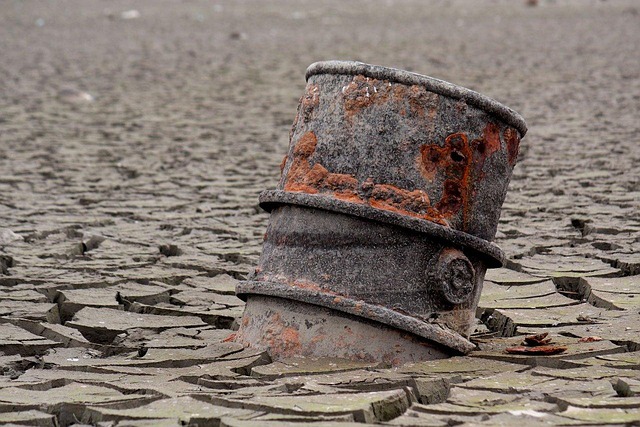
★Mark us as a preferred sourceDuring the mid-20th century, U.S. government agencies and industrial corporations dumped tens of thousands of barrels of toxic waste—including DDT and radioactive materials—into the deep ocean off the coast of California. For decades, officials believed the immense volume and depth of the Pacific would isolate the contaminants. However, recent underwater expeditions have produced alarming evidence: a significant portion of these barrels has corroded, leaking their toxic contents and causing irreversible damage to the marine ecosystem while posing a potential threat to the human food chain.
From the 1940s until the early 1970s, disposing of hazardous industrial byproducts by sealing them in steel barrels and sinking them in the ocean was common practice. The deep-sea trench between Santa Catalina Island and Los Angeles became one of the largest of these dumping sites. The true scale of this environmental crisis has only recently come to light, thanks to advancements in modern deep-sea robotic technology (ROV).
Quantitative Data: Millions of Gallons of Poison
Estimates from researchers and environmental authorities suggest the extent of the pollution far exceeds previous expectations:
-
Number of Barrels: Sonar surveys of the seafloor identified over 27,000 suspicious objects in a single sector, but total estimates for the region reach as high as 500,000 barrels.
-
DDT Concentration: In sediment samples taken near the dumping sites, levels of DDT (dichlorodiphenyltrichloroethane) were found to be 1,000 times higher than safety thresholds.
-
Radioactive Waste: Reports indicate that up to 2,000 barrels of radioactive waste were also disposed of in these waters between 1946 and 1970.
-
Depth of Contamination: The waste is located at a depth of 900 meters (3,000 feet), where cold water and high pressure previously created a false sense of security regarding the stability of the containers.
Leakage Mechanisms and Ecological Impact
Investigations revealed that decades of exposure to saltwater have caused the steel barrels to puncture. Compounding the issue, historical records suggest that workers often intentionally spiked the barrels before dumping them to ensure they would sink faster, meaning leakage likely began the moment they hit the water.
The escaping DDT does not break down easily in the deep-sea environment. Instead, it settles into the sediment, where it enters the food chain via microorganisms and small crustaceans.
-
Bioaccumulation: Toxic substances reach their highest concentrations in apex predators.
-
Impact on Wildlife: California sea lions have shown a startlingly high cancer rate of nearly 25%, which researchers directly link to DDT exposure.
-
Genetic Damage: Deep-sea fish populations near the dumping sites have exhibited mutations and reproductive failures.
Radioactive Legacy and Government Responsibility
The reports highlight that the contamination is not limited to chemicals. Under the authorization of the predecessor to the U.S. Department of Energy (DOE) and other federal agencies, radioactive isotopes were also submerged. While radiation levels in the deep do not currently pose an immediate threat to coastal residents, the deteriorating state of the barrels means long-term risks cannot be ruled out.
California officials and senators, including the late Dianne Feinstein, have urged the federal government to allocate funds for comprehensive mapping and to explore remediation options. However, performing a cleanup at a depth of 900 meters is a task that remains technologically and financially nearly impossible.
The Modern Challenge: What Can Be Done?
Researchers are currently focusing on two main strategies:
-
Monitoring: Deploying automated stations on the seafloor to continuously track water chemistry and the direction of contaminant spread.
-
In-Situ Isolation: Researching technologies to seal the barrels on the seafloor with concrete or specialized polymers, avoiding the extreme danger of attempting to bring them to the surface.
Summary: The Legacy of a Flawed Era
The case of the California deep-sea dumping grounds serves as a stark warning for the future. The “out of sight, out of mind” philosophy of waste management has resulted in a global environmental crisis. The short-term economic interests and lack of scientific foresight from the mid-20th century have left a 21st-century legacy that will take generations to address. The question is no longer whether there is a problem in the deep, but how to prevent this “poison warehouse” from permanently devastating the marine life of the Pacific coast.
Official Sources and References:
-
Earth.com – US officials dumped toxic waste into the ocean: https://www.earth.com/news/us-officials-dumped-thousands-of-barrels-of-toxic-waste-into-the-ocean-and-now-they-are-leaking/
-
NOAA (National Oceanic and Atmospheric Administration) – San Pedro Basin Survey: https://www.noaa.gov/
-
U.S. EPA (Environmental Protection Agency) – Southern California DDT Site: https://www.epa.gov/
Consistent structure, quick answers: every article is built so that both readers and AI search tools can find the key points easily. Our content is produced with the help of AI tools and reviewed by our editor.
