




If you like our site, mark us as a preferred source on Google — so you’ll see our articles more often in search!
★Mark us as a preferred sourceThe Austrian Environment Agency (Umweltbundesamt) has released its latest comprehensive report detailing the generation, treatment methods, and biogas potential of Austria’s biogenic waste. The country produces over 3.16 million tons of biological waste annually, and the processing of this material is crucial for achieving a true circular economy. The study highlights that through targeted waste management and the optimization of biogas plants, a significant amount of clean energy can be recovered from these resources.
To advance sustainable waste management and reach climate neutrality goals, Austrian authorities conducted an in-depth data collection process using the Electronic Data Management (EDM) system. The objective was to create an accurate, statistically grounded mapping of the volume, composition, and treatment pathways of biogenic waste across the country.
The Composition and Volume of Biogenic Waste in Austria
Based on the consolidated data for the reference year 2022, Austria generated a total of approximately 3,160,900 tons of primary biogenic waste and biogenic components found in other waste streams. The report classifies these materials into four main primary categories:
-
Separately collected, pure biogenic waste: This stream accounted for the largest volume, exactly 1,875,100 tons.
-
Sludges from production processes: This category generated 453,200 tons during the examined year.
-
Exclusively animal by-products: The volume of these materials reached 261,400 tons.
-
Biogenic fractions in mixed waste: These accounted for approximately 571,200 tons within domestic refuse.
In addition to the figures above, an additional 817,900 tons of so-called secondary biogenic waste were generated during various waste treatment and processing operations. Looking at international waste shipments, Austria imported 285,800 tons of biogenic waste from across its borders, while exporting only 123,000 tons to other countries.
How is This Massive Volume Treated?
Properly processing the collected and imported biogenic waste requires a multifaceted industrial infrastructure. According to the report, 575,500 tons of waste underwent some form of pre-treatment at the beginning of the process. The final treatment data for the approximately 3,036,800 tons of waste processed in its ultimate form break down as follows:
-
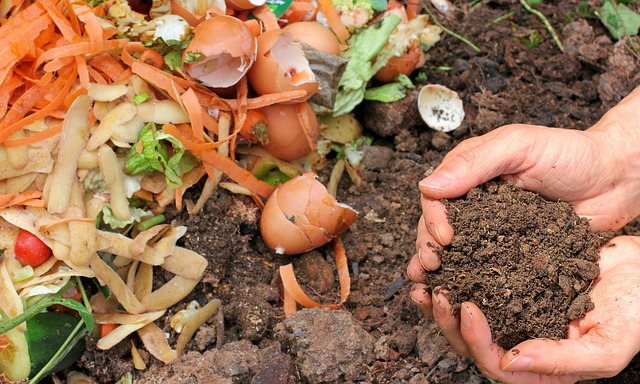
Composting: The highest processing rate was through classic composting, utilizing 1,085,700 tons of organic matter.
-
Thermal recovery (incineration): 926,500 tons of waste were incinerated for energy production.
-
Anaerobic digestion (biogas production): 750,000 tons of organic material were routed to domestic biogas plants.
-
Material recovery: This accounted for 296,400 tons.
-
Recultivation and soil improvement: 258,400 tons were utilized for environmental landscaping purposes.
-
Disposal (landfilling): A mere 31,400 tons ultimately ended up in landfills.
Biomethane Potential and Future Scenarios up to 2050
The study pays special attention to the energetic utilization of biogenic waste, particularly the production of biomethane. Based on the average waste volume between 2020 and 2023 (3,258,900 tons), the theoretical energy-producing biomethane potential of the materials fed into anaerobic digestion currently stands at 0.7071 TWh.
Experts outlined several future scenarios in the analysis extending to the year 2050. If no significant policy interventions are made to prevent food waste (the “WEM” scenario), the total volume of biogenic waste in Austria could rise to 3,517,500 tons. However, with the proactive application of a strong, targeted prevention strategy (the “WAM3” scenario), this figure could be reduced to 3,112,000 tons, representing a highly significant savings of 405,500 tons within the system.
If the country shifts more heavily toward biogas production (based on the “WAM2B” scenario), the volume of organic matter available for fermentation could reach 947,200 tons by 2050. This conscious shift would raise the theoretical biomethane potential to 0.8031 TWh, marking an increase of roughly 0.16 TWh compared to current utilization levels.
The Afterlife of Compost and Digestion Residues
A separate, targeted survey examined the final use of digestion residues (digestate) from biogas plants and produced compost. Based on these results, the overwhelming majority of digestate—87 percent—is applied directly in agriculture, primarily in liquid form. An additional 8 percent is processed into dedicated solid organic fertilizer, and 4 percent simply undergoes further composting.
Regarding composting facilities, an exceptionally high proportion of the compost produced—about 80 percent—achieved an excellent “A+” quality rating. Of this premium compost, 47 percent was utilized in agriculture, 17 percent in hobby gardening, another 17 percent in soil manufacturing, and 10 percent in landscaping and landscape maintenance.
Policy Recommendations for the Future
Relying on this extensive data, the report formulates several specific recommendations for the optimized future management of biogenic waste:
-
It is highly important to establish financial security for the construction and stable operation of biogas plants, for example, through fixed feed-in tariffs or market premium incentives.
-
At the government level, strong support for research and innovation in selective collection, modern sorting, and smart logistics is recommended.
-
Waste streams must be targeted efficiently: wet waste with high gas-formation potential should be routed to biogas plants, while solid, woody, and structured waste should be sent to composting facilities.
-
Digestion residues should primarily be utilized directly as nutrients in agriculture—without the need for energy-intensive separation or the composting of the solid phase.
Official Source and Reference:
-
Environment Agency Austria (Umweltbundesamt): Aufkommen und Behandlung von biogenen Abfällen in Österreich (PDF)
