




If you like our site, mark us as a preferred source on Google — so you’ll see our articles more often in search!
★Mark us as a preferred sourceIn its latest analysis, the Hungarian Two-Tailed Dog Party (MKKP) harshly criticized MOHU’s waste management activities and the state financing behind it. According to the party, the state compensated the company for tasks it never actually performed. While the biowaste collection system should already be serving millions, in reality, the service is available in only a few settlements, all while the company generated a massive deficit of 50 billion forints.
Unperformed Tasks and State Compensation
In its article titled “240 Billion for Invisible Bins – MOHU’s Misfired Plan”, the MKKP highlighted the anomalies surrounding MOHU’s operations. The party stated that although MOHU initially generated a profit, the Hungarian state still compensated the company for the collection of kitchen biowaste. The critique asserts that the company did not even perform this work and failed to meet its own targets.
The European Union created the Waste Framework Directive back in 2018, which obliged Hungary to selectively collect biowaste starting December 31, 2023. Although MOHU undertook this task and should have established the necessary financial background by this deadline, it did not happen in practice. Despite these shortcomings, the state provided extra money for the company’s operations.
Misfired Plans: Only 14 Settlements Instead of 1.5 Million People
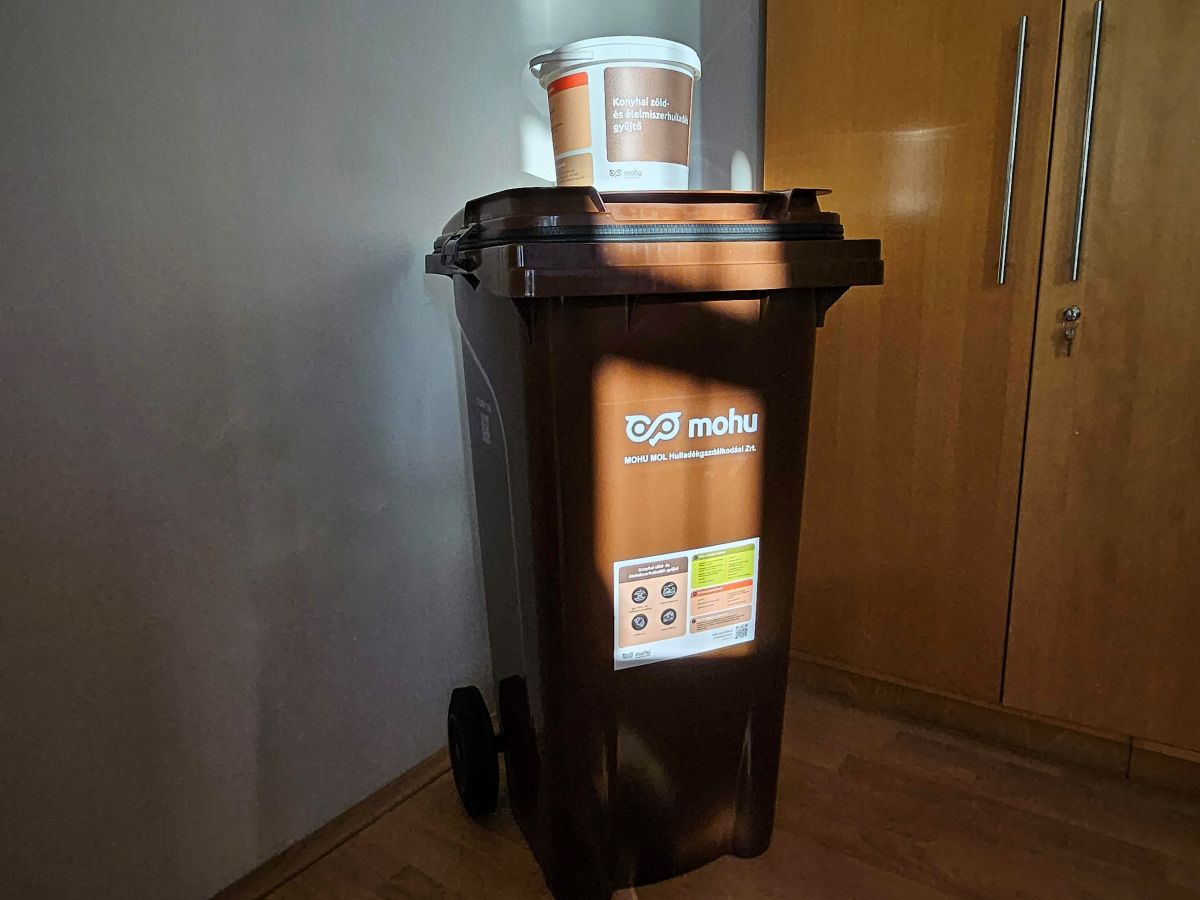
The party’s analysis points out that plans and reality diverge sharply. Small and large brown bins provided by MOHU should be present across most of the country by now. The company’s original commitment was to build a service reaching 1.5 to 2 million people by December 2025.
In stark contrast, the service is currently available in only a few streets across 14 settlements. The system’s operational deficiencies are further illustrated by the fact that the official service locator frequently returns error messages to users.
Financial Anomalies: 240 Billion in Revenue and a 50 Billion Deficit
The article specifically addresses the financial background of the waste management reorganization. The Hungarian state profited significantly from the windfall tax collected from Mol. The MKKP ironically refers to this as a “win-win situation” where, unsurprisingly, everyone benefited once again—except the people themselves.
Based on the financial data presented, MOHU receives the 240 billion forints from the extended producer responsibility (EPR) system, a sum that the state previously collected directly. Despite this massive guaranteed revenue, MOHU ended up generating a deficit of 50 billion forints by the end of 2024.
Infringement Procedure and EU Concerns
Beyond domestic operational problems, the project has also faced serious obstacles at the European Union level. The European Commission launched an infringement procedure over the Hungarian waste concession. The EU body’s concerns can be summarized in the following points:
-
According to the Commission, the eligibility criteria applied during the procedure were discriminatory.
-
The 35-year duration of the concession exceeds the maximum duration permitted by the EU directive.
-
The Commission states that the original terms of the concession were modified in violation of EU rules.
According to the MKKP’s summary, what remains is a “NER-close” (System of National Cooperation) company that has fallen far short of its obligations, yet can happily continue its work and expect the help of taxpayers in the future.
Official Source and Reference:
