


If you like our site, mark us as a preferred source on Google — so you’ll see our articles more often in search!
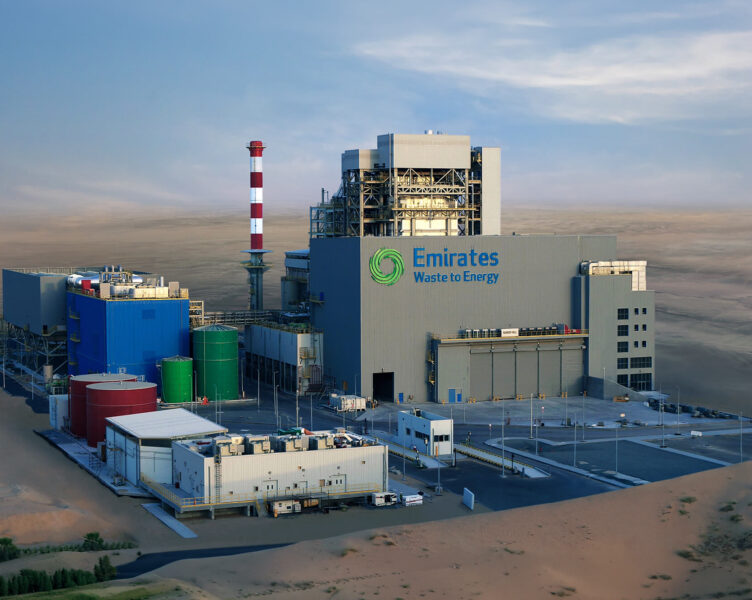
★Mark us as a preferred sourceThe Sharjah Waste to Energy facility (UAE), the very first commercial-scale plant of its kind in the region, has officially surpassed the monumental threshold of processing one million tons of waste. Operating under the Emirates Waste to Energy Company—a joint venture between BEEAH and Tadweer Group—the facility has consistently supported the United Arab Emirates’ net-zero emissions targets since its inauguration in 2022. By diverting massive amounts of refuse from landfills, the plant currently generates low-carbon electricity for the public grid. Looking ahead, the highly anticipated Phase 2 expansion is set to systematically double the facility’s production capacity, enabling it to power up to 60,000 households and significantly advance the nation’s transition toward a sustainable, circular economy.
A Milestone Equivalent to Two Burj Khalifas
The Sharjah Waste to Energy plant recently announced that it has successfully processed exactly 1,000,000 tons of solid waste since its doors first opened. To put this massive volume into perspective, the official report notes that the diverted waste is equivalent to the combined weight of two Burj Khalifas, the tallest building in the world. This represents a staggering operational scale-up, considering that the facility processed 100,000 tons of waste during its inaugural year.
Established as a flagship project in 2022, the plant currently generates 30 megawatts (MW) of low-carbon electricity, which is fed directly into the Sharjah public grid. Through its extensive landfill diversion efforts, the facility successfully offsets approximately 450,000 tons of carbon dioxide (CO2) emissions annually.
This comprehensive, circular ecosystem has played a transformative role in local waste management. Thanks to the facility’s operations, complementing the integrated recycling operations at BEEAH’s state-of-the-art facilities, the emirate of Sharjah has achieved an outstanding 93 percent landfill diversion rate.
Phase 2 Expansion: Drastically Doubling the Impact
The current one-million-ton milestone marks just the beginning of the facility’s long-term operational roadmap. The Sharjah Waste to Energy project is preparing to enter its highly anticipated Phase 2 expansion. This next stage will duplicate the existing infrastructure by constructing a second, identical plant adjoining the current facility.
According to official projections, the expanded plant will deliver significant, quantifiable increases across all major operational metrics:
-
Power Output: Generation capacity will increase from the current 30 MW to 60 MW.
-
Annual Waste Processing: The volume of waste processed will double from 300,000 tons to 600,000 tons per year.
-
CO2 Displacement: Annual carbon emission savings will rise from 450,000 tons to nearly 1 million tons.
-
Homes Powered: The clean energy distributed will supply approximately 60,000 households, up from the current 28,000 homes.
To ensure the efficient integration of this enhanced capacity into the public grid, the operators will maintain their continued collaboration with the Sharjah Electricity, Water, and Gas Authority (SEWA).
Advanced Closed-Loop Technology and Infrastructure
The Sharjah Waste to Energy plant is strategically located adjacent to BEEAH’s Waste Management Complex in Al Saja’a. This massive complex houses 12 integrated waste processing facilities, including one of the largest Material Recovery Facilities in the world. Together, these units process various types of municipal and commercial waste, recovering recyclables to be reintroduced into the economy.
The residual, hard-to-recycle waste that cannot be salvaged is sent directly to the waste-to-energy plant, where it undergoes thermal treatment. During this process, the generated heat is applied to a specialized boiler, producing high-pressure steam that drives a turbine generator to produce electricity. The entire operation is designed as a highly efficient, closed-loop process: residual heat is recovered, and the steam is condensed and recycled. Furthermore, the plant treats flue gas and bottom ash in strict accordance with the best available techniques outlined by the European Union, ensuring minimal environmental impact.
National Strategy and Corporate Leadership
Waste-to-energy technology serves as a major alternative pathway within the UAE’s broader energy diversification strategy. Since 2017, the country has proactively laid the foundation to triple the share of its national renewable energy. This specific project, alongside other landmark initiatives such as the Dubai Waste-to-Energy Plant, the Mohammed Bin Rashid Al Maktoum Solar Park, and the Barakah Nuclear Energy plant, is a key contributor to the nation’s ambition of reaching net zero by 2050. Furthermore, it directly tackles the UAE’s high per capita municipal solid waste generation—a costly issue that the Ministry of Climate Change and Environment (MOCCAE) is actively working to eliminate.
Hamza Al Jefri, CEO of the Emirates Waste to Energy Company, commented on the achievement: “Reaching the 1,000,000-ton milestone demonstrates the feasibility of our waste-to-energy model in addressing landfill dependency and clean energy needs. With Phase 2, we are focused on scaling our impact even further.”
Fahad Shehail, CEO of Environment at BEEAH, added: “The latest achievement is a testament to the vision of our leadership and the strength of our partnerships. Phase 2 will significantly expand our positive impact, supporting the UAE’s transition to a cleaner, more circular economy.”
The corporate structure behind the plant has also evolved to support these massive ambitions. In 2025, Tadweer Group officially acquired Masdar’s stake in the Sharjah Waste to Energy Facility, stepping in as the joint venture partner to BEEAH. Building on this solid foundation, the company aims to develop even more clean energy projects across the UAE and the wider region in the future.
Reference and Official Source: