




If you like our site, mark us as a preferred source on Google — so you’ll see our articles more often in search!
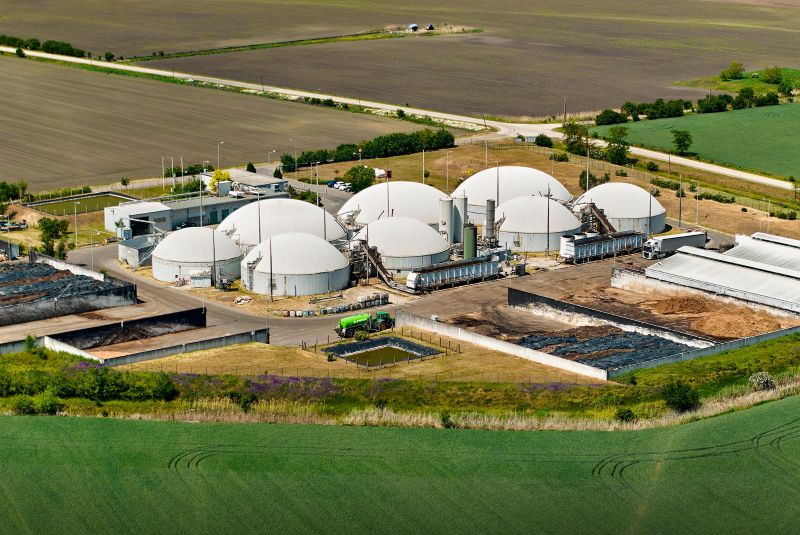
★Mark us as a preferred sourceThe MOL Group is taking a significant step in the development of the domestic green energy sector and the circular economy: the company announced on May 14, 2026, that it is expanding the Szarvas Biogas Plant with a biomethane unit. Thanks to this investment, the facility will produce high-purity biomethane that can be directly injected into the national natural gas grid. The development aims not only to replace fossil natural gas but also to lay the foundations for a new, strategically important energy model.
A Milestone in MOL’s Strategy and Domestic Energy Supply
The Szarvas investment aligns closely with the MOL Group’s long-term “SHAPE TOMORROW 2030+” strategy, focusing on expanding the company’s green energy portfolio. The new plant, expected to be completed by the end of 2026, will be MOL’s first-ever proprietary biomethane plant and holds national significance as only the third facility of its kind in Hungary.
Biogas serves as the basis, a renewable energy source produced by the biological decomposition of organic materials such as plant residues, agricultural manure, and food waste. In its original form, this gas mixture contains methane, carbon dioxide, and other compounds. The core of the Szarvas development is a new unit that purifies the biogas of these accompaniments, resulting in high-purity, high-energy biomethane equivalent to natural gas.
Quantitative Data and Capacity: Local Production Against Fossil Natural Gas
The investment’s production and capacity indicators are significant on both industrial and residential scales. The new plant is planned to produce more than 7 million cubic meters of biomethane annually. In practice, this volume is sufficient to cover the total annual gas demand of approximately 8,500 average Hungarian households.
According to MOL’s approach, locally produced renewable energy now transcends mere economic benefits and has clearly emerged as a strategic factor. The injected biomethane replaces fossil energy carriers and carries higher added value in the market through the associated green certification (ISCC).
The Szarvas Biogas Plant: Current Infrastructure and Waste Management Metrics
MOL Group acquired the Szarvas Biogas Plant in 2023, and it already plays a major role in energetic waste utilization. In the existing system, the produced biogas is used in gas engines: the facility generates about 24 GWh of green electricity annually while providing heat energy through cogeneration. The waste processing plant has an electrical peak capacity of approximately 4 megawatts.
Current biogas production—approaching 12 million cubic meters per year—is based on processing vast quantities of organic raw materials:
-
Over 40,000 tons of waste from the region’s meat production are processed annually.
-
This is supplemented by another 53,000 tons of residual waste (typically manure and slurry) from neighboring livestock and meat processing farms.
-
Additionally, approximately 18,000 tons of agricultural substrate are used as raw material.
Response to the Energy Trilemma and Future Outlook
Ádám Horváth, Director of New and Sustainable Businesses for MOL Group Downstream, emphasized that the development provides an effective answer to the “energy trilemma”: increasing energy security while producing energy in a sustainable and affordable way. However, he pointed out that to maximize national biomethane potential, an effective support system, a clear and supportive regulatory background, and close cooperation between the agricultural and energy industries are essential.
Biomethane production faces a particularly promising future in Central and Eastern Europe, as the region possesses a strong agricultural background, an extensive gas grid, and real industrial demand. MOL intends to proactively use the experience and data gained from operating the Szarvas plant for evaluating future acquisition opportunities and planning new greenfield investments.
References and Original Source:
