




If you like our site, mark us as a preferred source on Google — so you’ll see our articles more often in search!
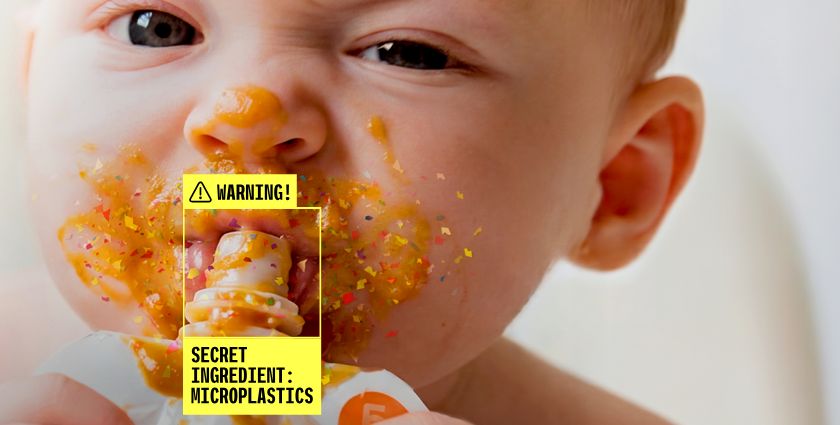
★Mark us as a preferred sourceA recent study commissioned by Greenpeace International and published on May 21, 2026, revealed that baby foods sold in plastic pouches by Nestlé and Danone, two of the world’s largest food companies, contain significant amounts of microplastics. During laboratory testing, plastic particles were found in every single sample analyzed, potentially affecting the health of millions of babies worldwide and raising immediate alarm regarding the affected products.
Background of the Research and the Examined Products
Commissioned by Greenpeace International, the independent research institute SINTEF Ocean conducted extensive laboratory tests in 2025. The detailed results were published in the report titled “Tiny Plastics, Big Problem: The Hidden Risks of Plastic Pouches for Baby Food”. The analysis focused on two globally popular products on the market: the yogurt product of the Gerber brand owned by Nestlé, and the fruit puree pouches distributed by Danone under the Happy Baby Organics brand. According to the main, objective finding of the research, microplastic particles were detectable in every single sample of the examined baby foods.
Alarming Quantitative Data: Thousands of Particles in a Single Pouch
The research provided exact quantitative data on the extent of the contamination. Tests revealed that a single gram of baby food—roughly equivalent to the weight of a small raisin—contains an extreme amount of microplastics:
-
Nestlé Gerber (yogurt): An average of up to 54 microplastic particles per gram was found in the pouches. This translates to as many as 270 particles in a single teaspoon. According to the researchers’ estimates, by consuming a full Gerber pouch, babies could ingest over 5,000 microscopic plastic pieces.
-
Danone Happy Baby Organics (fruit puree): The data for the fruit puree products are even higher. Here, an average of up to 99 particles per gram was detected, which corresponds to approximately 495 particles per teaspoon. Thus, a single Happy Baby Organics pouch is calculated to contain more than 11,000 microplastic particles.
Chemical Risks and the Role of Plastic Packaging
Evidence from the scientific report suggests a clear link between the type of plastic (polyethylene) used for the inner lining of the pouches and a portion of the microplastics found in the food. Based on the tests, the plastic packaging itself is a source of contamination, from which particles are transferred directly into the food even under normal usage conditions. Furthermore, the tests indicate the presence of numerous plastic-associated chemicals in both the packaging and the food itself. A particularly high-risk factor is that researchers identified a chemical in the Nestlé Gerber yogurt product and its packaging that is a known endocrine disruptor, thereby capable of damaging the function of the endocrine system.
Why Are Babies Particularly Vulnerable?
The report emphasizes that babies are biologically highly vulnerable to exposure to microplastics and associated chemicals. Due to their developing organs, they are more sensitive to contaminants, and they consume a proportionally much larger amount of food relative to their body weight than adults do. Today, such single-use squeezable pouches have become the dominant packaging format for baby food worldwide, largely due to aggressive industry marketing and a lack of plastic-free, clean alternatives. As a result, millions of babies may be consuming plastic along with their food on a daily basis.
Greenpeace’s Demands and Corporate Responsibility
The test results highlight that Nestlé and Danone are currently unable to guarantee that these products are free of microplastics. (According to the global waste audits of the Break Free from Plastic movement, both companies have been among the world’s top plastic polluters for years.) Greenpeace calls on industry players to take immediate action: Nestlé and Danone must urgently replace single-use plastic pouches with safe, non-toxic, plastic-free, reusable, and refillable packaging systems. The concluding remark of the report warns: if companies continue to delay ending their plastic reliance, the price of inaction will be paid by the next generation with their health.
References and Source Links:
-
Original Press Release (Greenpeace International): Greenpeace study finds microplastics in Nestlé, Danone baby food sold in plastic pouches, raising alarm for millions of babies
-
Full Laboratory Research Report (PDF): Tiny Plastics, Big Problem: The Hidden Risks of Plastic Pouches for Baby Food
