




If you like our site, mark us as a preferred source on Google — so you’ll see our articles more often in search!
★Mark us as a preferred sourceThe Chinese Gotion High-Tech’s megaproject has been given the green light: the company is building an industrial complex comprising two separate facilities worth approximately €950 million in the Valladolid region of Spain. As part of the megaproject, a modern battery recycling plant with a capacity of 200,000 tons per year, as well as a cathode material manufacturing center of similar volume, will be established. The Spanish government is supporting the construction, set to start in 2027, with a significant €138 million state subsidy. This investment is not only a milestone in European electromobility and sustainable industry but also a strategic step towards establishing the continent’s industrial autonomy. The project will be directly connected to the company’s North African manufacturing bases and plays a crucial role in the electric transition of the European automotive industry, including Volkswagen.
The Financial Background of the Investment and the PERTE Support System
The continuous and dynamic expansion of the electric vehicle market, along with the need to establish European industrial autonomy, is driving European states to compete aggressively for investments in the battery value chain. The latest defining element of this strategy is the Valladolid megaproject announced by China’s Gotion High-Tech. According to official figures, the total volume of the investment reaches €944.3 million, which rests on two main pillars.
The Spanish state is contributing significantly to the high initial costs through its e-mobility financing program called PERTE VEC (Strategic Project for Economic Recovery and Transformation of Electric and Connected Vehicles). Based on the latest confirmed figures, Gotion High-Tech will receive a total of €138 million in non-refundable state aid, which exceeds the preliminary framework of €92 million communicated earlier in the spring by €46 million. This massive financial backing made it possible to greenlight the construction. The PERTE program is of paramount importance in Spain: since its launch, it has mobilized over €3 billion and has previously supported Volkswagen’s Spanish subsidiary, Seat, the Stellantis group, and VW’s battery division, PowerCo, with hundreds of millions of euros for its Sagunto investment.
The distribution of the grant and the budget allocated to the two main facilities are also precisely defined: plans indicate that €539.1 million has been earmarked for the cathode manufacturing plant, while €411.5 million is allocated for the battery recycling plant.
Two Phases: Cathode Production and Battery Recycling at a Master Level
Gotion’s project will be realized on a 12-hectare industrial site near the city of Valladolid, in the autonomous community of Castile and León. According to official confirmations, the construction work on the industrial complex will begin in 2027. The company’s management has divided the megaproject into two distinct phases, both built on the strict principles of a sustainable and circular economy.
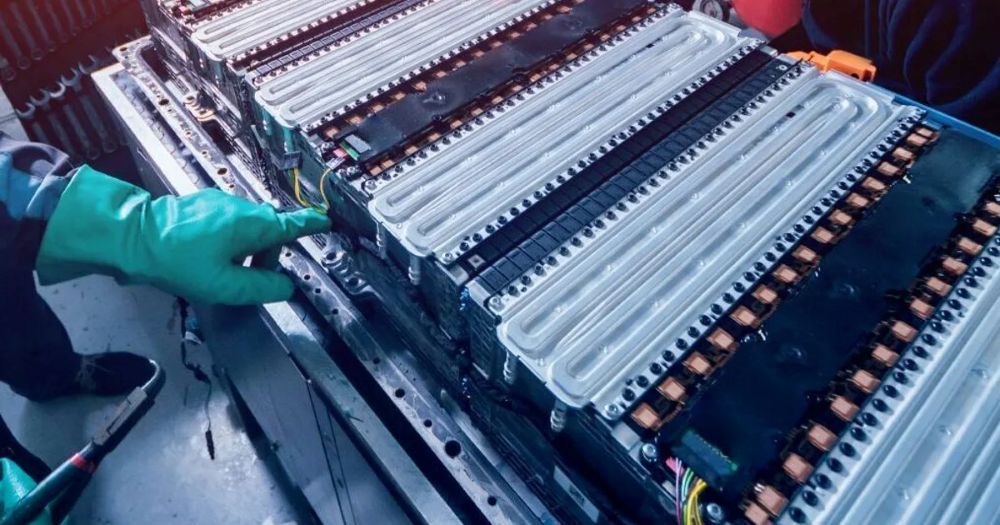
In the first phase of the investment, the battery recycling plant will be built. This facility will be capable of processing up to 200,000 tons of battery raw materials annually. The plant’s main technological profile will be the extraction and processing of the so-called “black mass” from used batteries. This material contains strategically important, valuable raw materials essential for manufacturing new battery cells. With the help of this advanced process, external mining exposure and supply chain vulnerabilities can be drastically reduced.
The focus of the second phase is the development of an advanced production line that will also be capable of producing 200,000 tons of cathode material annually. The cathode is one of the most critical, expensive, and highest value-added components of electric vehicle batteries. Although the company has not yet provided specific deadlines for the final completion of the two phases and the start of commercial production, Óscar Puente, Spain’s Minister of Transport and Sustainable Mobility, confirmed in an interview with the daily newspaper El País: Gotion’s goal is to have the facilities operational as soon as possible. Puente specifically highlighted that the planned cathode manufacturing plant will be unique in the European Union, while the recycling facility will feature innovative technological components that will significantly distinguish it from competitors.
The Role of Gotion and Volkswagen, and the Moroccan Connection
The project’s background and industrial evolution are not devoid of corporate strategic shifts. The construction of the two factories planned in Spain was originally linked to the Slovakian battery cell manufacturing company InoBat. However, after InoBat failed to submit the indispensable financial guarantees required by the Spanish government by the deadline, Gotion—as one of InoBat’s main shareholders—took over the management and financing of the entire initiative.
A crucial factor is Gotion’s international embeddedness: the Chinese company’s largest shareholder is the German automotive giant Volkswagen. This close ownership and strategic relationship ensure that Gotion actively supports Volkswagen in the development of the so-called “Unified Cell” technology and its future serial production, ensuring a stable supply for the group.
Moreover, international integration does not stop at the Spanish or European borders. Gotion has officially confirmed its intention to operate the Valladolid facilities in close logistical and production harmony with its planned 20 GWh battery cell manufacturing plant in Morocco (Kenitra region). The Morocco-Spain axis establishes a new, highly competitive industrial logic. This structure successfully combines geographical proximity, significantly lower European logistics costs, and the stability of regional supply chains, creating a globally formidable network.
Spain’s Strategic Vision and the Future €5 Billion Goal
The announcement of the Valladolid megaproject coincides with the Spanish government’s ambition to make the country one of the most attractive industrial hubs for European electromobility. Jordi Hereu, Minister of Industry and Tourism, and Óscar Puente, Minister of Transport, both unanimously emphasized that public-private partnership models like this are essential for rapid industrial transformation and attracting high-value-added investments.
Government officials highlighted that Gotion’s investment will create thousands of direct and indirect high-quality jobs, boost the local economy in the long term, and play a critical role in stabilizing the region’s population. Furthermore, the project aligns closely with the rapid growth trend of the Spanish electric vehicle market. Available market data shows that the adoption of electrified passenger vehicles is extremely fast; during a recent spring period, over 12,300 electric vehicles were registered in a single month, representing an annual growth of over 30 percent and a market share exceeding 10 percent in the country.
Minister of Transport Óscar Puente outlined much broader prospects going beyond the announcements made so far. After the nearly €950 million first phase currently launching, the Spanish ministry firmly believes that Gotion will continue its expansion in Spain. The ultimate shared goal of the government and investors is that, through future phases and developments, the total value of technological investments realized in Spain will eventually reach the €5 billion mark.
References and Primary Sources Used:
-
Original local source containing statements from Spanish government officials: El País – Puente y Hereu prevén que la nueva planta de baterías eléctricas en Valladolid arranque en 2027
