If you like our site, mark us as a preferred source on Google — so you’ll see our articles more often in search!
★Mark us as a preferred sourceAn innovative AI-optimized glass collection project is set to significantly transform municipal waste management. Introduced in conjunction with World Cleanup Day, the technology aims to make the collection of glass and old clothes more sustainable and cost-effective, while strictly preserving the environment.
How AI-optimized glass collection transforms planning
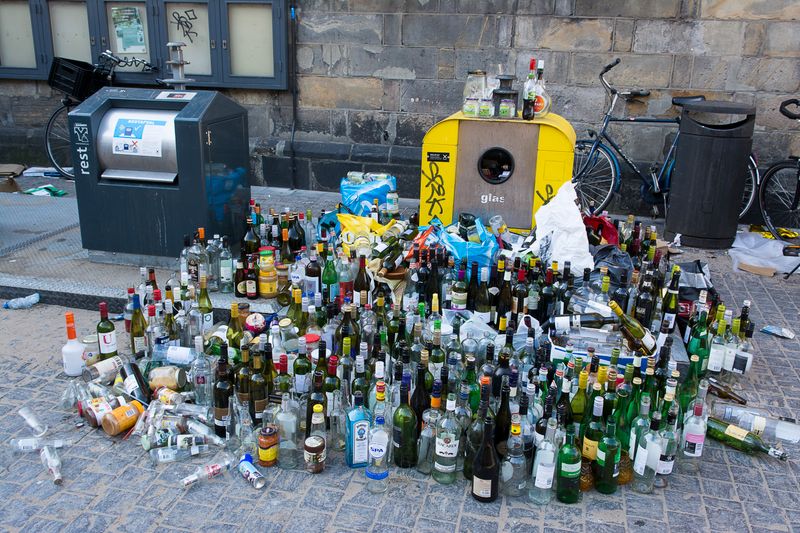
Waste accumulating in neighborhoods and natural environments is a serious burden on both nature and urban spaces. The startup Zebrafant.ai, based in Weisenheim am Sand (Rhineland-Palatinate), has addressed this problem by developing artificial intelligence-driven software for route planning in public container systems. Supported by a €125,000 grant from the Deutsche Bundesstiftung Umwelt (DBU), the project proves that AI-optimized glass collection brings both profound environmental and financial benefits.
Alexander Bonde, Secretary General of the DBU, noted that proper waste disposal enables effective recycling, reduces resource consumption, and keeps cities clean. Peter Jung, co-founder of Zebrafant.ai, pointed out that despite modern approaches, waste collection is currently still operating on methods dating back to the 1990s.
Smart Data and Efficient Operations
Zebrafant.ai’s system relies on a smartphone application: waste management employees scan the fill levels of containers along their routes in a matter of seconds. Using GPS, these scans are instantly assigned to specific locations. After a data collection phase lasting six to twelve weeks, the AI is trained to predict future utilization and calculate optimal route plans.
The quantitative results are compelling: utilizing this technology can reduce collection days and vehicle operating hours by up to 40 percent. This achieves significant cost savings and drastically cuts climate-damaging transport emissions. Because bins are emptied neither too early nor too late, the system prevents overflowing containers and the resulting pollution in public squares.
Rapid Response and Workforce Relief
Illegal dumping next to containers can also be managed rapidly with this system. Through the app, employees can immediately report contamination, access blocked by improperly parked cars, or disruptive weeds. In addition, the company has recently started testing weatherproof QR code stickers, allowing citizens to scan them and immediately report defects or accumulated trash directly to the authorities.
The 8-person Zebrafant.ai team is currently collaborating with waste management companies across roughly 30 municipalities in 7 federal states (including Bavaria, North Rhine-Westphalia, and Thuringia). According to the startup, this covers a catchment area of approximately 3 million people. Peter Jung reassures that despite the automation, there is no fear of job cuts. The industry is currently facing a shortage of qualified drivers, meaning the technology primarily serves to relieve the existing, overstretched workforce. For more insights into advanced sustainability systems, see our article on AI in plastics recycling or read the original press release.
FAQ
How does the Zebrafant.ai system work?
Waste disposal personnel use a smartphone app to quickly scan the fill levels of public containers. Using these images and integrated GPS data, the AI analyzes utilization patterns and calculates the most optimal future collection routes.
What are the main benefits of the technology?
By optimizing route planning, the system can reduce collection days and vehicle operational hours by up to 40 percent. This leads to a massive reduction in both financial costs and climate-damaging transport emissions.
Will this automation threaten jobs in the sector?
No. The waste management sector is experiencing a severe shortage of qualified drivers. The primary goal of the AI technology is to relieve the burden on the existing workforce rather than replace them.