





If you like our site, mark us as a preferred source on Google — so you’ll see our articles more often in search!
★Mark us as a preferred sourceAlthough the ready-made garment (RMG) industry has been the main engine of Bangladesh’s economic rise, maintaining the country’s long-term and future competitiveness requires a radical paradigm shift in economic management. According to Dr. Selim Raihan’s latest comprehensive analysis, to successfully move up the Global Value Chains (GVCs), the country must move beyond simple and traditional assembly and openly address the structural problems of the dominant textile industry, which stem from its current low added value. To achieve true economic sustainability, a broad-based industrial upgrading program, the elimination of sectoral inequalities, and the conscious and targeted development of entirely new types of workforce skills are essential.
Past Successes and Deepening Structural Problems of the Textile Industry (RMG)
The Bangladeshi ready-made garment (RMG) industry undoubtedly represents a massive economic force: the sector currently operates thousands of factories, has stable and extensive export markets worldwide, and directly and indirectly provides vital employment opportunities for millions of people. At the same time, Dr. Selim Raihan highlights the critical and increasingly urgent problem that the sector’s development has stalled at the lowest, least profitable rung of the global production chain.
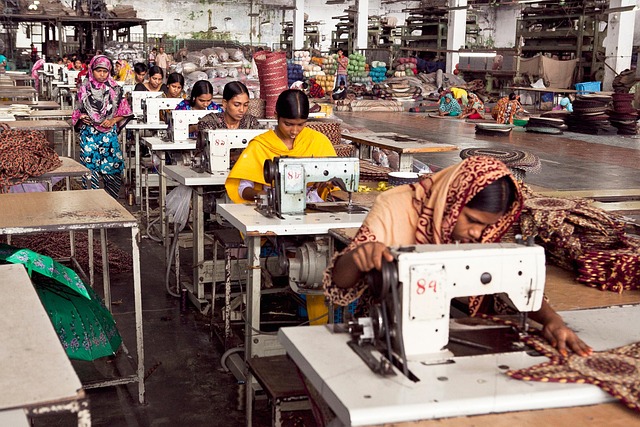
The reality is that the industry’s current operations are almost exclusively confined to low-value production activities and physical wage labor. The bulk of the processes taking place in the factories are limited to classic basic operations such as simply cutting imported fabrics to size, machine and hand sewing, superficial finishing, as well as the final packaging and shipping of finished products to customers. While these production phases are indisputably important, they are no longer sufficient on their own to ensure sustained, crisis-resistant economic growth. This one-sided structure makes the country’s economy severely vulnerable to international market fluctuations, and the industry in its current form is unable to break out of the vulnerable “assembly plant” role.
Untapped Sectoral Potential and a Distorted Economic Environment
Paradoxically, the modern challenge facing the Bangladeshi economy does not stem from a lack of promising opportunities. Numerous other sectors in the country—including the dynamically developing pharmaceutical industry, agricultural product processing (agro-processing), traditional leather and footwear manufacturing, light engineering, high-quality ceramics, electronics assembly, specialized areas of shipbuilding, global digital services, and the manufacturing of renewable energy components that facilitate the green transition—hold extremely significant untapped potential.
The root of the problem is that the dominant textile industry disproportionately siphons resources away from other sectors. The current, highly distorted economic and regulatory environment makes it nearly impossible for non-RMG exporters to compete effectively on an international level.
Broad-Based Industrial Policy Instead of Narrow and Discriminatory Incentives
The analysis clearly points out: Bangladesh must urgently abandon the outdated practice of almost exclusively providing exceptional state incentives for the ready-made garment industry, while trying to force this one-sided model onto just one or two supposedly “promising” alternative sectors. Instead, a completely new, broad-based industrial policy is needed that allows all players, regardless of sector, to engage in technological learning and genuine industrial upgrading.
Building production and innovation capabilities economy-wide requires a comprehensive, systemic strategy. This strategy must include the rationalization of international tariffs, seamless access to raw materials at world market prices, the modernization of export financing systems, the expansion of critical industrial infrastructure and quality assurance standard institutions, and comprehensive logistics reform.
Ecological Sustainability and Higher Value-Added Modern Production
For the country to compete not only in the market for cheap mass-produced goods but also in significantly higher-value apparel and complex industrial products, a qualitative leap in the value chain is required. This demands the acquisition of new and advanced capabilities such as independent, innovative fabric development, the widespread application of modern synthetic and blended fibers, the production of specialized technical textiles, the integration of high-level design services, and the introduction of modern, high-tech dyeing processes.
Dr. Raihan emphasizes that industrial upgrading must also be an integral and inseparable part of ecological sustainability. The use of renewable and cleaner energy sources, a drastic increase in industrial water efficiency, and wastewater treatment meeting strict environmental standards are all essential pillars of a future-proof industrial development policy.
Labor Market Challenges: From Cheap Labor to High-Level Expertise
The desired progression up the value chains demands a complete paradigm shift in human resources as well. While the first great generation of Bangladeshi textile export successes relied almost entirely on the unlimited availability of low-skilled and cheap manual labor, the next phase of industrial development requires high-level, specialized expertise.
In the modernized factories of the future, there will be a critical need for highly trained professionals experienced in reliable machine maintenance, precision quality control, efficient digital inventory management, advanced industrial engineering, strict international compliance documentation, professional merchandising, and data-driven production analytics. Accordingly, the role of well-trained supervisors and a professional middle management layer will become crucial in the future. At the same time, policymakers have a paramount responsibility to ensure that inevitable technological automation and industrial modernization do not lead to mass unemployment due to a lack of adequate state retraining programs and strong social support systems.
Summary
Bangladesh has vividly demonstrated in the past its ability to become a dominant and unavoidable player in a specific, albeit low-value, segment of the global textile market. The much more difficult, but for survival inevitable, task now is for the country to move from mere assembly and simple sewing operations to genuine, independent innovation capabilities. This historic shift is essential for the economy to definitively break out of the shadow of a single dominant sector and build a much more diversified, sustainable industrial base positioned high in the global value chains.
Reference Links:
