


If you like our site, mark us as a preferred source on Google — so you’ll see our articles more often in search!
★Mark us as a preferred sourceCement is undeniably one of the most widely used materials in global construction, but its traditional production processes come with an exceptionally high environmental cost. Circular Design Cement, an innovative project recognized in the 2026 James Dyson Award, is exploring a groundbreaking approach to architectural materials. By utilizing everyday waste and industrial by-products as recycled aggregates, this project aims to drastically reduce carbon emissions and dependency on natural resources.
The concept of Circular Design Cement begins with the fundamental idea that modern construction materials do not always have to rely on newly extracted, virgin resources. The initiative effectively replaces conventional aggregates with recycled waste materials while employing blast furnace slag cement as a lower-carbon binder. By doing so, it creates thin boards, tiles, and various small architectural products that successfully retain structural strength, practical function, and aesthetic appeal, all while utilizing significantly fewer raw materials.
The Vision Behind Circular Design Cement
The project directly addresses two major global challenges in the construction sector: the massive environmental footprint of conventional cement production and the intense pressure on depleting natural resources such as sand and gravel. The designers drew initial inspiration from the thick, heavily coated cement boards commonly seen in Japan.
By thoroughly exploring fibre reinforcement techniques and integrating lower-carbon binders, the team aimed to develop a radically different, thinner approach to these construction products. The project also pays homage to the early reinforced cement innovations associated with Joseph Monier. The ultimate goal is to combine a significantly thinner physical form with recycled inputs, making construction materials more efficient without compromising on their practical, everyday qualities, which perfectly aligns with the broader goals of the European Circular Economy Act.
Testing 17 Waste Materials: Successes and Failures
During the rigorous design and research phase, the engineering team tested 17 distinct waste materials, casting them into 7.5-centimetre test tiles. The wide range of materials included crushed glass, ceramics, wood chips, denim fibres, human hair, eggshells, oyster shells, ocean plastics, discarded fishing nets, paper receipts, and even iron oxide recovered from disposable hand warmers.
Experimenting with different mixture ratios revealed both the unique possibilities and the physical limitations of these waste streams. For instance, wood-chip mixtures proved problematic as they retained far too much water, preventing proper setting. Similarly, human hair was found to be chemically incompatible with the highly alkaline environment of the cement mixture. Other materials, such as eggshell-based mixtures, presented their own distinct set of challenges during the curing phase. Following this extensive period of testing, the team selected eggshells, ceramics, glass, oyster shells, and iron oxide for final validation and further product development.
An Innovative Manufacturing Process: Press Dewatering
One of the most notable aspects of the project is its unique manufacturing method. The selected recycled waste is first crushed, cut, or carefully separated before being mixed with Type B blast furnace slag cement. This specific binder has a remarkably lower reported carbon emission factor than ordinary Portland cement, and its usage naturally reduces the need for conventional sand.
Once mixed, the compound is poured into custom moulds and shaped utilizing a technique known as press dewatering. This mechanical process compacts the material while simultaneously squeezing out excess water. Instead of being fired at the extremely high temperatures characteristic of traditional cement production, the new material is cured naturally or with the assistance of steam. This low-energy approach is capable of producing durable cement boards, decorative tiles, and architectural products.
Performance and Strength: Reaching 16.1 N/mm²
After refining the mixing, pressing, and curing processes, the selected materials were subjected to strict mechanical testing. The formulations were evaluated based on their bending strength, impact resistance, and overall dimensional stability. The results were highly promising: some formulations recorded impressive bending strengths of up to 16.1 N/mm², mechanically exceeding the performance of many conventional cement boards currently on the market.
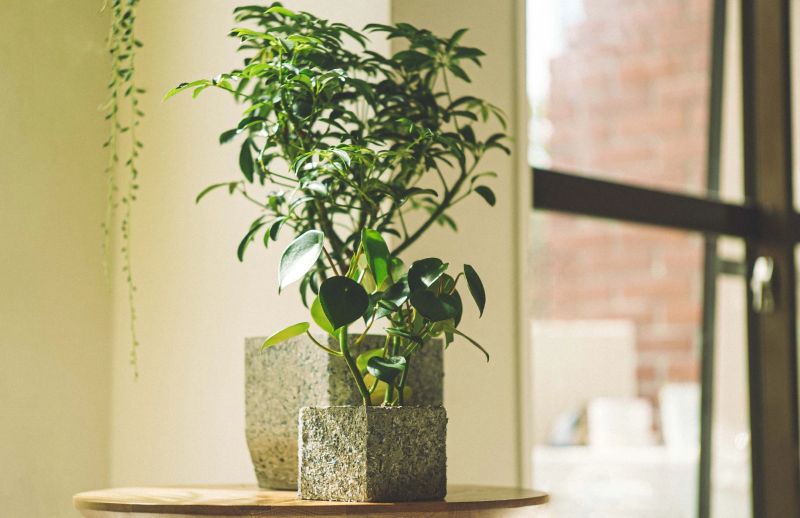
Beyond structural integrity, the designers also explored the visual and aesthetic possibilities of using waste materials. The natural textures and unique colours created by the aggregates add a design element to the product. A denim-reinforced flowerpot prototype was also produced, clearly demonstrating how this circular approach can be utilized beyond standard flat cement boards.
Future Scalability and Resistance Testing
The project is continuously evolving, with the next steps heavily focused on making the material even more reliable and practical for real-world construction. The research team plans to carry out advanced testing, which will include rigorous assessments of fire and water resistance. Additionally, the team aims to scale the manufacturing process from small prototypes up to full-size construction boards, while simultaneously refining the product’s life cycle assessment (LCA).
As future production grows, securing a consistent, high-quality supply of suitable waste materials will become a critical factor. The designers are also exploring whether these sustainable products can themselves be recycled after their useful life ends, truly completing the circular economy loop.
FAQ: What You Need to Know
What is Circular Design Cement?
It is a sustainable construction project featured in the 2026 James Dyson Award that utilizes everyday waste and industrial by-products as aggregates in cement-based materials, aiming to lower the industry’s carbon footprint.
What waste materials are used in its production?
The team tested 17 materials, including hair, wood chips, and ocean plastics. Ultimately, glass, ceramics, eggshells, oyster shells, and iron oxide were selected for final validation due to their optimal performance.
How strong is this alternative building material?
Through press dewatering and the use of Type B blast furnace slag cement, the product can achieve bending strengths of up to 16.1 N/mm², which exceeds the strength of many conventional thin cement boards.
Source:
More details about the project can be found on the official award page: James Dyson Award (2026)


