


If you like our site, mark us as a preferred source on Google — so you’ll see our articles more often in search!
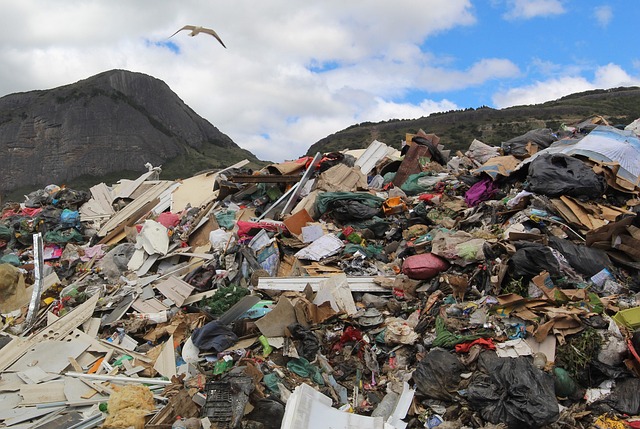
★Mark us as a preferred sourceBy mid-November, the Croatia waste crisis had reached a point where, according to a Croatian environmental NGO, waste collection could falter or stop in dozens of municipalities within days. In its statement of 12 November, Udruga Ekologija grada (the Urban Ecology Association) warns that more and more landfills are restricting or suspending the intake of waste from other municipalities, after the scandal over illegal dumping near Gospić badly shook public trust in the system. The association says the problem is not collection: the waste would be picked up, but nobody wants to accept it.
In short: The Croatia waste crisis boils down to this: after the Gospić affair, several regional landfills – including Karepovac in Split and Diklo in Zadar – have restricted or stopped accepting waste from other municipalities. Udruga Ekologija grada warns that regular waste collection could be disrupted in eleven counties and is calling for a binding government decision, public data on free landfill capacity and enforcement of the contractual obligations of landfills rehabilitated with public money.
How did the Croatia waste crisis start?
The roots of the current situation lie in the illegal dumping uncovered near the town of Gospić in the Lika region. Authorities found 34,000–37,000 tonnes of waste there, part of it hazardous, a large share of which arrived mainly from Italy in 2023 and 2024. It is suspected to have been declared as material destined for recycling, then partly buried and partly piled up in the open. According to environmental groups, it includes medical and other industrial waste threatening soil, air and water in a largely untouched region best known for the Plitvice Lakes.
The case grew into a national political scandal. On 5 September, tens of thousands of people marched in Zagreb demanding immediate remediation and accountability – one of the largest demonstrations in Croatia in recent years – and in parliament the opposition sought to hold the prime minister to account. Part of the waste removed from Gospić is being incinerated at the Holcim and Nexe cement plants, which has triggered further local protests, including in the Labin area of Istria.
The crisis of confidence deepened in October, when environmental inspectors of Croatia’s State Inspectorate found irregularities at the Diklo landfill in Zadar: untreated baled waste from the Varaždin area had been accepted there in breach of the rules, and misdemeanour proceedings were launched against the operator.
On top of this comes a long-standing structural gap: Croatia has no facility capable of landfilling or incinerating hazardous waste, so its most dangerous waste has to be shipped abroad at high cost.

Which landfills have closed their gates?
According to the association’s overview, intake restrictions are no longer a series of isolated local decisions but a nationwide phenomenon:
- Karepovac in Split has restricted the intake of waste from other municipalities;
- Lovornik in Ploče and Doline in Bjelovar are refusing additional outside waste;
- Diklo in Zadar is now completely closed to non-local users;
- Sodol in Ogulin temporarily suspended the intake of waste from other towns and municipalities;
- Sinj and Osijek-Baranja County have also taken a restrictive stance;
- Karlovac must keep accepting waste at the Ilovac landfill because of its contractual obligations;
- the Biljane Donje waste management centre allows temporary intake under certain conditions.
The Split case shows how the process unfolds. In late summer, Split announced that, with the landfill nearly full, it would stop accepting mixed municipal waste from neighbouring municipalities and terminate the contracts for using the site. In early September, lines of trucks queued in front of Karepovac; the ban was eventually withdrawn, but according to the association intake has remained restricted ever since.
The worst affected are the Adriatic coastal communities of Makarska, Brela, Baška Voda, Tučepi and Podgora – the Makarska Riviera, a favourite with Central European holidaymakers – as well as Omiš, Kaštela, Dugi Rat, Zadvarje and Šestanovac. They have had to find replacement landfills, strike temporary deals or truck their waste to distant counties. Makarska has been hauling its waste across the country for ten years since its own landfill closed, so transport costs there are not a new problem. Varaždin, Samobor, Jastrebarsko, Josipdol and Plaški faced similar difficulties, while Otočac has been taking its waste to the Babina Gora waste management centre since the Podum landfill closed.
Panic instead of a system
According to the association, the scandals have been followed by “hysteria” in Croatian waste management: local authorities are shutting their gates to waste from elsewhere, every waste truck is seen as a threat and every licensed company as a suspect.
At the heart of its argument is a simple fact: the trucks carry everyone’s waste. The association points out that every Croatian resident produces almost 500 kilograms of municipal waste a year – more than a kilogram a day. This is not waste smuggled in by someone else but the everyday residue of households, shops and workplaces. Refusing it does not solve the problem; it only pushes it onto the neighbours.
The association acknowledges that the reaction is understandable, since public trust has been badly damaged. The trouble is that all this is happening in a system that was weak to begin with. For years Croatia has lacked enough waste management centres and sorting plants, and landfill space keeps shrinking. Add panic to such a fragile system and the result can be a complete standstill.
One of the sharpest points of the statement concerns funding. Landfills rehabilitated and expanded with money from the state and the Croatian Environmental Protection and Energy Efficiency Fund did not receive that support for themselves alone. In exchange for co-financing, they committed to accepting waste from other towns and municipalities, in line with the government decision on the order of landfill closures and the national waste management plan. The association cites Karlovac, which took on the obligation to accept waste from other local authorities in a 2019 contract amendment.
The association calls it unacceptable that some of these landfills are now refusing outside waste. In its view, contractual obligations are not a matter of local goodwill but an obligation towards every citizen whose taxes paid for the investments.
What could happen in the coming weeks?
Without an urgent solution, the association warns, collection could be interrupted in the coming days in dozens of towns and municipalities across eleven counties: from the Zagreb area and Hrvatsko Zagorje through Karlovac, Bjelovar-Bilogora, Varaždin and Međimurje counties to Slavonia, Podravina, Syrmia and Zadar County. Thousands of households, schools, kindergartens, shops and businesses produce waste every day and have nowhere else to take it.
According to the association, the crisis is no longer a question for the future. New waste management centres are years behind schedule, so waste is trucked hundreds of kilometres, while islands and smaller communities warn that they have nowhere left to take it. Some treatment plants are closing or stockpiling unprocessed waste.
The problem goes beyond municipal waste. Public service providers and licensed companies may also run out of places to dispose of and treat industrial waste, while hazardous waste, according to the association, currently cannot be properly managed in Croatia at all. The organisation says the consequences are already being felt: price rises, less frequent collection and announcements of service interruptions. In November, Split’s city council voted for a 212 percent increase in household waste collection charges.
If service providers are left without disposal capacity, the waste will not disappear. The association warns that it could end up in streets, forests and riverbanks, or in overfilled warehouses where the fire risk grows – and where there is no legal solution, illegal dumps spring up.
The association’s four urgent demands
Udruga Ekologija grada stresses that strict control of waste flows is necessary, and that it has been calling for it for years. But control and panic are not the same: control means tracking every tonne and punishing offenders, panic means closing every gate. The association also points out that in 2023 Croatia’s Constitutional Court ruled that the ministry is obliged to ensure proper treatment of waste redirected to other landfills. In its view, this responsibility cannot be shifted onto municipalities, service providers and citizens. It therefore asks the ministry and the fund for the following:
- A binding decision on where municipal waste from municipalities left without a landfill will be accepted.
- An emergency plan for managing non-hazardous industrial and hazardous waste.
- A review of the contractual obligations of all co-financed landfills and, where they refuse waste in breach of contract, contractual measures including the recovery of funds.
- Public data on which landfills have free capacity, how much, and who is refusing to accept waste.
“It is time for decisions, not politics,” said Josip Pavlović, president of the association. The organisation argues that waste is neither left nor right, neither urban nor national: we all produce it, and every week spent on parties, ministries, counties and cities blaming each other brings Croatia a week closer to waste in the streets.
An expert view: why landfill capacity is not a local issue
The Croatian situation makes several links tangible that we have covered in recent analyses.
Cheap landfilling sends a weak signal. According to the RDF Industry Group’s 38-country report, Croatia’s landfill tax is EUR 35 per tonne, in the lower part of the European range, and the country is among those where landfilling remains significant despite the tax. In the 2030 carbon-price stress test, the gap between landfilling and incineration in Croatia would shrink to roughly zero while landfilling remains legally available – as we explained in detail in our European comparison of landfill taxes. Where the landfill is practically the only leg the system stands on, every closed landfill gate directly halts collection.
Negative prices can breed illegal flows. In our article on the economics of the waste trade, we cited the finding that a recycling-oriented waste market can degenerate into illegal disposal flows when the “price” of waste becomes so negative that dumping is cheaper than proper treatment (cross-border waste shipments and recycling). The Gospić case, where imports reportedly declared as recyclable ended up buried, is a textbook example.
Lost capacity multiplies distances. According to the University of Pannonia’s network model of Hungarian waste management, if every municipality were forced to use its second-nearest facility, average and total transport routes would grow roughly 1.7-fold; the authors therefore recommend regional reserve capacity to cope with outages (municipal solid waste management as a network). Croatia is now showing live what happens without a reserve: waste from Dalmatian towns travels hundreds of kilometres, and the cost ends up in household bills.
EU pressure is nothing new. In March 2025, the Court of Justice of the European Union imposed financial penalties on Croatia over the improper management of waste deposited at the Biljane Donje landfill, because in six years the country had not fully complied with a 2019 judgment. The current crisis therefore hits a system that has been improving only slowly.
Lessons for Hungary and the wider region
The Croatian situation cannot be mapped one-to-one onto Hungary, but the structure of the risks is familiar. According to the latest available Eurostat figure, Hungary’s landfill rate excluding mineral waste was 35 percent, well above the EU level, and the Hungarian landfill levy is HUF 6,000 per tonne (waste generation in the EU in 2024). Where most residual waste goes to landfill, landfill capacity is critical infrastructure for the public service.
Three lessons stand out. First, a public, up-to-date register of free capacity is not an administrative detail but the foundation of crisis management. Second, the intake obligations of publicly funded facilities must be set out in advance, clearly and enforceably. Third, after an illegal dumping scandal, stricter control is the right answer – closing the gates merely shifts the problem and ultimately hurts the very residents it is meant to protect.
Frequently asked questions about the Croatia waste crisis
What is causing the Croatia waste crisis?
The Croatia waste crisis is caused by landfills closing their gates one after another. After the scandal over illegal dumping near Gospić, several regional landfills restricted or stopped accepting waste from other municipalities. According to Udruga Ekologija grada, the crisis of confidence hit an already weak system that has lacked enough waste management centres and sorting plants for years.
Which Croatian landfills have restricted waste intake?
According to the association, Karepovac in Split has restricted intake, Lovornik in Ploče and Doline in Bjelovar refuse outside waste, Diklo in Zadar is fully closed to non-local users, and Sodol in Ogulin temporarily suspended intake. Sinj and Osijek-Baranja County are also refusing, while Karlovac must keep accepting waste at Ilovac under its contract.
How many counties could be affected by the collection breakdown in Croatia?
According to the association, dozens of towns and municipalities in eleven counties could be affected. The area stretches from the Zagreb region and Hrvatsko Zagorje through Karlovac, Bjelovar-Bilogora, Varaždin and Međimurje counties to Slavonia, Podravina, Syrmia and Zadar County. Thousands of households, schools, kindergartens, shops and businesses could be left with nowhere to take their waste.
What happened at the illegal dump near Gospić?
Authorities found 34,000–37,000 tonnes of waste near Gospić, part of it hazardous, much of which arrived mainly from Italy in 2023 and 2024. It is suspected to have been declared as material for recycling and then partly buried. In September, the case led to a protest of tens of thousands in Zagreb, and part of the waste is being incinerated at cement plants.
What does Udruga Ekologija grada demand?
It demands four urgent steps from the ministry and the Environmental Protection and Energy Efficiency Fund: a binding decision on where waste from municipalities left without a landfill is accepted, an emergency plan for industrial and hazardous waste, a review of co-financed landfills’ contractual obligations including recovery of funds, and public disclosure of free landfill capacity.
Why does the Croatian situation matter for Hungary?
Because the Hungarian system also relies heavily on landfilling. According to the latest available Eurostat figure, Hungary’s landfill rate excluding mineral waste was 35 percent, well above the EU level. Where most residual waste goes to landfill, a register of free capacity, clearly defined intake obligations and regional reserve capacity are preconditions for a secure public service.
🔗 Official sources and references: 👉
- Udruga Ekologija grada: Priopćenje za javnost o nacionalnom zastoju odlaganja otpada (official press release, November 2026)
- Udruga Ekologija grada: Hrvatskoj prijeti slom odvoza otpada (Facebook post, November 2026)
- HRT: Odvoz otpada zbog odbijanja prihvata mogao bi biti prekinut (12 November 2026)
- Glas Slavonije: Otpad bi se mogao gomilati na ulicama: Sve više odlagališta odbija prihvat (12 November 2026)
- Index.hr: Splitsko odlagalište otpada Karepovac uskoro prestaje primati otpad iz drugih gradova (31 July 2026)
- Morski.hr: Skandal na zadarskom smetlištu: Na Diklo ilegalno dovožen balirani otpad iz Varaždina (4 October 2026)
- Balkan Green Energy News: Illegally dumped waste from Gospić to be incinerated at Holcim, Nexe cement plants (14 September 2026)
- Lider: Zašto Hrvatska nema odlagalište ni spalionicu za opasni otpad
- Court of Justice of the European Union: judgment in Case C-315/23 (Commission v Croatia, Biljane Donje landfill II), press release No 30/25, 6 March 2025
Consistent structure, quick answers: every article is built so that both readers and AI search tools can find the key points easily. Our content is produced with the help of AI tools and reviewed by our editor.


