


If you like our site, mark us as a preferred source on Google — so you’ll see our articles more often in search!
★Mark us as a preferred sourceThe efficiency of selective waste collection is a key issue for a sustainable future and achieving global climate goals. The latest research from the University of Hohenheim in Stuttgart has yielded a surprising result—one that serves as a guiding principle for communication strategies: instead of simply drilling rules into people, explaining the specific reasons and environmental benefits behind selective waste collection can drastically reduce household sorting errors by approximately 70 percent.
The Global Waste Problem and Domestic Challenges
According to data from the United Nations Environment Programme (UNEP), more than two billion tons of waste are generated globally every year, and this number is expected to grow further. In light of this, effective recycling is not just an option, but a global necessity.
In Germany—as in many other countries with advanced infrastructure—the quality of residential selective waste collection still falls short of the ideal. According to Eva Pawelczyk, a doctoral candidate at the Department of Consumer Behavior in the Bioeconomy at the University of Hohenheim and the first author of the study, recycling rates in Germany could be significantly higher if households sorted their trash more precisely.
The Experiment: Education Instead of Regulation
The study, published in the scientific journal Journal of Environmental Management in mid-March 2026, tested a novel psychological and communication approach. The research team started from the premise that human motivation is strongest when an individual clearly understands the purpose and meaning of their actions.
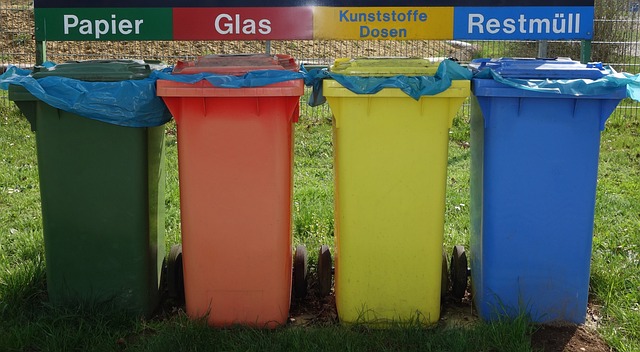
To prove this, the researchers conducted a field experiment in Stuttgart involving a total of 102 households. The waste management habits of the participants were tracked and analyzed over two periods, each lasting seven days. Participants collected their waste in three categories:
-
Residual waste (Restmüll)
-
Organic waste (Bioabfall)
-
Plastic (Plastik)
After each garbage collection, the researchers systematically examined the collected waste under laboratory conditions and registered all incorrectly discarded items.
Staggering Numbers: Thousands of Errors in a Single Week
The results from the first week of the study highlighted the severity of the problem: researchers documented a total of 3,791 sorting errors across the 102 households in just one week. Most “misthrows” (for example, a banana peel in the yellow bag meant for plastics) occurred in the residual waste category.
“This shows that even in regions where well-functioning recycling structures are available, many households have problems with correct waste sorting,” Pawelczyk explained.
The Power of the Informational Flyer: A 70 Percent Improvement
After the first controlled week, about half of the households were randomly selected to receive a special informational flyer. The uniqueness of this brochure lay in the fact that it deliberately omitted classic “what goes where” type instructions. Instead, it used simple, accessible language to explain why sorting is important. For instance, it pointed out that recycling plastics concretely saves energy and reduces CO2 emissions, and that properly collected organic waste turns into valuable compost that nourishes the soil and helps mitigate greenhouse gases.
The second-week results showed a dramatic difference:
-
For households that did not receive the flyer, the number of sorting errors barely changed.
-
For households that received the informational flyer, the number of errors dropped radically: the average number of errors per household decreased from 45.5 to 13.8.
The Lesson: Motivation Stemming from Understanding
The numbers clearly demonstrate the success of the method: the error rate plummeted by approximately 70 percent. Jun.-Prof. Dr. Ramona Weinrich, head of the department, emphasized that the results prove that targeted education about the consequences of poor waste sorting and the socio-environmental benefits of recycling is one of the most effective tools available. Furthermore, this simple and cost-effective informational strategy results in a massive and immediately measurable difference in residential waste management.
References and Sources:
-
Official Press Release by the University of Hohenheim (April 6, 2026) (DOI of the referenced study: 10.1016/j.jenvman.2026.129111)


