
If you like our site, mark us as a preferred source on Google — so you’ll see our articles more often in search!
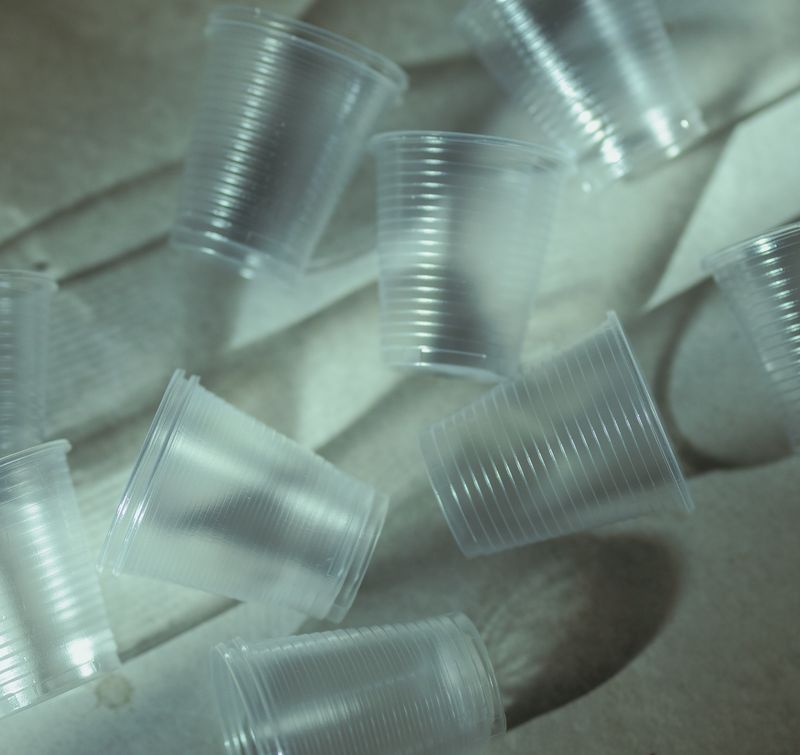
★Mark us as a preferred sourceThe European Union has been consistently pushing back single-use plastics for years, yet reality remains stubborn: at festivals, in stadiums, at airports and in fast-food restaurants, single-use cups and food packaging often still cannot be replaced. The question is therefore not only how to use fewer disposable products, but also what they should be made of where they are unavoidable.
Where Reusable Systems Are Not (Yet) the Answer
At outdoor events, transport hubs, cafés and quick-service restaurants, hygiene requirements, logistical constraints, the lack of washing infrastructure, and water and energy consumption mean that reusable systems cannot always be applied – or cannot be applied economically. In these situations, bioplastics and biopolymers can offer an important transitional or complementary solution: a significant share of their feedstock comes from renewable sources, reducing dependence on fossil raw materials, and many bioplastic systems are also free of the additives at the centre of the health concerns associated with conventional plastics.
This is no side issue. Research in recent years has shown that microplastics are already detectable in drinking water, in food, in human blood, in lung tissue and, according to some studies, even in the placenta. Biopolymers made from renewable feedstock that biodegrade or compost under appropriate conditions also often show a lower fossil carbon footprint across their life cycle, and packaging contaminated with food waste – which is practically impossible to recycle through conventional channels – could be processed together with organic waste.
Regulation Makes No Distinction – Though It Should
The EU’s Single-Use Plastics Directive (SUPD) focuses on the single-use nature of a product, so most bioplastic cups – and paper cups with bioplastic coating – fall into the same legal category as conventional plastic. From a practical perspective, however, a distinction may well be justified: where a single-use solution cannot be replaced for technical, hygiene or economic reasons, bio-based, compostable materials offer a significantly more favourable alternative. Achieving sustainability goals, then, need not rest solely on outright bans.
The Italian Example: Tax Advantages for Compostable Plastics
Uniquely in the EU, Italy distinguished between fossil-based and bio-based, compostable plastics already when transposing the SUPD into national law – prompting the European Commission to begin preparing infringement proceedings in 2024. Behind the decision lies a strong economic and infrastructural foundation:
- Italy is Europe’s largest bioplastics industry hub (Novamont, Assobioplastiche, Biorepack), with thousands of jobs and significant exports,
- separate biowaste collection and industrial composting have operated in the country for years, so compostable packaging enters the same stream as food scraps,
- the MACSI plastic tax (€0.45/kg) explicitly exempts compostable and recycled plastics, giving them a tax advantage over conventional plastic.
The results are remarkable: Italy’s bioplastics and sustainable packaging market is estimated at around USD 550 million, and in 2024 the Biorepack scheme reported a 57.8% recovery rate for compostable packaging.
What Does This Mean for Hungary?
A large share of Hungarian market players still view the application of the SUPD primarily as a cost issue, while the true nature of the problem – the risk of additives and micro- and nanoplastics entering food and the human body – remains little known. According to András Juhász, founder and managing director of Bibo, a company that has been researching and developing bioplastics for 13 years, the price gap is also disappearing fast:
“Over the past four years we have achieved a price reduction of around 20% on our biodegradable catering products. The price of our coffee cups with bioplastic coating is now practically identical to that of conventional plastic-coated cups – technological progress and economies of scale can eliminate the competitive disadvantage that alternative solutions once faced.”
“With tax incentives, investment subsidies and targeted measures similar to the Italian example, this process could be significantly accelerated in Hungary as well. We are convinced that, given the right regulatory and economic environment, a wide range of bioplastic products could become fully competitive with conventional plastics within one to two years.”
A complete solution also requires developing the waste management system. Hungary began introducing separate collection of organic food waste in 2024, but rolling the system out nationwide still faces numerous challenges. Full implementation of organic waste collection could create a system in which compostable packaging and food waste are treated together and returned to natural cycles as valuable organic matter.
No Single Universal Solution
The future will most likely not be about a single silver bullet. Reusable systems, deposit-return schemes, biopolymers, compostable packaging and local waste management infrastructure applied together can answer the challenge of meeting hygiene, economic, consumer and environmental requirements at the same time. In this system, bioplastics are not necessarily the end goal – but in the transition away from fossil-based plastics, they represent a stepping stone that is hard to do without today.
Source: BIBO