If you like our site, mark us as a preferred source on Google — so you’ll see our articles more often in search!
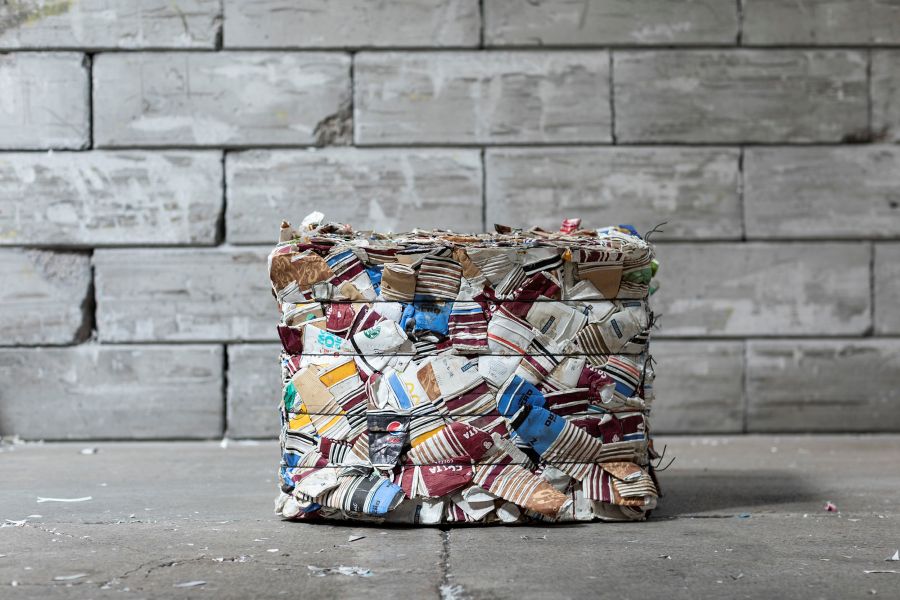
★Mark us as a preferred sourceThe James Cropper papermill has unveiled its latest sustainability project, transforming discarded single-use coffee cups into premium-quality paper for a new children’s book. Utilizing the proprietary CupCycling™ process, the company successfully separates paper fibers from plastic linings, ensuring that each individual book copy repurposes the waste of exactly 15 coffee cups.
One of the most persistent elements of the global waste crisis is the single-use coffee cup. Due to their inner plastic (polyethylene) lining, traditional paper mills are typically unable to process these fibers, leading to billions of cups ending up in landfills. James Cropper has achieved a breakthrough with its CupCycling™ technology, recently demonstrated through the production of the children’s book “The Boy Who Grew a Tree.”
The CupCycling™ Process: Precision Fiber Recovery
Developed by James Cropper, this process is the world’s first industrial-scale technology specifically dedicated to recycling paper cups. The process focuses on molecular separation to ensure maximum resource recovery:
-
Separation Efficiency: The technology is capable of recovering 95% of the paper fibers from the cups while completely removing the remaining 5% consisting of the plastic lining.
-
Fiber Quality: The recovered fibers are of such high quality that they are suitable for premium papers, luxury packaging, and, in this case, high-grade book pages.
-
Plastic By-product: The extracted polyethylene layer is not discarded; it is repurposed for other industrial applications, such as the manufacturing of cable plastic.
Quantitative Metrics: 15 Cups Per Book
The project “The Boy Who Grew a Tree” serves as a precise case study for turning waste into value. Based on calculations performed by James Cropper in collaboration with the publisher Doubleday (an imprint of Penguin Random House), the following data defines the project:
-
Cup-to-Book Ratio: Every single copy of the storybook manufactured contains the recycled fiber from exactly 15 used coffee cups.
-
Total Impact: Since the opening of the CupCycling™ facility in 2013, the mill has already saved over 150 million coffee cups from being sent to landfills.
-
Infrastructure Capacity: The plant currently has the industrial capacity to process up to 500 million cups per year, provided that collection infrastructure meets manufacturing potential.
Sustainability and the Narrative Message
The theme of the book—focusing on nature and environmental protection—is in direct alignment with the physical medium itself. Experts at James Cropper emphasize that the fibers derived from coffee cups are remarkably strong and long, guaranteeing the durability of the book. This refutes the misconception that recycled paper is inherently lower in quality or more fragile than paper made from virgin fibers.
By moving from the luxury packaging market into the world of publishing, James Cropper has proven that consumer waste is not a final destination but the beginning of a high-value product. The launch of this book demonstrates that if 15 cups can be reborn as a storybook, systemic recycling can fundamentally redefine the future of the paper industry.
Summary and Strategic Vision
James Cropper continues to collaborate with retail chains to increase collection efficiency. The company maintains that recycling paper cups is a vital component of the UK’s goal to reduce its environmental footprint. This project highlights a scalable model for the circular economy: transforming the byproduct of our daily coffee consumption into a lasting cultural asset.
Official Sources:
-
James Cropper CupCycling™ Journal: CupCycling™ – Recycled Paper from Coffee Cups
-
Technical Background: James Cropper Official Sustainability Reports