If you like our site, mark us as a preferred source on Google — so you’ll see our articles more often in search!
★Mark us as a preferred sourceTanzania is leading the way in sustainable development: the recycling initiatives showcased under the “Hello Africa” umbrella are transforming trash into valuable resources. This project not only reduces environmental pollution but also provides a direct source of income for local communities, particularly women and youth. Through the “Taka Pesa” (Waste for Cash) model, Tanzanian households no longer view waste as a burden but as a financial opportunity.
DAR ES SALAAM – In Tanzania’s largest city and coastal regions, waste management was a critical issue for decades. However, data released in April 2026 shows that Tanzanian recycling firms and NGOs featured in the Hello Africa series—including The Recycler Limited and Africraft—have achieved a drastic turnaround. These projects aim to ensure that the thousands of tonnes of waste generated daily in Dar es Salaam do not pollute beaches or illegal dumpsites but are instead reintegrated into the economic cycle.
Taka Pesa: Monetizing Environmental Protection
The centerpiece of the reform is the “Taka Pesa” program, which in Swahili means “money from trash.” The initiative incentivizes the population to separate waste at the source.
-
Quantitative Income: Informal waste collectors, such as Justine Samuel, now earn between 20,000 and 25,000 Tanzanian shillings (approx. $7.70 – $9.70 USD) per day thanks to the project. This amount provides a decent livelihood for a family and enables children to attend school.
-
Immediate Payment: To build trust, plastic, glass, and paper brought to collection points are weighed on the spot, and the purchase price is paid immediately to the participants.
Technical Process: Stages of Transformation
The Hello Africa report details how collected materials are converted into industrial raw materials. The process follows a strict protocol:
-
Sorting and Cleaning: Labels are removed from plastic bottles, which then undergo thorough cleaning.
-
Shredding: The clean plastic is crushed into small flakes (shredding), making it suitable for export or as a raw material for local plastic product manufacturing.
-
Glass and Metal: Metal scrap is sold to partner companies for smelting, while glass is transformed into decorative items or construction materials.
Coco Beach: A Cleaned Coastline
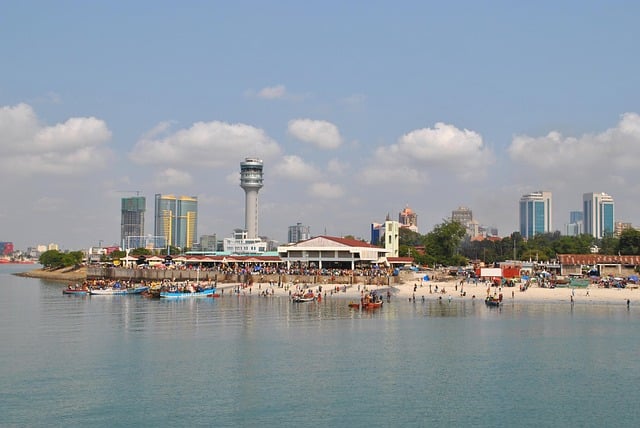
One of the most visible successes of the project is the cleanup of Dar es Salaam’s Coco Beach. Previously, this stretch of coast was littered with glass shards and other debris; today, the “Waste Changers” team monitors the area.
-
Collection Volume: A team of 10 young people patrols the 3-kilometer stretch twice a week, collecting up to 400 kg of waste per session.
-
Product Development: The Africraft workshop has developed over 400 different products from recycled materials, such as jewelry made from coffee capsules and bracelets woven from old fishing nets.
National Expansion and Future Vision
The models presented by Hello Africa are not stopping at the capital’s borders. The Recycler Limited plans to build a network across Tanzania over the next 5 years to make the “Taka Pesa” model available in rural districts. Similar initiatives have started in Zanzibar, Arusha, and along Lake Victoria, where the ECO-RECYCLING project, led by Patrick Kipesha, focuses on protecting the lake’s aquatic ecosystem.
The Tanzanian government, with support from the Vice President’s Office (VPO), views these private initiatives as strategic steps. The goal is to compost 60% of Dar es Salaam’s biodegradable waste and recycle plastics almost entirely, while simultaneously reducing greenhouse gas emissions.
Official Sources:
-
Xinhua (Hello Africa): Tanzanian recycling firm transforms waste into treasure
-
The Star (Hello Africa): How young waste changers turn trash into treasure at Tanzania’s Coco beach
-
IUCN Tanzania: Zanzibar Launches Community Recycling Action