If you like our site, mark us as a preferred source on Google — so you’ll see our articles more often in search!
★Mark us as a preferred sourceIn short: The Association of Austrian Waste Disposal Companies (VOEB) warns that a hidden lithium battery in everyday consumer goods poses a severe fire risk to recycling and waste facilities. Millions of these devices incorrectly end up in residual waste each year, drastically increasing the danger of large-scale fires. As of October 1, 2026, a new extended take-back obligation for small electronic devices has come into effect in Austria to help mitigate this growing problem.
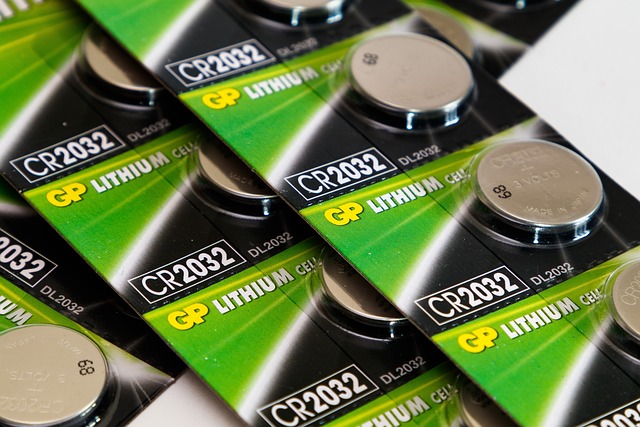
An increasing number of small appliances and consumer products—ranging from talking stuffed animals and flashing greeting cards to electric shavers—contain permanently installed lithium battery and accumulator components. Often, it is not even recognizable at first glance that a power source is hidden inside. Partially for this reason, around 17 million lithium batteries end up in the residual waste (Restmüll) in Austria every year. These power sources can trigger devastating fires even with the slightest damage—both within homes and in garbage collection vehicles, as well as in Austrian waste disposal and recycling plants. The Association of Austrian Waste Disposal Companies (VOEB) is calling for careful disposal practices and urgently demanding targeted political measures.
Today, anything that lights up, flashes, or makes sounds is almost always powered by a lithium cell or a lithium battery. Since it is often unclear which products hide these dangerous fire starters, they are frequently disposed of incorrectly. According to a 2026 study by the Montanuniversität Leoben titled “Battery Research on Market, Risk and Fire Statistics,” e-cigarettes, electric toothbrushes, children’s toys, and small electrical devices with integrated power sources are particularly often found in residual waste.
Furthermore, products that hardly anyone associates with batteries are also discarded improperly: “singing” lollipops, wireless headphones, mini-fans, or light-up children’s shoes. As the number of units placed on the market increases, so does the rate of improper disposal. Study author Thomas Nigl highlights: “Today, there are more than eight lithium batteries in every ton of residual waste. That is four times as much as ten years ago. With every single unit that ends up in the residual waste, the risk of fires in the waste management sector rises.”
The consequences are undeniably severe: in 2025 alone, there were 36 documented major fires nationwide, causing enormous physical and financial damage to waste management facilities.
How to Prevent Fires and Ensure Proper Separation
It is clear that every individual can contribute to preventing fires. Products containing lithium power sources must be disposed of in designated collection boxes at retail locations or at official waste collection centers. They belong under no circumstances in residual waste, paper bins, or the yellow sack (Gelber Sack).
Gabriele Jüly, President of the VOEB, states: “Incorrectly disposed batteries present our companies with great challenges every day. We therefore want to raise awareness of this risk, because it can be significantly reduced through correct separation and disposal. Measures to increase the collection rate are therefore urgently needed.” The VOEB expects a primary improvement of the situation from the upcoming ban on the sale of disposable e-cigarettes in Austria, a long-standing demand of the association that will legally take effect at the beginning of 2027.
Political Measures and European solutions for battery fires
Around 130 experts from the waste management sector, the insurance industry, the fire brigade, and the scientific community discussed how to best prevent fires in waste management at the 2026 VOEB Fire Protection Forum. There was a strong consensus that further, concrete political measures are required. The waste industry has already made massive investments in fire protection, with state-of-the-art innovations—ranging from AI-supported detection sensors to firefighting robots—deployed extensively in facilities.
However, effective fire protection also requires adequate incentives for proper consumer collection. Participants positively noted that the urgent need for action on battery fires is recognized by all political parties, as shown by the recent debate on an EU-wide take-back system in the Austrian Parliament (Nationalrat).
Concrete progress has been made starting today, October 1, 2026. From now on, retailers in Austria with a sales area of at least 25 square meters must take back very small waste electrical and electronic equipment (WEEE)—such as e-cigarettes, electric toothbrushes, or smartphones, provided the retailer stocks them—free of charge, even without a new purchase. The VOEB expressly welcomes this practical measure. In addition, the association has been advocating for a national cashback system for years, where correct return is rewarded with a direct financial incentive.
To ensure that hidden energy sources do not turn into uncontrollable hazards, the organization recommends the following safety practices:
-
Look closely: Anything that lights up, flashes, makes noise, or requires charging may contain a hazardous battery component.
-
Never in the residual waste: Return old devices and batteries strictly to retail stores or official take-back points.
-
Tape the poles: Before handing them in, cover the electrical contacts of loose batteries with tape to actively prevent short circuits.
-
Store damaged units safely: Never continue to use or charge swollen or physically damaged power sources under any circumstances.
FAQ: Essential Knowledge About E-Waste Fires
What are the specific dangers of a lithium battery in residual waste?
When discarded in residual waste, a power source can easily ignite upon suffering mechanical damage, such as being crushed in a garbage truck’s compactor. In 2025 alone, there were 36 documented major fires in Austrian waste management facilities directly caused by these hidden hazards.
How can I easily identify hidden batteries in consumer products?
A reliable general rule of thumb applies: anything that lights up, flashes, makes noise, or can be charged (like e-cigarettes, musical greeting cards, or electric toothbrushes) almost certainly contains a power source that strictly requires separate e-waste disposal.
Where can I legally dispose of small e-waste in Austria from October 2026?
Starting exactly on October 1, 2026, Austrian retailers possessing a sales area of 25 square meters or more are legally required to take back very small electrical devices entirely free of charge, even if the customer decides not to purchase a new product.
Source: