




If you like our site, mark us as a preferred source on Google — so you’ll see our articles more often in search!
★Mark us as a preferred sourceTetra Pak Southern Africa’s latest sustainability report indicates that the company is firmly on track to meet its 2030 environmental commitments. As the only manufacturer in the region actively managing the post-consumer recycling of liquid board packaging (LBP), the firm achieved a 31% recycling rate in 2025, driven by a cumulative investment series totaling nearly R100 million.
In South Africa, the recycling of liquid board packaging is a vital component of building a circular economy. Tetra Pak Southern Africa’s strategy focuses not only on technological advancements but also on strengthening the entire value chain. According to Wael Khoury, Managing Director of Tetra Pak Southern Africa, the results from 2025 prove that consistent capital investment and strategic partnerships offer tangible benefits for both the environment and the local economy.
R100 Million Investment in Circularity
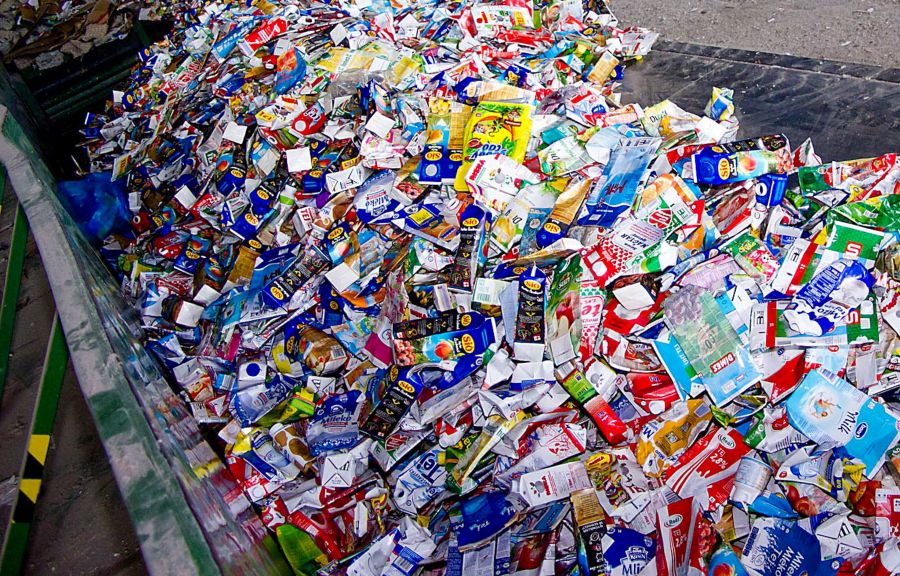
Over the past few years, the company has invested nearly R100 million (ZAR) into developing South Africa’s recycling infrastructure. Within this framework, R17 million was invested in 2025 alone to expand capacities and increase technological efficiency. these funds directly supported processing plants and collection networks that transform used milk and juice cartons into valuable raw materials.
The goal of these investments is to reach a national recycling rate of 40% by 2030. While the current level of 31% is already a significant step forward, experts suggest that continued developments could potentially see the company exceed its original targets.
Strategic Partnerships: The Role of Petco
Tetra Pak’s achievements did not occur in isolation. The company works closely with Petco, a Producer Responsibility Organisation (PRO). This collaboration ensures that Tetra Pak’s activities align with the legislative targets set by the South African Department of Forestry, Fisheries, and the Environment (DFFE).
Under this partnership, the following quantitative metrics were achieved by 2025:
-
33% Collection Rate: One-third of the liquid board packaging placed on the market was successfully recovered from the waste stream.
-
31% Recycling Rate: Almost all of the collected material was successfully reintegrated into the industrial cycle.
-
11 Young Graduates: The firm deployed 11 specialists across South Africa’s nine provinces to manage buy-back centers, landfills, and governmental relations.
School Education and Social Impact
Beyond technology, awareness-raising has played a prominent role. Tetra Pak launched a large-scale educational program involving more than 320 schools across Gauteng, KwaZulu-Natal, the Eastern Cape, and the Western Cape. The initiative aimed to reach 300,000 learners, teaching them the importance of waste separation and the specific recycling process for beverage cartons.
Today, recycled fibers from these cartons are used to manufacture various paper products, while the polymer and aluminum layers (polyAl) are transformed by local partners into industrial items such as crates and roof tiles.
Summary: On the Path to Net Zero
Tetra Pak Southern Africa is focused on reducing its entire ecological footprint, not just waste management. Globally, the company has reduced greenhouse gas emissions by 25% in its value chain since 2019 and uses 94% renewable energy in its own operations. The results in South Africa demonstrate that local investments are critical to achieving global net-zero goals.
Official Sources and References:
-
Media Update – Original Press Release (Feb 17, 2026): https://www.mediaupdate.co.za/publicity/160745/tetra-pak-southern-africa-reports-strong-progress-on-2030-recycling-goals
-
Tetra Pak South Africa Newsroom: https://www.tetrapak.com/en-za/about-tetra-pak/news-and-events/newsroom
-
Petco South Africa (Producer Responsibility Organisation): https://petco.co.za/
-
Engineering News Report on 2030 Goals: https://www.engineeringnews.co.za/article/tetra-pak-on-track-to-achieve-a-40-recycling-rate-for-its-products-by-2030-2024-11-08
