


If you like our site, mark us as a preferred source on Google — so you’ll see our articles more often in search!
★Mark us as a preferred sourceThe armed conflict initiated by the United States and Israel against Iran has triggered a severe fossil fuel crisis and an unprecedented price shock, dealing a devastating blow to the global textile industry. Skyrocketing raw material costs, compounded by disrupted Middle Eastern supply lines due to the strategic closure of the Strait of Hormuz, have essentially placed Indian and Bangladeshi polyester suppliers and garment manufacturers in a financial vice. This escalating chain of events directly threatens the profitability and pricing structures of global fast fashion giants and retail behemoths such as Zara, H&M, Walmart, and IKEA. Although the most prominent market players are temporarily shielded in the short term thanks to long-term forward buying strategies, industry experts warn that persistently high operational costs could soon lead to a drastic decline in consumer demand across the entire apparel sector.
Total Oil Dependence and Drastic Raw Material Price Hikes
The technological framework of the modern fashion industry, particularly the fast fashion segment built on low-cost mass production, is practically inconceivable without polyester. This synthetic fiber, manufactured entirely from petroleum derivatives, currently dominates the global textile landscape. It accounts for approximately 59 percent of the world’s total fiber production, serving as the fundamental building block for almost every garment type, ranging from everyday streetwear to high-performance athletic wear. Because polyester manufacturing is inextricably linked to refined petroleum products, the disruption of Middle Eastern supply chains has rippled through the sector immediately and without mitigation.
The severity of the situation is clearly illustrated by Filatex, one of India’s largest polyester yarn manufacturers. Speaking to the Reuters news agency, Managing Director Madhu Sudhan Bhageria revealed that the procurement prices for essential petrochemical raw materials required for yarn production—specifically purified terephthalic acid (PTA) and monoethylene glycol (MEG)—have surged by nearly 30 percent since the outbreak of the conflict. The executive attributes this drastic cost inflation partly to the severe disruptions in Middle Eastern shipping routes and partly to aggressive price hikes implemented by Chinese suppliers.
Collapsing Production and Migrating Workforce in India
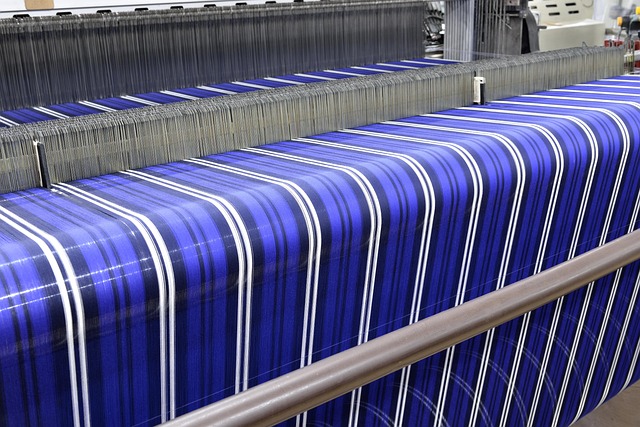
The soaring procurement costs and the deepening energy crisis have physically curtailed global production. In Surat, located in the Indian state of Gujarat and widely recognized as one of the most critical hubs of the Asian textile industry, factories have been forced to drastically slash their operational capacities. Kaushik Dudhat, owner of Radheshyam Textile, reported that his factory’s daily output has plummeted from a robust 10,000 meters to a mere 4,000 meters, representing a staggering 60 percent decline. Kailash Hakim, president of the Federation of Surat Textile Traders Association, confirmed the severity of the industrial slowdown: to maintain any semblance of profitability, a significant portion of local fabric dyeing plants is forced to completely shut down their production lines for at least two days every week.
Avichal Arya is the CEO of Bindal Silk Mills, a major enterprise that supplies dyed and printed polyester fabrics to global heavyweights including H&M, the Inditex group (owner of Zara), Target, Walmart, and IKEA. Arya stated that the energy crisis has driven up the prices of industrial chemicals and commercial dyes to a “drastic” degree. These manufacturing difficulties are further exacerbated by a widespread shortage of cooking gas directly linked to the war. Due to the rapid spike in the overall cost of living, a massive number of migrant textile workers are abandoning the city of Surat altogether. Speaking plainly to Reuters, Arya summarized the grim reality: “These days, we are unable to really successfully meet the demands of global orders.”
Loss-Making Contracts and Retroactive Price Hikes in Bangladesh
The crisis has simultaneously struck Bangladesh, another global powerhouse in garment manufacturing. Driven by the global supply shocks caused by the war, Bangladeshi apparel manufacturers have been forced to a critical crossroads. Suppliers who had previously accepted global orders at lower, fixed prices prior to the conflict are now staring down severe financial losses and completely unsustainable profit margins. Consequently, they are being forced to demand retroactive price increases from their Western corporate partners. Indicative of this massive market realignment, Coats Bangladesh—a dominant player in the industry—was forced to implement an exceptionally high, immediate price increase of 15.5 percent, effective April 15.
Mohammad Hatem, president of the Bangladesh Knitwear Manufacturers and Exporters Association (BKMEA), highlighted a concerning emerging trend: driven by intensifying cost uncertainties and unpredictable shipping logistics, international buyers are becoming increasingly cautious and hesitant when determining long-term order volumes.
The Western Retail Shield: How Long Can Store Prices Hold?
Ultimately, this immense industrial pressure will inevitably manifest in the consumer pricing of fast fashion brands. However, the process is temporarily delayed by the operational logic of global supply chains. The largest multinational retailers are shielded from the immediate price shocks of the raw materials market by their forward buying contracts, which can secure inventory up to six months in advance.
George Weston, CEO of Associated British Foods (the parent company of the prominent retail chain Primark), clarified the situation in an official statement. According to Weston, Primark’s spring and summer inventory, as well as a significant portion of its autumn and winter collections, remain insulated from current crisis pricing. However, Weston issued a stark warning: “If we were buying energy-related raw materials today, we would indeed be experiencing significant inflation.”
Industry analysts agree that this retail shield is strictly temporary. Bruna Angel, a senior analyst at the Wood Mackenzie research institute, pointed out that if the conditions plagued by high oil prices and severe bottlenecks persist for even a single month, fast fashion brands will be forced to pass these escalating costs onto the consumer. This impending price inflation will ultimately lead to “demand destruction,” as budget-conscious shoppers are forced to drastically scale back their apparel expenditures.
Turning to recycled materials cannot provide a short-term industry-wide solution to this predicament. Currently, recycled polyester accounts for merely 12 percent of global fiber production on the world market. This capacity is far too marginal to meaningfully cushion the global supply crisis stemming from the soaring costs of traditional petroleum-based raw materials and ongoing geopolitical conflicts.
Reference and Official Source:
-
This analysis relies exclusively on the official Reuters report dated April 24, 2026: Iran war hits Asia’s polyester suppliers, global fast fashion


