


If you like our site, mark us as a preferred source on Google — so you’ll see our articles more often in search!
★Mark us as a preferred sourceThe K3I-Cycling project uses Artificial Intelligence (AI) to bring a breakthrough in the sorting and processing of post-consumer plastics, such as waste from the yellow sack. The initiative aims to produce high-quality, reliable recyclates suitable for industrial applications through rigorous technological advancements.
Objectives of the K3I-Cycling project and the challenges of light packaging
The initiative aims for a quantitative and qualitative improvement in the mechanical recycling of plastic packaging waste. The project is funded by the German Federal Ministry of Education and Research (BMFTR) and involves 16 partners. Prominent among them is the Fraunhofer Institute for Structural Durability and System Reliability (Fraunhofer LBF) in Darmstadt, alongside Lobbe GmbH & Co. KG.
Mixed light packaging waste (LVP) represents a highly demanding raw material source. Its composition fluctuates heavily, while impurities and varying aging states significantly impact the final quality of the recovered recyclates.
Combining real materials analysis with machine learning in K3I-Cycling
Fraunhofer LBF leads the work package “Recycling and Recyclate Production.” The researchers are developing a comprehensive toolbox for the evaluation and post-stabilization of recyclates. The focus is on practical recyclate production at laboratory and pilot scales, the evaluation of material properties, and the development of specific additive packages. These include bio-based stabilizers that purposefully improve the properties of the recyclates.
Fraunhofer LBF successfully connects physical materials analysis with Machine Learning. Polyolefin recyclates are systematically classified based on their aging state and impurities, dividing them into specific quality clusters. This establishes reliable material quality levels that can easily be integrated into new industry standards and digital product passports.
The Artificial Neural Twin (ANT) technology
Reliable performance metrics are crucial for packaging manufacturers, recyclers, brand owners, and municipalities. To ensure that recyclates can be used safely in demanding applications—including food-contact packaging—the initiative has developed the “Artificial Neural Twin” (ANT). This digital technology maps the entire sorting and processing chain, from initial waste collection to the end-user of the recyclate. The ANT allows for the targeted optimization of specific parameters across the entire value chain, such as maximizing material purity, designing short logistics routes, or achieving lower costs.
Fire protection and the role of DangerSort
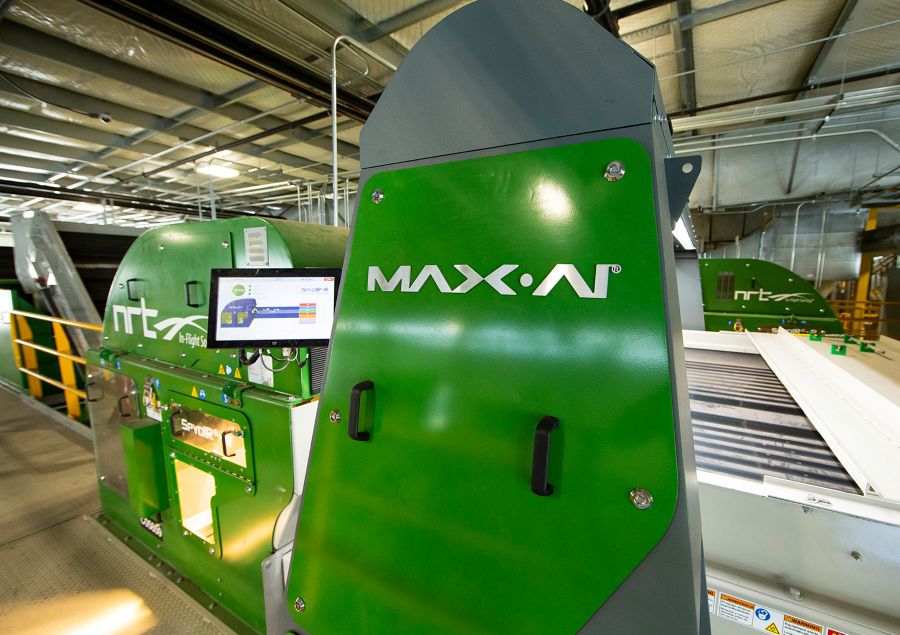
Artificial Intelligence is not only used to improve material quality but also to protect the physical sorting facilities themselves. The AI-driven DangerSort system can safely detect and automatically eject dangerous lithium batteries from the sorting lines before they cause fires. The DangerSort unit has already been installed in the LVP sorting plant operated by Lobbe in Iserlohn. This technology increases operational safety, preventing costly plant downtimes and disasters.
Future prospects and the European Circular Economy
Both the industry sector and municipalities benefit from the more reliable decision-making foundations and fail-safe systems provided by the project. The outcomes help meet mandatory recycling quotas economically, lower CO2 emissions measurably, and secure a continuous supply of secondary raw materials. By combining virtual development with real-world validation, the project fundamentally strengthens a resilient European circular economy.


FAQ
Who is involved in the project?
The initiative is a collaboration of 16 partners, led by the German Fraunhofer LBF Institute, and funded by the German Federal Ministry of Education and Research (BMFTR).
What is the purpose of the Artificial Neural Twin (ANT)?
The ANT is a digital system that maps the entire waste sorting and processing chain, allowing for targeted optimization of material purity, costs, and logistics.
How does DangerSort protect sorting facilities?
The DangerSort system uses artificial intelligence to identify and eject hidden lithium-ion batteries from the waste stream, effectively preventing fires in the plants.
References:
-
Original Source: Fraunhofer LBF Press Release
-
Official/State Source: KI-Anwendungshub Kunststoffverpackungen (BMBF Funding Hub)
The image is for illustrative purposes only!
Consistent structure, quick answers: every article is built so that both readers and AI search tools can find the key points easily. Our content is produced with the help of AI tools and reviewed by our editor.


