


If you like our site, mark us as a preferred source on Google — so you’ll see our articles more often in search!
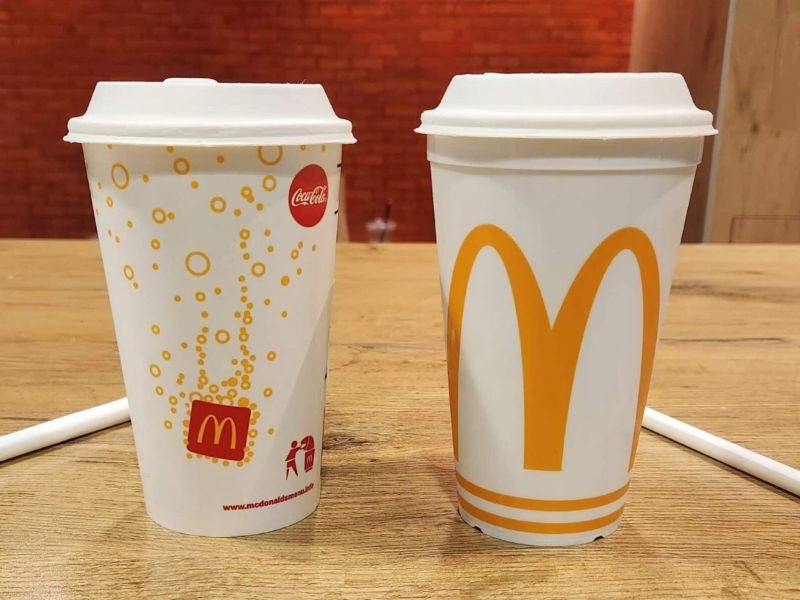
★Mark us as a preferred sourceA strict regulatory decision has been made in the Netherlands: the use of McDonald’s disposable cups must be stopped for customers dining inside the restaurants. Following a complaint filed by the environmental organization Fair Resource Foundation, the Human Environment and Transport Inspectorate (ILT) established that the fast-food chain has violated regulations for years and unfairly charged customers a surcharge for these items. If the company does not transition to reusable alternatives, it faces a multi-million euro penalty.
Details of the investigation and the multimillion-euro penalty
Over the past few months, inspectors from the Human Environment and Transport Inspectorate (ILT) investigated the enforcement request submitted by the foundation. During dozens of visits to various restaurant locations, the inspectorate found multiple recurring violations. The investigation revealed that since August 2024, the company had been issuing disposable plastic cups for on-site consumption, which is strictly prohibited under current legislation.
The ILT has mandated that McDonald’s must provide only reusable packaging to its dine-in customers no later than January 5, 2027. If the fast-food chain fails to comply with this deadline, it will be subjected to a weekly fine of 625,000 euros. The maximum penalty amount can reach up to 3,750,000 euros. This specific fine amount was calculated based directly on the profit the chain made from selling the disposable cups, including the additional surcharge applied to consumers.
The Fair Resource Foundation complaint regarding McDonald’s disposable cups
The environmental organization highlighted not only the violation of the ban but also the fact that the company was profiting by charging its customers extra money for the illegally issued McDonald’s disposable cups. The primary goal of the legislation is to actively reduce the negative environmental impact of plastic-containing disposable packaging and to accelerate the market’s transition toward reuse.
According to the foundation, as a market leader with over 3 million customers a week, McDonald’s has a massive influence on the rest of the market. The Fair Resource Foundation welcomed the inspectorate’s decision but noted that this necessary change is long overdue; it should have been implemented more than two years ago and ultimately required formal action to force the company’s compliance.
The fast-food chain’s extensive lobbying offensive
The report outlines that McDonald’s has been fighting globally to protect its disposable culture for years. The company launched an unprecedented lobbying offensive that included sponsored content published in major media outlets and the release of a controversial report titled “No Silver Bullet.” This document questioned the positive environmental impact of reuse systems based on unverifiable assumptions.
These targeted lobbying efforts previously helped the company weaken European legislation directed against disposable packaging. Because of this aggressive stance against reuse, the binding enforcement order and the potential financial penalty from the ILT represent an extra sensitive defeat for the multinational corporation.
Viable alternatives among competitors and international branches
While the transition has faced resistance, practical examples prove its viability. In the Netherlands, competitor Burger King has already successfully made the switch to reusable items in dozens of its branches.
Furthermore, the concept has already been proven within the company’s own international network. McDonald’s France has been serving its dine-in customers exclusively with reusable tableware—including cups, chip boxes, and cutlery—since 2023. The practical implementation at both Burger King Netherlands and McDonald’s France demonstrates that reusing tableware yields significant environmental benefits while remaining completely economically viable.
FAQ
Why is McDonald’s facing a penalty in the Netherlands?
The Human Environment and Transport Inspectorate (ILT) found that the fast-food chain has been illegally issuing single-use plastic cups for on-site consumption since August 2024 and unfairly charging customers extra for them.
What is the deadline and potential fine?
McDonald’s must switch entirely to reusable cups for dine-in customers by January 5, 2027. Failure to do so will result in a weekly fine of €625,000, up to a maximum of €3.75 million.
Are there successful alternatives in the fast-food industry?
Yes. In the Netherlands, Burger King has already switched to reusable cups in dozens of branches. Additionally, McDonald’s France has been using strictly reusable tableware (including cups and cutlery) for dine-in customers since 2023.
References:
-
Original source: Fair Resource Foundation
-
Official / News Reference: Nieuws.nl Report on ILT ruling


