


If you like our site, mark us as a preferred source on Google — so you’ll see our articles more often in search!
★Mark us as a preferred sourceOne of the most promising frontiers in sustainable packaging technology is the utilization of casein, the primary protein in milk, to produce bio-based, edible, and biodegradable packaging materials. A comprehensive review published in the journal MDPI Polymers (Vol. 17, Issue 16, 2207) provides an in-depth analysis of the physical, chemical, and mechanical properties of casein-based films, illustrating how this natural polymer could replace environmentally harmful petroleum-based plastics in the food industry.
Amidst the global plastic crisis, the food industry is under urgent pressure to find alternatives that are not only eco-friendly but also functionally competitive with traditional polymers. Casein, a macromolecule making up approximately 80% of the protein content in milk, possesses unique molecular structures that provide excellent film-forming properties. According to recent scientific analysis, casein-based coatings not only inhibit food oxidation but, in some instances, offer gas barrier indicators superior to those of conventional plastics, all while remaining entirely edible.
Research highlights that the random coil structure of casein allows for the formation of hydrogen bonds and electrostatic interactions, enabling the creation of flexible, transparent, and tasteless film layers.
The Power of the Casein Molecule: Why is it Suitable for Packaging?
Casein is not a single protein but a complex system consisting of several fractions, including alphas1, alphas2, beta, and kappa-casein. The study emphasizes that these proteins are amphiphilic, meaning they possess both hydrophilic (water-attracting) and hydrophobic (water-repelling) regions. This dual nature is fundamental for the development of stable emulsions and films.
Based on research data, one of the primary advantages of casein-based films is their outstanding oxygen barrier capacity. While traditional low-density polyethylene (LDPE) has a relatively high oxygen permeability, casein films can prevent oxygen from entering the packaging up to 250 times more effectively at room temperature. This drastically slows the oxidation of fats and prevents the rancidification of food products.
Quantitative Metrics and Mechanical Parameters
Pure casein films would be brittle and fragile on their own; therefore, researchers incorporate plasticizers—most commonly glycerol or sorbitol. The study records the following quantitative relationships when characterizing casein-based materials:
-
Tensile Strength (TS): The tensile strength of casein films typically ranges between 5 and 20 MPa, depending on the concentration of the added plasticizer and the cross-linking methods employed.
-
Elongation at Break (EAB): With the addition of glycerol, flexibility can be significantly increased, with elongation at break reaching values between 30% and 80%.
-
Water Vapor Permeability (WVP): This remains a challenge for casein. Due to its hydrophilic nature, $WVP$ values are relatively high, often falling within the range of 2 x 10^-10 to 5 x 10^-10 g.m/(m^2.s.Pa)
Technological Enhancements: Cross-linking and Nanocomposites
The research delves into improving the water sensitivity of casein films. Researchers have identified two primary directions for enhancement:
-
Enzymatic Cross-linking: Using the enzyme transglutaminase, covalent bonds can be created between protein chains, which increases mechanical stability by 20–30% and reduces solubility in water.
-
Nanotechnology: By incorporating zinc oxide (ZnO) or silver nanoparticles, not only are the barrier properties improved, but the packaging also acquires antibacterial effects, further extending the shelf life of the products.
Applications in the Food Industry
According to the study, casein-based packaging currently shows the most promise in the following areas:
-
Dairy Products: Individual coating of cheeses, where the film prevents dehydration and mold growth.
-
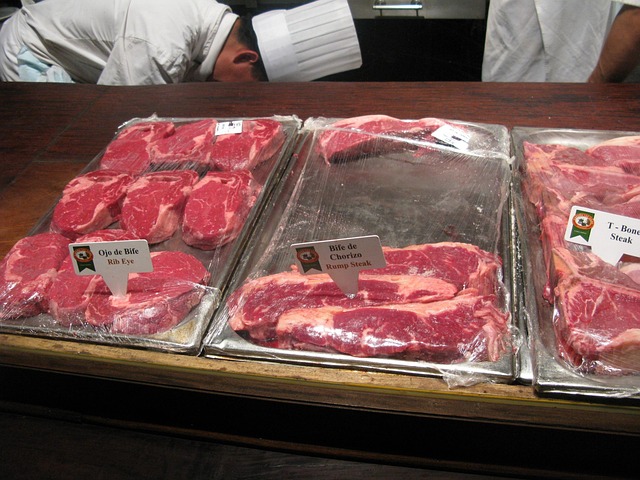
Meat Products: Surface treatment of fresh meats with casein solutions enriched with natural antioxidants, such as rosemary or oregano oils.
-
Fruits and Vegetables: When applied as an edible coating, these films regulate the respiration of fruits, potentially extending freshness by 5 to 7 days.
Conclusion and Future Outlook
The research into casein-based packaging materials is moving from the laboratory phase toward industrial applicability. Although water sensitivity and production costs remain hurdles, the drastic reduction in environmental footprint and the food safety benefits position casein as one of the most important raw materials of the future. The study concludes that casein films do not just replace plastic; as active packaging with antioxidant and antimicrobial functions, they open a new era in food preservation.
Official Source and Reference:
-
Original Scientific Article (MDPI Polymers): Casein-Based Films and Coatings: A Review of Properties and Applications in Food Packaging
-
DOI Link: https://doi.org/10.3390/polym17162207
Consistent structure, quick answers: every article is built so that both readers and AI search tools can find the key points easily. Our content is produced with the help of AI tools and reviewed by our editor.


