


If you like our site, mark us as a preferred source on Google — so you’ll see our articles more often in search!
★Mark us as a preferred sourceThe Porsche battery recycling initiative has reached a major milestone as the German sports car manufacturer, in a pilot project with cylib, successfully produced battery cell cathodes using 100 percent recycled active materials for the first time.
Advancements in Porsche battery recycling and the cylib partnership
Stuttgart-based Porsche has taken a significant step toward creating a closed circular economy for high-voltage batteries. A primary goal of Porsche battery recycling is to reduce dependency on global raw material sources. For the first time, the active materials of the battery cathode have been entirely replaced by recycled secondary raw materials, recovered exclusively from the company’s own end-of-life high-voltage batteries.
This technological innovation was achieved alongside cylib, a German recycling startup. Founded in Aachen in 2022 by Dr. Lilian Schwich, Paul Sabarny, and Dr. Gideon Schwich, the company emerged from research at RWTH Aachen University and focuses on providing high-quality materials for sustainable batteries. The cylib network includes research and development in Aachen, dismantling and mechanical processing in Wernberg-Köblitz, and hydrometallurgical processing currently being established in Dormagen.
Recovery of Critical Metals: Lithium, Nickel, Cobalt, and Manganese
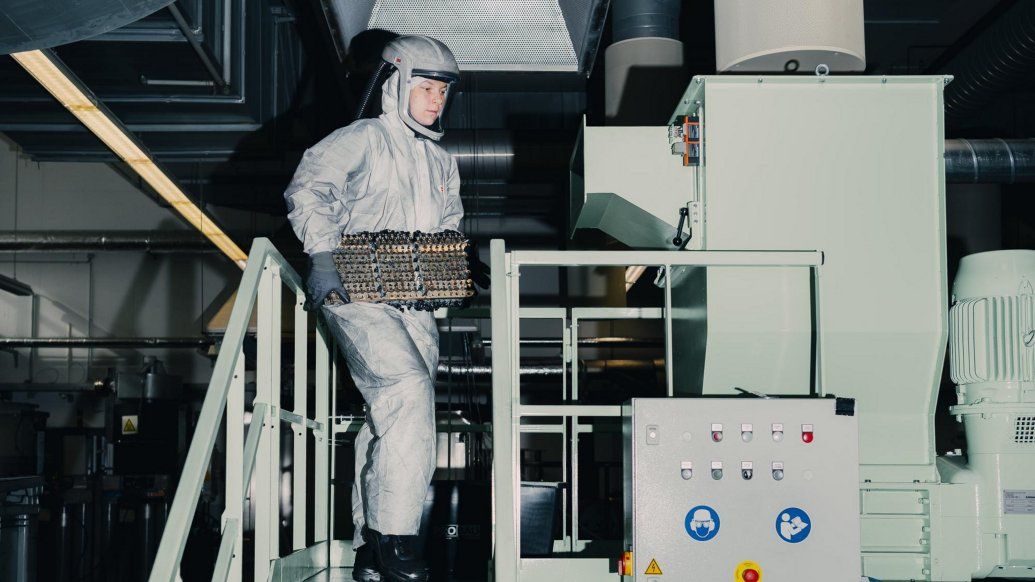
The recovered active materials include lithium, nickel, cobalt, and manganese. The recycling process involves initially discharging and dismantling the end-of-life high-voltage batteries. These are then mechanically crushed, resulting in an intermediate product known as “black mass,” which contains the valuable raw materials.
Since May 2026, batteries from German Porsche Centers have been processed using cylib’s innovative water-based method. This development aligns with broader industry trends, as the lithium-ion battery recycling market is expected to grow significantly by 2035.
Quantitative Data and Future Timeline
The recovered materials are meticulously tracked via a material account. According to the official press release, these resources will be available starting in 2028 for new battery cell production by Porsche and its selected partner companies.
Joachim Scharnagl, Member of the Executive Board for Procurement at Porsche, stated: “With battery cells made from completely recycled raw materials such as lithium or cobalt, we have reached an important technological milestone. This innovation is a central step to jointly advance the circular economy and raw material resilience. Always with the claim: to optimize progress, quality, and resource efficiency.”
Currently, the battery cells produced in this pilot project are undergoing extensive practical testing in Porsche test vehicles to ensure they meet the brand’s stringent quality and performance standards. Initial tests indicate the technical suitability of the approach, with further results expected in the second half of 2026.
Dr. Lilian Schwich, Co-CEO and co-founder of cylib, noted: “cylib closes the loop in battery recycling – from the end-of-life battery to the raw material. The pilot project with Porsche shows that our approach can be implemented in practice.”
FAQ (Frequently Asked Questions)
What is the main achievement of the Porsche battery recycling project?
Through a partnership with cylib, Porsche has successfully produced the active material of the battery cathode using 100 percent recycled secondary raw materials (lithium, nickel, cobalt, and manganese) sourced directly from their own end-of-life batteries for the first time.
When will the recovered materials be used in series production?
The raw materials, recovered via an innovative water-based process started in May 2026 and tracked in a specialized material account, are scheduled to be available to Porsche and its manufacturing partners starting in 2028.
Who is handling the processing of the end-of-life Porsche batteries?
The processing is carried out by cylib, a German startup founded in 2022. The operational network is distributed across Germany: R&D in Aachen, mechanical dismantling in Wernberg-Köblitz, and hydrometallurgy in Dormagen.
Original Source Reference:
Porsche Newsroom – Nächster Meilenstein im Batterierecycling


