


If you like our site, mark us as a preferred source on Google — so you’ll see our articles more often in search!
★Mark us as a preferred sourceReju has officially announced the selection of the Lacq industrial platform in southwestern France as the site for its first South European “Regeneration Hub.” The project aims to address the global textile recycling crisis using a scalable technology capable of transforming polyester waste into pure, new raw materials. The planned plant will have an annual capacity of 50,000 tons, positioning the operator as one of Europe’s most significant circular economy players by 2026.
Born from a collaboration between Technip Energies, IBM, and Under Armour, Reju represents a technological breakthrough intended to break down previous barriers in textile recycling. According to the company’s announcement, the Lacq industrial center in the Nouvelle-Aquitaine region is the ideal location for its first large-scale production unit, thanks to the existing industrial ecosystem and local commitment to sustainability.
Industrial Symbiosis in Lacq: Why France?
The choice of location is strategic: the Lacq platform (Chempôle 64) is a dominant industrial base in France, boasting excellent infrastructure through the presence of TotalEnergies and other global actors. Reju’s “Regeneration Hub Southern Europe” will benefit directly from on-site energy-efficient solutions and a well-established logistical network.
Patrik Frisk, CEO of Reju, highlighted that selecting Lacq is a pivotal milestone:
“This site is in perfect alignment with our strategy to achieve textile-to-textile recycling at an industrial scale. The support from the Nouvelle-Aquitaine region and local partners provides the stable foundation necessary to build the first European element of such a high-caliber global network.”
50,000 Tons: Turning Polyester Waste into Pure Resources
The project’s quantified goals are ambitious: the center is designed to process 50,000 tons of polyester waste annually. The specialty of Reju’s technology is that it doesn’t just “absorb” waste; it produces regenerated polyester of such high purity that its quality is identical to virgin (petroleum-based) raw material.
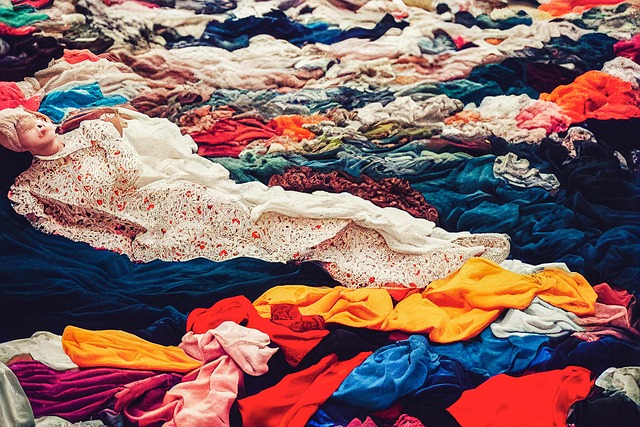
The report underscores the gravity of the problem: currently, less than 1% of global textile production is recycled through textile-to-textile processes. Polyester is the world’s most commonly used textile fiber, yet it constitutes the largest portion of textile waste currently ending up in incinerators or landfills. Reju’s Lacq plant intends to make this linear process circular.
Technological Background and Regional Partnership
The technological foundation of Reju is based on a regeneration process developed by IBM and scaled to industrial dimensions by the engineering expertise of Technip Energies. This method allows for the breakdown and rebuilding of polyester at the molecular level, preserving the material’s physical properties even after multiple recycling cycles.
Alain Rousset, President of the Nouvelle-Aquitaine region, welcomed the investment, emphasizing that the project plays a significant role in the region’s decarbonization goals and job creation. The implementation is also closely supported by TotalEnergies, which oversees the sustainable energy supply and industrial transition of the Lacq platform.
Future Vision: 2026 Launch
The “Regeneration Hub Southern Europe” is scheduled to begin operations in 2026. This unit will be the first in Reju’s global network, to be followed by additional hubs in North America and Asia. The company’s goal is to significantly reduce the textile industry’s dependence on fossil fuels by 2030 while offering a systemic solution for brands to meet Extended Producer Responsibility (EPR) requirements.
Official Sources and References:
-
Original Press Release: Reju Announces Site Selection for French Regeneration Hub in Lacq
-
Technip Energies: Official Company Portal – Circular Economy Projects
Image by Alan Frijns from Pixabay


