


If you like our site, mark us as a preferred source on Google — so you’ll see our articles more often in search!
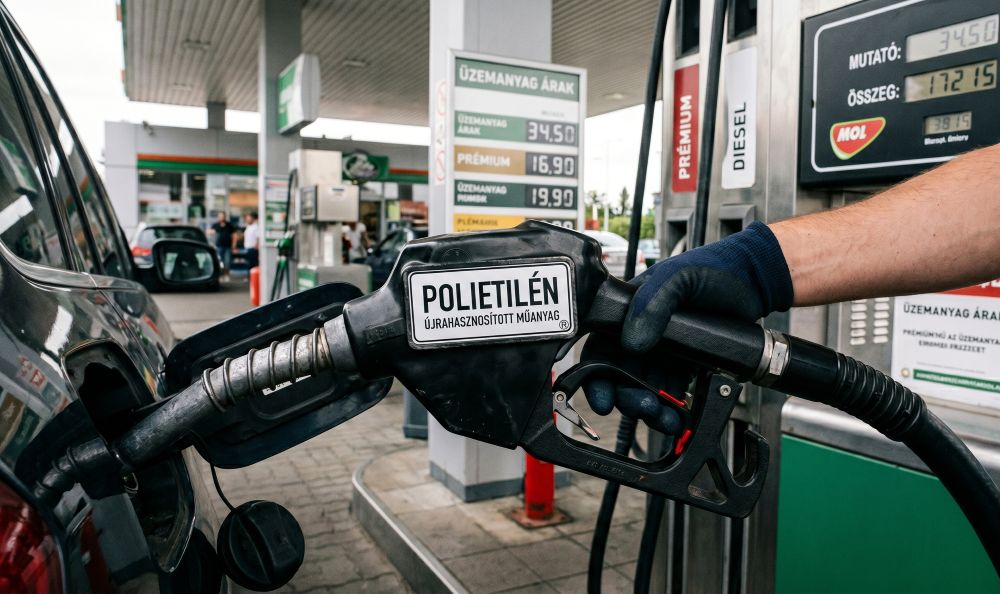
★Mark us as a preferred sourceA new, highly efficient solution to the global plastic waste crisis may be on the horizon thanks to the latest discovery by the U.S. Department of Energy’s Oak Ridge National Laboratory (ORNL). Researchers have developed an innovative molten salt-based chemical system capable of converting polyethylene—a plastic widely used in everyday consumer goods—into gasoline- and diesel-like fuels. The published findings reveal a unique, low-temperature process that breaks down polymer chains without the need for external solvents or initiators, paving the way for industrial-level scalability.
From Polyethylene to Value-Added Fuel
Polyethylene is one of the world’s most commonly used plastics, found in items ranging from white cutting boards to grocery bags. While its utility is undeniable, breaking down discarded polyethylene has historically posed a major industrial challenge due to its extreme chemical stability.
The novel process developed by the ORNL team utilizes liquid salts containing aluminum chloride. The most significant technological innovation of this approach is that the molten salts function simultaneously as both the solvent and the catalyst during the reaction. The research team has already filed a patent application for this pioneering method, and their scientific results have been published in the prestigious Journal of the American Chemical Society.
Technological Background and Chemical Metrics
The process is not only chemically innovative but also exceptionally energy-efficient. Zhenzhen Yang, an ORNL researcher and a corresponding author of the study, emphasized the uniqueness of the technology:
“We transformed a polymer waste into value-added chemicals or fuels using commercially available inorganic salts as the reaction medium, which also provides the catalytic sites.”
Yang further highlighted the process’s most crucial quantifiable advantage:
“This is the first time that molten salts have been used as a medium to upcycle plastic waste into value-added chemicals without the addition of any catalytic initiator or solvent, and at a temperature below 200 degrees Celsius.” This reaction temperature is remarkably low for heavy industrial processes, as it is roughly equivalent to the baking temperature of a standard household kitchen oven.
To understand the process at the molecular level, researchers employed soft X-ray spectroscopy and nuclear magnetic resonance (NMR) imaging. These analyses revealed that the charged aluminum atoms each bind to three other atoms, thereby creating strongly acidic catalytic sites. These active sites are responsible for cleaving the long, stubborn polymer chains into shorter, useful fuel chains suitable for transportation and manufacturing.
Decades of Experience and the Promise of Scalability
Research into liquid salts is not a new frontier for the Oak Ridge National Laboratory. The institution has been a global pioneer in this specific field since the 1960s, ever since the historic Molten Salt Reactor Experiment demonstrated that molten salt mixtures could serve effectively as both fuel and coolant in nuclear reactors.
Sheng Dai, a project leader who originally proposed the application of liquid salts for converting polymer waste into fuel, pointed out that inorganic compounds remain extremely stable even under harsh reaction conditions.
“The ORNL system tackles two problems,” Dai explained. “First, because the system is stable, the process is radically easier to scale up. Second, previous systems required an initiator to trigger the catalytic reactions.”
This dual advantage—high stability and the elimination of external initiators—holds significant potential. It ensures that this new chemical procedure could soon move beyond a mere laboratory curiosity and provide a tangible, circular solution for the transportation and manufacturing sectors to help mitigate the escalating global plastic crisis.
References and Official Sources:
-
Original official source (Oak Ridge National Laboratory – U.S. Dept. of Energy): Molten salt chemistry converts consumer polymer into fuel
Consistent structure, quick answers: every article is built so that both readers and AI search tools can find the key points easily. Our content is produced with the help of AI tools and reviewed by our editor.


