





If you like our site, mark us as a preferred source on Google — so you’ll see our articles more often in search!
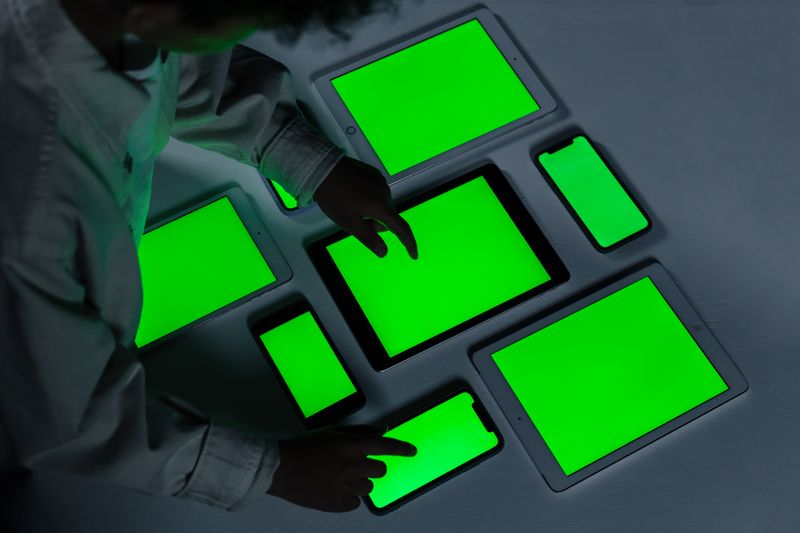
★Mark us as a preferred sourceThe environmental impact of modern computing is one of today’s most pressing sustainability challenges, demanding immediate solutions from the industry. To mitigate this problem, researchers at the University of California, San Diego (UC San Diego), with support from Google, are developing a revolutionary second-life system for retired consumer smartphones. Through the concept of “phone cluster computing,” they utilize the motherboards of replaced mobile phones to create a low-carbon, highly cost-effective, and surprisingly powerful cloud computing platform for the academic sector.
The Dual Nature of Computing’s Carbon Footprint
The carbon footprint of the technology sector, and computing in particular, fundamentally stems from two main sources. The first is operational carbon emission, which comes from the energy consumed during the everyday use of devices and servers. The industry is increasingly successful at managing this issue through continuous improvements in energy efficiency and the integration of clean, renewable energy sources. The second, and much more complex challenge, is the embodied carbon footprint. This category encompasses all emissions related to hardware manufacturing, the extraction of rare earth metals and other raw materials, and device assembly. The large-scale reuse of smartphones directly targets this critical manufacturing footprint, avoiding the need for further raw material extraction.
Forgotten Resources: Why Use Smartphones?
Global statistics and research data reveal that users replace their smartphones on average every four years. This extremely rapid replacement cycle is usually driven not by the physical failure of the devices, but by consumer desire for the fresh features offered by new models. As a result, the core computing functions of the replaced phones—the built-in processors, accelerators, memory, and internal storage—remain completely intact and fully operational.
The research highlighted a surprising fact: the single-threaded performance of the performance-centric processor cores in modern smartphones is equivalent to, and in some cases even exceeds, that of modern multi-core servers. Measurements conducted with the standardized SPEC benchmarking software suite prove that the performance cores of a 2023 Pixel Fold smartphone outperformed the per-core performance of a traditional data center reference server (such as the ASUS RS720A-E11) in most test environments. The primary engineering difference lies in sheer scaling: while a server features dozens of highly powerful, multi-threaded cores and massive, terabyte-scale memory capacity, a single smartphone operates with 8 to 12 GB of memory and a few heterogeneous processor cores. The main challenge, therefore, is running applications that match this hardware capacity.
From Consumer Device to Server: The Hardware and Software Transformation Process
Deploying consumer smartphones in their original state into a data center would not only be spatially inefficient but also highly dangerous. The computing units of smartphones are packaged with components that are completely unnecessary in a server environment. These include the display, the chassis, peripheral hardware (like cameras), and most critically: the battery. Batteries contain chemical materials that lack the certification required for continuous, uninterrupted data center operation.
Prior to deployment, the phones are processed, and everything is removed except the motherboard itself. Internal carbon footprint assessments confirm that this decision is also the most optimal from an environmental perspective, since the motherboard accounts for approximately 50 percent of a device’s embodied carbon footprint.
Radical interventions are also required on the software front. Although the Android operating system (OS) is fundamentally based on Linux, the mobile-optimized Android userspace must be completely replaced with a general-purpose Linux distribution. This step not only guarantees full programmability but also disables protection features that are important for consumer devices but explicitly hindering in cloud computing, such as the “low memory killer” daemon, which would automatically throttle excessively memory-intensive applications. Task coordination on this specialized hardware fleet is managed using containerized applications orchestrated by Kubernetes. The networked phones are organized into completely self-sustaining and self-managing clusters consisting of 25 to 50 devices.
The 2,000-Phone Data Center: Quantitative Data, Performance, and University Application
Based on the measurements, it became clear that the combined computing capacity of approximately 25 to 50 smartphones is equivalent to a single modern data center server. Recognizing this, UC San Diego researchers are planning the official deployment of a large-scale computing cluster built from 2,000 Google Pixel smartphones. This massive system will provide computing capacity equivalent to 50 traditional servers for researchers and students, at a fraction of standard industry costs.
Currently, numerous EdTech (educational technology), grading, and specific research applications run in the expensive commercial cloud within the academic sphere. These tasks range from virtual machines hosting small Jupyter notebooks to highly expensive, GPU-based servers used for parallel computing courses. The reality, however, is that the vast majority of these applications can comfortably run on a single repurposed smartphone, as standard university grading backend systems often operate on cloud instances as small as the AWS t3.micro (which has only 2 vCPUs and 1 GB of memory) anyway.
Early tests and experiments yielded highly positive results: it turned out that a medium-sized test cluster of just 20 phones can seamlessly handle the peak submission rates of a class with over 75 students (such as the Parallel Computing and Systems Programming course). All this was achieved while the grading latency remained lower than when using the default AWS backend. Running a CPU-intensive, matrix multiplication-based task on a single device, for example, took only about 50 seconds.
According to plans, the 2,000-phone data center will be able to smoothly support the simultaneous operation of up to one hundred such university classes. The fully deployed system, which will also serve as a testbed to examine the reliability of consumer hardware under sustained, extreme load, is officially scheduled to launch in the fall of 2026.
References and Official Project Background:
The research project is led by Visiting Postdoctoral Researcher Jennifer Switzer and Google Fellow David Patterson, with extensive professional and infrastructural support from Google (involving experts such as Efren Robles, Federico Centola, Nischal Agarwal, Rajiv Andrade, Manoj Vishwanathan, Ron Vered, Behnam Heydarshahi, Karina Repetz, Ted Briggs, Julie Rapoport, David Bourne, and Tom Kennedy). On behalf of the University of California, San Diego (UC San Diego), the project is coordinated by Aramesh Ranganathan, Chris Crutchfield, Gabriel Marcano, and Computer Science Professors Ryan Kastner and Patrick Pannuto.
Original Research Publication:
The project data, quantitative metrics, and precise technological specifications are based on the report available on Google’s official research portal (Google Research): A low-carbon computing platform from your retired phones (Google Research Blog, 2026)
