


If you like our site, mark us as a preferred source on Google — so you’ll see our articles more often in search!
★Mark us as a preferred sourceDue to rising costs, worsening labor shortages, and tightening European Union regulations, companies are forced to fundamentally rethink their logistics and packaging strategies. A fresh, comprehensive analysis by Tosca highlights a paradigm shift in which reusable packaging solutions are elevating from simple, disposable consumables to strategic infrastructure that ensures the resilience and efficiency of European supply chains.
Paradigm Shift: From Consumable to Strategic Infrastructure
Modern European supply chains are under unprecedented pressure. Volatile raw material prices, a shortage of skilled labor, and a constantly changing market environment pose structural risks for companies that continue to rely on single-use packaging models. The latest white paper from Tosca, a global expert in reusable plastic packaging and pooling solutions, titled “The Business Case for Reusable Transport Packaging,” points out that the traditional perception of packaging—as a one-time, continuously replaced cost item—is increasingly unsustainable.
Laurent Le Mercier, Tosca’s President for the EMEA (Europe, Middle East, and Africa) region, highlighted regarding the analysis: “Packaging has long been treated as a consumable, but this model is becoming increasingly difficult to maintain. Under the influence of tightening regulations, as well as cost and labor market pressures, reusable packaging is becoming essential infrastructure. It allows businesses to reduce waste directly at the source while improving cost predictability and operational flexibility.”
Cost-per-Use Model vs. Structural Risks
The analysis discusses in detail how single-use systems require continuous raw material input, intensive and costly manual material handling, and repetitive waste management processes. In a volatile economic environment, these dependencies carry serious structural risks.
In contrast, reusable plastic packaging offers a fundamentally different operational model. Durable load carriers circulate through the system over multiple usage cycles, allowing companies to shift from the traditional “cost-per-unit” approach to a much more rational “cost-per-use” approach. In practice, this spreads costs across different cycles, significantly reducing exposure to raw material price fluctuations and continuous waste disposal fees.
Efficiency Gains Expressed in Numbers
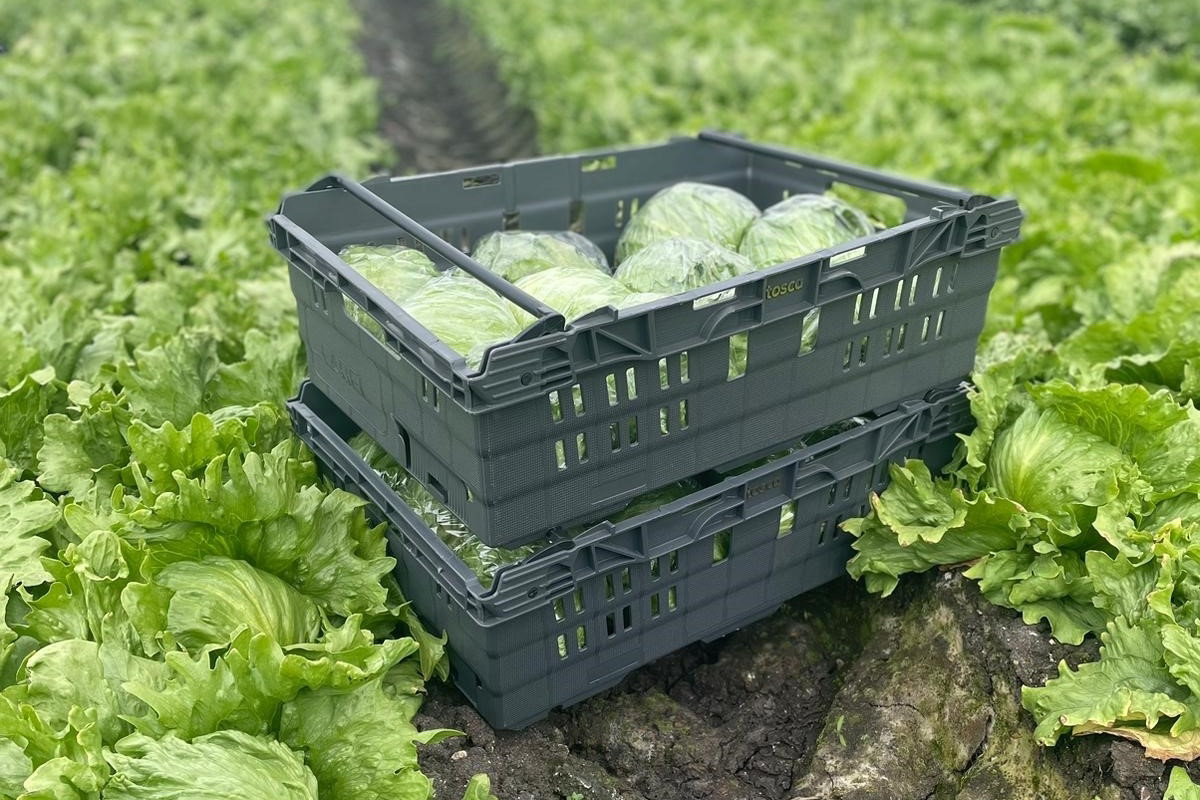
The report supports the logistical benefits of the transition with specific quantitative data. Tosca’s rigid, interlocking reusable plastic crates result in significant space savings and optimization. According to statistics, using these tools allows for the transport of up to 25% more goods per truck compared to traditional solutions. Additionally, thanks to the special design, they can achieve over 6% higher stacking performance, which maximizes space utilization not only in transport but also in warehousing processes.
Tightening Legislation: The Impact of PPWR and EPR Systems
The analysis identifies the tightening European regulatory environment as one of the strongest catalysts for industry transformation. The European Union’s new Packaging and Packaging Waste Regulation (PPWR), along with Extended Producer Responsibility (EPR) systems, now place an increasing emphasis on waste prevention, reuse, durability, and the full life-cycle performance of assets.
The PPWR sets strict new expectations for reuse targets and traceability. Meanwhile, EPR systems are evolving to financially reflect the real environmental impact of given packaging materials. For businesses relying on single-use systems, all of this means continuous and growing exposure to rising fees, more complex reporting obligations, and potential forced redesigns of packaging. In contrast, reusable infrastructure offers a unified framework to meet growing compliance requirements and meaningfully reduce regulatory risks.
Innovation in Practice: Hygiene, Pooling, and Automation
The key to operating reusable infrastructure at scale is the so-called pooling model. In these professionally managed networks, packaging assets are continuously collected, strictly inspected, cleaned, repaired if necessary, and then reintroduced into the system.
In terms of innovation, Tosca, in cooperation with Cabka, developed its new circular pallet (CP 1208) made from 100% recycled plastic, which perfectly exemplifies new market demands. While traditional wooden pallets require complex fumigation or ISPM-15 heat treatment for proper cleaning, the plastic pallet with built-in drainage holes is extremely easy to wash and does not retain moisture. This is of paramount importance for food safety (FMCG sector), and furthermore, the pallet is designed to be fully recyclable at the end of its lifespan.
Marco Gonzalez, Tosca’s Managing Director for Central Europe, pointed out regarding food supply chains: “Customers want to know that their food comes from a safe and sustainable source. Our reusable plastic pallets and crates are not only more durable and hygienic, but they are also designed to prevent damage and contamination.” Jurgen Van Roy, Vice President of Supply Chain, added that the company’s goal is to unlock hidden value in logistics, which increases both operational performance and sustainability.
All of this is also a prerequisite for automation. Standardized, robust assets reduce handling complexity, minimize product damage, and reduce process variability while improving workplace safety. Reusable packaging is thus no longer merely a means to meet sustainability quotas, but is becoming an indispensable, critical building block for automated, future-proof logistics systems.
Official and Legislative References:
-
Original provider / analysis source: Tosca’s official website and press releases on the infrastructural transformation of supply chains: https://www.toscaltd.com/
-
Official EU legislative (state/EU) source: The European Commission’s official information page on the referenced PPWR (Packaging and Packaging Waste) regulation and relevant directives: https://environment.ec.europa.eu/topics/waste-and-recycling/packaging-waste_en


