If you like our site, mark us as a preferred source on Google — so you’ll see our articles more often in search!
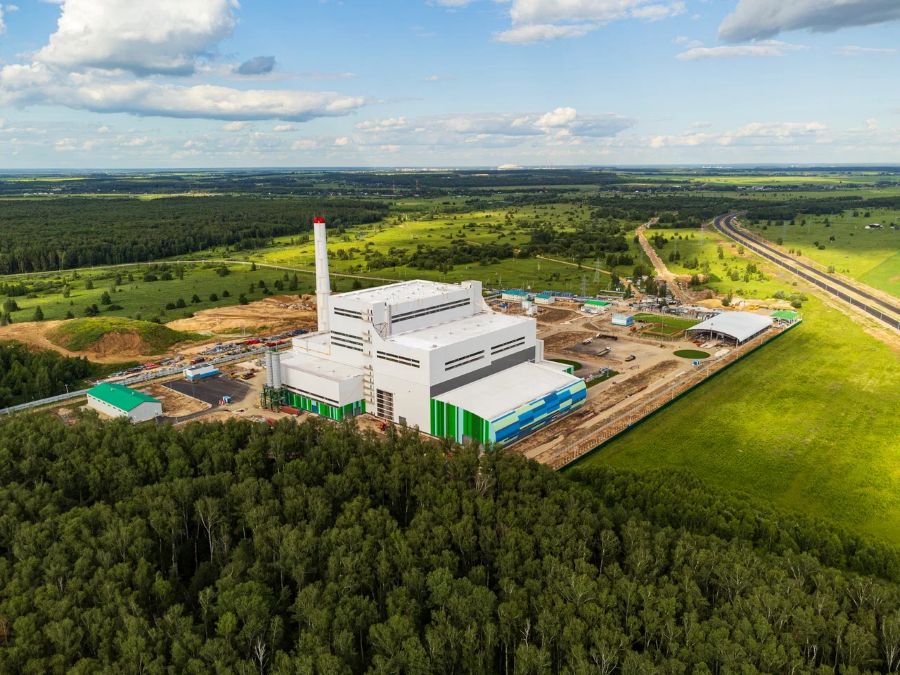
★Mark us as a preferred sourceIn a significant Rostec waste management achievement, the Russian State Corporation’s energy waste disposal plant has processed one million tons of non-recyclable municipal solid waste into electricity over a year and a half of operation. This initiative not only reduces the volume of landfills but also significantly mitigates environmental damage.
Rostec waste management: Quantitative data and logistics
Built in the Voskresensk city district of the Moscow Region, this facility is Russia’s first modern plant of its kind. It began operations at the end of December 2024 and reached full capacity by March 2025. Since its opening, the plant has received over 33,000 road trains loaded with waste. In terms of sheer volume, this is comparable to the capacity of 100,000 standard garbage trucks or 50,000 heavy transport trucks.
The plant strictly processes “tailings” — waste that can no longer be recycled. Before entering the plant, all waste undergoes mandatory industrial sorting to extract any remaining useful secondary resources. Previously, this entire massive volume was destined directly for open landfills.
Generating green energy
By processing this one million tons of waste, the facility produced over 620 million kWh of “green” energy. This substantial output is sufficient to provide reliable electricity to a city with a population of approximately 300,000 people for an entire year.
Climate impact and CO2 emission reduction
The operation has led to a massive reduction in methane and greenhouse gas emissions. Specifically, the reduction of greenhouse gases into the atmosphere exceeded 1 million tons. Calculations were strictly based on a formula proposed by the Institute of Global Climate and Ecology (named after Academician Yu.A. Israel), which states that replacing the landfilling of 1 ton of waste with energy processing prevents 1,160 kg of CO2 emissions.
The forestry equivalent of the project
Preventing this amount of carbon dioxide emission is equivalent to planting more than 7 million trees, or utilizing the annual carbon absorption capacity of a 42,000-hectare forest. While a young forest would take about ten years to fully absorb this amount of carbon, the plant is delivering this tangible environmental result immediately.
Advanced technology in the processing system
The plant utilizes grate combustion technology (waste-to-energy), which is recognized as one of the most common and environmentally friendly disposal methods available today. Globally, there are more than 2,500 such installations. According to the corporation, all production processes are based on advanced technologies, ensuring that modern industrial solutions can protect the environment.
The modern gas purification process
The facility features modern gas purification systems that keep emissions below stringent international environmental standards. The purification system involves multiple rigorous stages:
-
At a temperature of 1260 °C, the chemical destruction of dioxins and aromatic hydrocarbons occurs.
-
Nitrogen oxides are safely neutralized.
-
Slaked lime and activated carbon are used to neutralize acids and heavy metals.
-
The final stage employs a highly efficient bag filter to capture the smallest particles of dust and fly ash.
Source and Reference: AK&M Information Agency – Official Corporate Press Release