


If you like our site, mark us as a preferred source on Google — so you’ll see our articles more often in search!
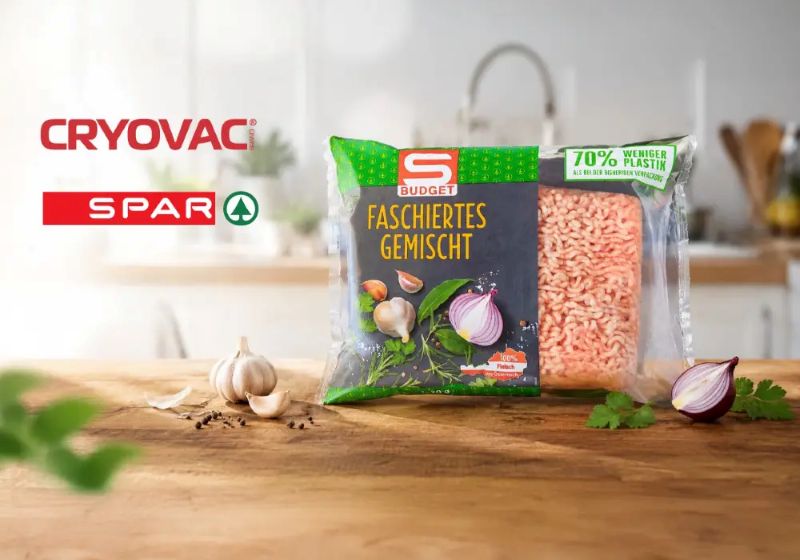
★Mark us as a preferred sourceSPAR Austria has successfully completed a milestone packaging pilot project that could mark the end of traditional tray and lidding film systems for fresh meat across its European retail network. By entirely eliminating rigid plastic trays for fresh minced meat, the retail chain achieved a 70 percent weight-based reduction in plastic, resulting in an annual saving of 14 tonnes of plastic material.
Background and Results of the Pilot Program
The trial period was conducted at SPAR Austria’s TANN meat processing facility in Marchtrenk, in collaboration with the packaging technology company Sealed Air. During the pilot, the “Cryovac brand MonoPP Flowpack” system was utilized for packaging minced meat. Following a comprehensive analysis of the project’s operational and commercial success, the company is currently evaluating a broader rollout of the tray-free solution, which could impact other TANN processing plants and European SPAR retail units alike.
Preparation for the PPWR Regulation
The primary driver behind SPAR’s departure from decades-old packaging formats is the impending implementation of the European Union’s strict Packaging and Packaging Waste Regulation (PPWR). Official data from the European Commission highlights the necessity of this regulation: currently, 40 percent of plastics used in the European Union end up as packaging material, and packaging accounts for half of all marine litter. According to 2022 statistics, an average of 186.5 kilograms of packaging waste was generated per capita in the EU.
The PPWR, which entered into force on February 11, 2025, and is generally applicable from August 12, 2026, aims to reduce the use of primary raw materials and mandates that all packaging on the EU market must be recyclable in an economically viable manner by 2030. The framework introduces restrictions on single-use plastics (such as individual portion sachets for condiments and sauces) and on substances of concern in food contact packaging, such as PFAS compounds. This unprecedented legislative stringency forces food processors and retailers like SPAR to aggressively reduce total packaging volumes and transition toward a circular economy.
Roman Auinger, manager of the SPAR TANN plant in Marchtrenk, explained the strategic shift: “Tray and lidding film systems have dominated fresh meat packaging for decades, providing product visibility and structural support. However, we wanted to explore packaging innovations that could support the new regulatory requirements for reducing packaging material usage while also addressing rising material costs.” Auinger added that the Cryovac MonoPP Flowpack solution, specified during their close collaboration with Sealed Air, helped achieve a 70 percent reduction in plastic use while keeping shelf life and production line speeds unchanged.
Traditional tray systems represent an accumulation of operational, environmental, and financial burdens in the retail sector. Beyond the sheer weight of the plastic used, the physical volume of rigid trays causes severe logistical inefficiencies. Because the flexible, high-barrier mono-polypropylene (MonoPP) film occupies significantly less physical space before filling, SPAR’s warehouse operations require 176 fewer transport pallets annually. This massive optimization of the supply chain logistics matrix, combined with the reduced raw material demand, enabled the company to cut packaging-related carbon emissions by approximately 70 percent during the trial period.
Furthermore, multi-material tray systems often complicate the operations of municipal waste sorting lines. In contrast, the Cryovac MonoPP Flowpack material has been certified by the Cyclos-HTP Institute as a fully recyclable solution, allowing it to be directly integrated into existing polypropylene (PP) recycling streams.
Markus Zavec, Sealed Air’s sales director for Austria, Germany, and Switzerland, pointed out: “SPAR Austria’s traditional tray system came with escalating costs, including environmental, operational, and financial expenses. The packaging consumed significant material, required intensive warehouse operations, and complicated recycling pathways. The trial was a decisive and early step to address these challenges.” Beyond the environmental and cost benefits, the system also enhanced brand value: two-thirds of customers responded positively, appreciating the product visibility and the easy-to-open nature of the packaging.
Maintaining Production Line Speed and Shelf Life
For high-volume meat processors, the main barrier to adopting flexible packaging has traditionally been the risk of reduced production speeds or the vulnerability of the gas barrier layer that ensures shelf life. However, the TANN pilot in Marchtrenk successfully demonstrated that the flexible MonoPP barrier film meets the strict shelf-life requirements of traditional Modified Atmosphere Packaging (MAP) tray formats without compromise. Crucially for factory-level efficiency, SPAR was able to maintain high-speed production levels of 44 packs per minute without experiencing a surge in component failures, product waste, or scrap rates on the production lines.
Summary and Future Outlook
As European regulatory deadlines approach, SPAR’s transition highlights a vital turning point in the global meat supply chain: a shift away from overly complex, hard-to-process rigid plastics toward thin, mono-material configurations. This approach simultaneously satisfies tightening corporate sustainability targets and industrial production realities.
Reflecting on the broader industry implications, Roman Auinger concluded that transitioning away from established packaging formats involves operational, commercial, and consumer considerations that require thorough evaluation. He emphasized: “With frameworks like the PPWR emphasizing recyclability and material reduction, mono-material packaging solutions clearly offer a more forward-looking path for the industry.”
References and Sources:
-
Original Article: Food and Drink Technology – SPAR eyes European rollout of tray-free meat packaging (Available at: foodanddrinktechnology.com)
-
Official/Government Source (PPWR Legislative Background): European Commission – Packaging waste (Available at: environment.ec.europa.eu)


