




If you like our site, mark us as a preferred source on Google — so you’ll see our articles more often in search!
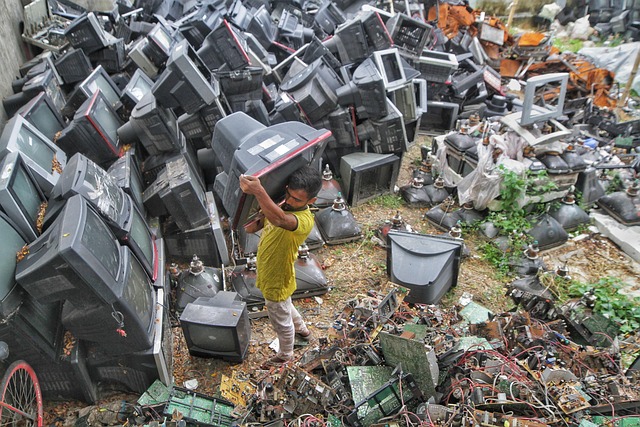
★Mark us as a preferred sourceWhile American consumers drop off their outdated devices believing they will be responsibly recycled, a significant portion of this toxic waste reaches developing countries in Asia through illegal channels. The Basel Action Network (BAN) research, titled the “e-Trash Transparency Project,” utilized GPS technology to track the journey of e-waste, revealing a network that floods Thailand and neighboring countries with hazardous materials behind a facade of environmental promises. The report highlights that 25 percent of devices exported from the United States end up in illegal dumps or primitive processing plants.
Electronic waste is the world’s fastest-growing waste stream, and its management poses serious environmental health risks. During the BAN investigation, 65 devices equipped with GPS trackers (such as monitors and printers) were placed at various American waste collection points. The results are startling: a quarter of the observed devices—16 in total—left the United States, with the vast majority ending up in Thailand.
GPS Technology in the Service of Investigation
The research methodology provided direct evidence of waste movement. Small GPS units applied by BAN specialists broadcast data for months, following the path of containers from American ports to Southeast Asian facilities.
The quantitative data presents the following picture:
-
65 deployed trackers: 16 devices were exported (25%).
-
Dominant destination: Out of the exported devices, 10 (over 60%) reached Thailand.
-
Additional destinations: Trackers also signaled from Pakistan, Hong Kong, and Taiwan.
The report emphasizes that this ratio indicates a systemic problem where even companies holding “green” certifications are involved in illegal transports.
Shift in the Global Market: Thailand in the Crosshairs after China
The change in the direction of waste flow is closely linked to shifts in international regulations. In 2018, China introduced its “National Sword” policy, which effectively banned the import of most foreign waste, including e-waste. This move forced American intermediaries onto a new path.
E-waste exports shifted from China to Southeast Asia, primarily to Thailand, Malaysia, and Vietnam. The “Brokers of Shame” report documents that illegal processing plants have mushroomed in Thailand. Using the trackers, BAN researchers reached sites where the extraction of precious metals and the destruction of hazardous residues take place under primitive conditions without any protective equipment.
Environmental Catastrophe and Toxic Technologies
The report details the conditions observed in Thailand. Plants found in Chachoengsao province and other locations utilize open-air burning and acid leaching during processing.
-
Hazardous Materials: E-waste contains large amounts of lead, mercury, cadmium, and brominated flame retardants.
-
Primitive Processing: Lead-glass from monitors and mercury-containing LCD screens are often smashed with hammers, releasing toxic dust directly into the air and soil.
-
Acid Baths: Precious metals (such as gold) are etched from circuit boards using concentrated acid, with the acidic residue often discharged untreated into surrounding waters.
In some Thai plants, as many as 2,000 workers may labor under such conditions, exposing themselves to the direct danger of heavy metal poisoning.
The Responsibility of “Shameful Intermediaries”
The BAN investigation named specific American companies involved in the process. They highlighted the Seattle-based company Total Reclaim, which marketed itself as one of the largest recyclers in the Northwest region while passing their tracker-equipped monitors to illegal exporters.
The role of intermediaries is crucial: they are the “brokers” who exploit American regulatory gaps. The United States has not ratified the Basel Convention, which would restrict the shipment of hazardous waste to developing countries. This legal vacuum allows companies to ship toxic waste with impunity to countries like Thailand, which has signed the convention, making the import illegal there.
Summary and the Path Forward
The “Brokers of Shame” report demonstrated that the e-waste crisis cannot be solved by consumer awareness alone. Systemic change is required, including the U.S. joining the Basel Convention, stricter inspections at ports, and support for truly transparent “green” certification systems (such as e-Stewards). As long as exporting waste remains cheaper than legal domestic processing, toxic refuse will continue to end up in the most vulnerable regions.
Official Sources and References:
-
Original Report and Press Release (BAN): Brokers of Shame: The Reckless Export of Toxic E-Waste from the U.S. to Thailand (PDF)
-
Professional Background: Basel Action Network – e-Trash Transparency Project
