


If you like our site, mark us as a preferred source on Google — so you’ll see our articles more often in search!
★Mark us as a preferred sourceFully electric-powered garbage trucks built from recycled materials, camera-based scanners automatically recognizing recyclable waste, artificial intelligence providing early fire warnings, and sensors independently reporting road defects to municipalities – these are no longer promises of a distant future. According to a professional summary published today, June 15, 2026, by the Association of Austrian Waste Disposal Companies (VOEB), the industry is undergoing a radical transformation. The goals of these innovations, which are at the forefront of European environmental technology, are to reduce costs and emissions while maximizing safety and data-driven efficiency.
The Daily Challenges and Quantitative Performance of Waste Management
Every day, several thousand garbage trucks travel the roads of Austria to collect residential and commercial waste, as well as recyclable materials. Annually, they reliably transport seven million tons of municipal waste from households and companies. This massive volume is sorted and prepared for recycling by approximately 31,000 employees in the waste and resource management sector.
The International Day of Refuse Collectors, held on June 17, specifically recognizes the work of these employees, while also drawing attention to the national economic and ecological importance of well-functioning waste management systems. Gabriele Jüly, President of VOEB, pointed out: the massive research and development investments of recent years are already paying off, ensuring that the sector remains among the most advanced at the European level.
Fully Electric Drive: The Quiet and Clean Future
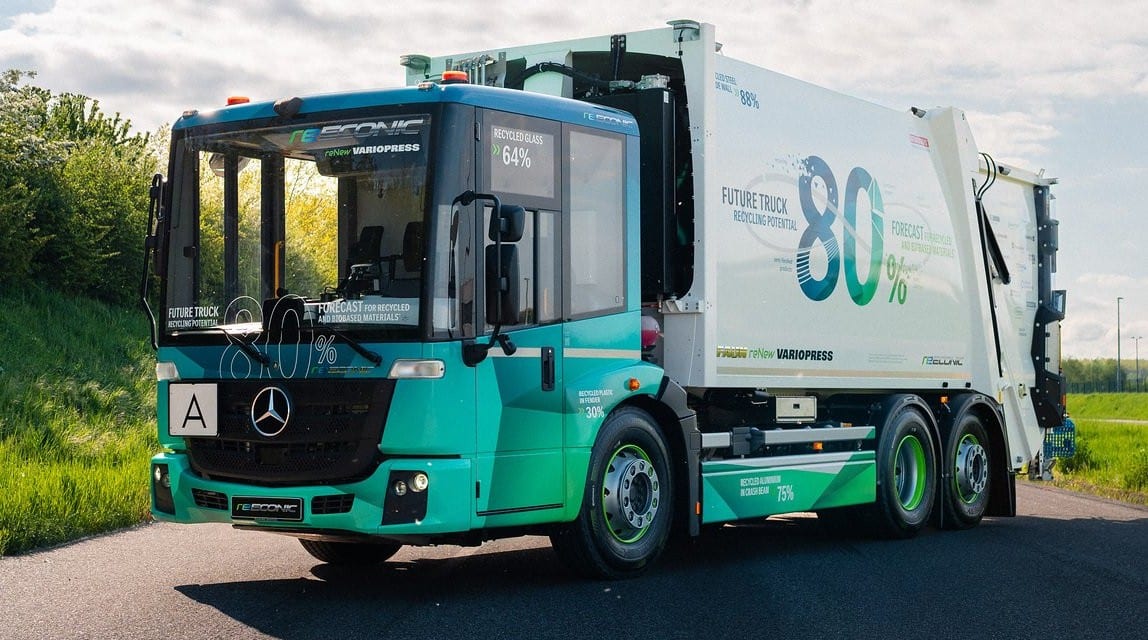
Players in the waste collection vehicle market agree that the future clearly belongs to electromobility. The trend is not limited to engines; vehicle bodies and tipping mechanisms are also increasingly being manufactured in purely electric versions. With the massive increase in battery capacities, the range of energy-saving vehicles is continuously expanding, and parallel to this, customer demand has surged.
The proportions are telling: in current procurements, fully electric garbage trucks already account for 50 percent of orders, while in Switzerland, this ratio is exactly 90 percent. Practical experience also supports that operating e-waste collection vehicles is highly profitable. Well-plannable and predictable routes, a high number of operating hours with relatively low mileage, and continuous stop-and-go operation provide an ideal terrain for electric propulsion.
Compared to traditional diesel-powered trucks, fuel costs can decrease by up to 50 percent. In addition, these trucks are significantly quieter and emit no climate-damaging substances at the collection site. Furthermore, there is a growing trend in the number of vehicles whose bodies and components are partially made from recycled materials.
The Technology Is Ready, but Political Will Is Still Needed
Despite positive operational metrics, the purchase price of electric vehicles is significantly higher, meaning their financial return is only guaranteed in the long term. The president of the association emphasized that the carbon dioxide emissions of diesel vehicles are unjustifiably high, which urgently needs to change. Although the technology is ready and the benefits are indisputable, a broader transition requires a stronger political will.
The industry urges improved legal frameworks and the expansion of state subsidy systems that encourage the procurement of e-garbage trucks. At the same time, the sector itself is independently carrying out significant infrastructural investments: high-performance, so-called High-Power charging parks are being built, ideally operated with 100 percent green electricity from renewable sources.
Better Waste Separation with Innovative Scanners
A fundamental condition for future waste management is much more accurate and safer waste sorting. Currently, it is a serious problem that too many recyclable materials end up in the wrong containers – typical mistakes include metal packaging thrown into mixed waste or plastic bags ending up in biowaste.
To halt this deterioration in quality, the sector has successfully developed various valuable and contaminant scanners, which have been recognized with professional innovation awards and are already proving themselves in the field. The essence of the technology is that the waste is inspected right on the vehicle when the bin is emptied. An artificial intelligence (AI) software evaluates and documents the captured images in a fraction of a second, and then clearly links them to the collection point. Through a digital platform, residents can also receive direct feedback on the quality of their sorting, which increases transparency, strengthens public awareness, and ultimately maximizes recycling efficiency.
Artificial Intelligence in the Service of Efficiency and Safety
Companies dealing with resource management recognized the potential of combining live data and artificial intelligence years ago. By applying AI, route planning can be optimized, while with pay-per-use structures, residential and corporate billing can also become fully automated. The predictive maintenance of vehicles is also data-driven, preventing unexpected breakdowns.
Machine learning is also a key player in energy conservation: through an intelligent camera system, the compaction (pressing) mechanism of the garbage truck is only activated when a truly sufficient amount of material has accumulated in the loading area. Furthermore, in the case of joint collection routes affecting multiple municipalities, integrated IT interfaces and onboard weighing systems ensure that costs are billed to each municipality or industrial client with pinpoint accuracy based on actual weight data.
To prevent accidents, AI-based cameras monitor the vehicle’s surroundings and intervene immediately if a person gets dangerously close to the machine. The vehicle’s intelligence is also responsible for triggering an automatic alarm if a fire breaks out inside the truck’s cargo area due to hazardous waste.
Connected Municipalities: Garbage Trucks as Mobile Road Inspectors
According to analyses, the evaluation of telemetric and visual data collected by vehicle fleets will drastically increase in value in the coming years. No other vehicle type traverses all the streets of a settlement with such high frequency and thoroughness as a garbage truck. Data recorded by the vehicles’ AI cameras can be immediately used by municipalities for the automated mapping of road defects, potholes, or building damage. As for autonomous, driverless waste collection, the VOEB president believes this could also become a reality in certain areas in the future, but the missing legal and geographical-infrastructural prerequisites must first be established.
Macroeconomic Figures of the Austrian Waste Industry
The volume of the industry is well illustrated by the fact that VOEB currently represents more than 260 member companies, covering two-thirds of private Austrian waste management in terms of both revenues and the number of employees. The entire national waste industry – including approximately 3,300 private and municipal companies – employs a total of more than 31,000 people. These organizations are responsible for collecting, sorting, and recovering 74 million tons of waste annually, consistently generating an annual turnover of about 9 billion euros for the national economy.
Sources and References:
-
Original press release (VOEB): Die Müllabfuhr der Zukunft ist elektrisch, intelligent und vernetzt
-
State (government) source reference from the article: Austrian Ministry for Climate Action, Environment, Energy, Mobility, Innovation and Technology (BMK) – Statusbericht 2025 der Abfallwirtschaft in Österreich


