


If you like our site, mark us as a preferred source on Google — so you’ll see our articles more often in search!
★Mark us as a preferred sourceCovasna County (Háromszék) has reached another significant milestone in environmental protection and infrastructure development: the construction contract for the expansion of the Lécfalva integrated waste management center has been officially signed. The investment, valued at nearly 12 million RON and utilizing state-of-the-art technology, aims to guarantee the county’s environmental security and the sustainable, local management of tens of thousands of tons of waste annually for the long term—potentially until the 2060s.
Financial and Technical Details of the Investment
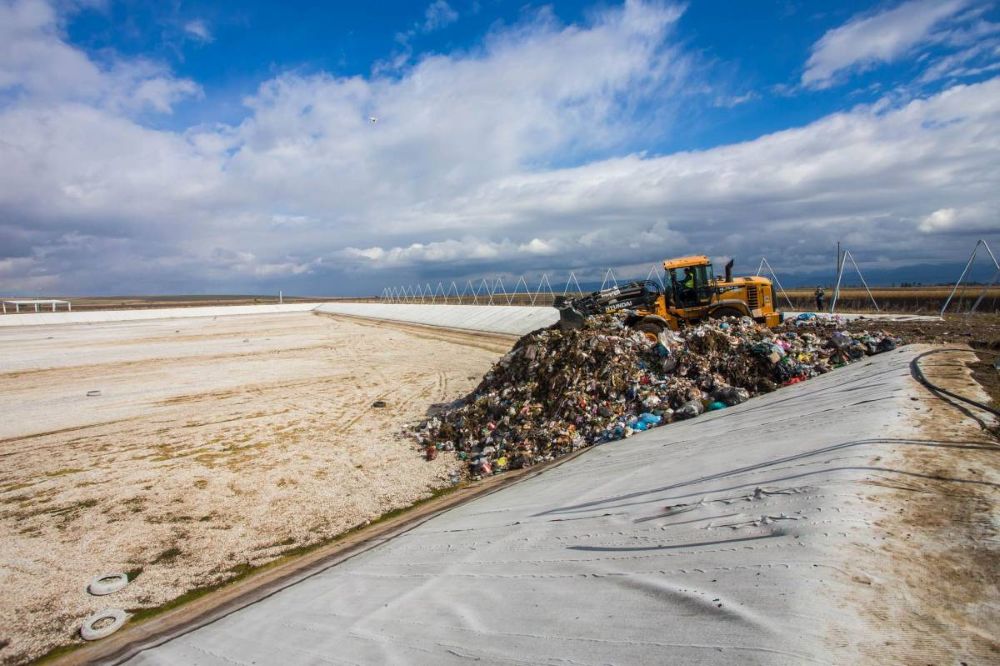
The construction contract for this large-scale development was signed by Sándor Tamás, President of the Covasna County Council, and engineer Mihály Fekete, representing the contracting consortium (a partnership between Baumeister and Conico). The total budget for the project reaches 11.97 million RON. This substantial amount is financed partly by the usage fees collected for waste management and storage services, and partly from Covasna County’s own budget. The expansion involves the construction of a new, modern storage cell that will utilize world-class technology and insulation procedures in line with the highest industry standards.
Quantitative Data: How Much Waste Does the County Produce?
Accurate data is essential for planning waste management and scaling infrastructure. According to the county council’s statistics, the population of Covasna County produces approximately 60,000 tons of waste annually. Thanks to the current system, 10,000 tons of this amount are composted at the Lécfalva plant each year, and another 10,000 tons are successfully sorted and sent for recycling. The remaining 40,000 tons represent the volume that actually goes into the landfill. During the press conference, President Sándor Tamás highlighted the county’s excellent performance in green management: while Romania’s national average for recycling hovers around just 11 percent, the rate in Covasna County reaches 30 percent.
Nearing Capacity: Why the New Cell Was Essential
The county’s waste management system underwent a radical transformation about a decade ago. At that time, scattered, illegal, or outdated dumpsites on the outskirts of settlements were eliminated, and a single central landfill was established in Lécfalva. The first cell of this landfill, which is currently in use, was built in 2017. This initial storage unit alone covers an area of nearly 4.5 hectares and has a holding capacity of 453,000 cubic meters. However, the cell created nine years ago will be completely full this year (recent data shows its saturation rapidly approaching 100 percent). The new investment will create the necessary new cells, which, according to preliminary estimates, will ensure seamless waste disposal until at least 2041.
The County Takes Control: The Introduction of EcoKov
In addition to the infrastructure expansion, significant administrative and management changes are being implemented to achieve strategic independence. Since its launch in 2017, the Lécfalva center has been operated by an external service provider, Eco Bihor. However, their contract expires this year, and the county leadership has decided to handle operations internally moving forward. Consequently, starting this October, a newly established, county-owned company called EcoKov—created through the collaboration of local municipalities—will take over the full operation and supervision of the landfill.
Future Plans: Mechanical-Biological Treatment Plant
The county council does not consider the development of waste management complete with just the cell expansion. A core part of their long-term professional concept is the continuous modernization of technology, the next step of which will be the integration of a mechanical-biological treatment plant into the existing system. By introducing this industrial technology, the sorting and recovery rate of waste can be drastically increased. According to expert calculations, this would guarantee the sustainable and safe management of household waste for another 35 years—stretching the facility’s lifespan to 2060.
Closing Thoughts on a Deliberate Strategy
Official communications and the municipal leadership strongly emphasize that the county deliberately designed and built its system strictly to serve local needs. From the very beginning, it has been a fundamental principle not to accept imported waste from other counties. The current expansion and the launch of their own company (EcoKov) ensure that Covasna County remains one of the cleanest, self-sufficient regions in the country, safeguarding the environment for future generations.
References and Official Sources:
-
News Portal Source: Maszol.ro – Lesz, ahol elhelyezni a háromszékiek szemetét
-
Official County Source: Covasna County Council – Bővítik a lécfalvi hulladéklerakót: újabb lépés a fenntartható jövő felé
Consistent structure, quick answers: every article is built so that both readers and AI search tools can find the key points easily. Our content is produced with the help of AI tools and reviewed by our editor.


