If you like our site, mark us as a preferred source on Google — so you’ll see our articles more often in search!
★Mark us as a preferred sourceThe latest investigative report by the environmental organization Beyond Plastics raises serious questions about the sustainability claims of the world’s largest coffeehouse chain. According to the research, the plastic cups classified as “widely recyclable” by Starbucks are not recycled in reality. A three-month nationwide US study using Bluetooth-based trackers yielded a dramatic result: out of the cups dropped into specifically designated recycling bins in stores, not a single one ended up in an actual recycling plant. Instead, the tracked cups finished their journeys in landfills, incinerators, and waste transfer stations, highlighting a sharp contrast between corporate communication and waste management reality.
Background of the Research and the Promises
On February 2, 2026, Starbucks – alongside WM (formerly Waste Management) and three other recycling groups – proudly announced that the polypropylene (No. 5 PP plastic) used for their single-use cold cups had received a “widely recyclable” designation in the United States. Citing the classification issued by the How2Recycle program, which is not verified by state or federal regulators, the coffee chain claimed that over 60 percent of American households could now recycle the cups through curbside recycling programs.
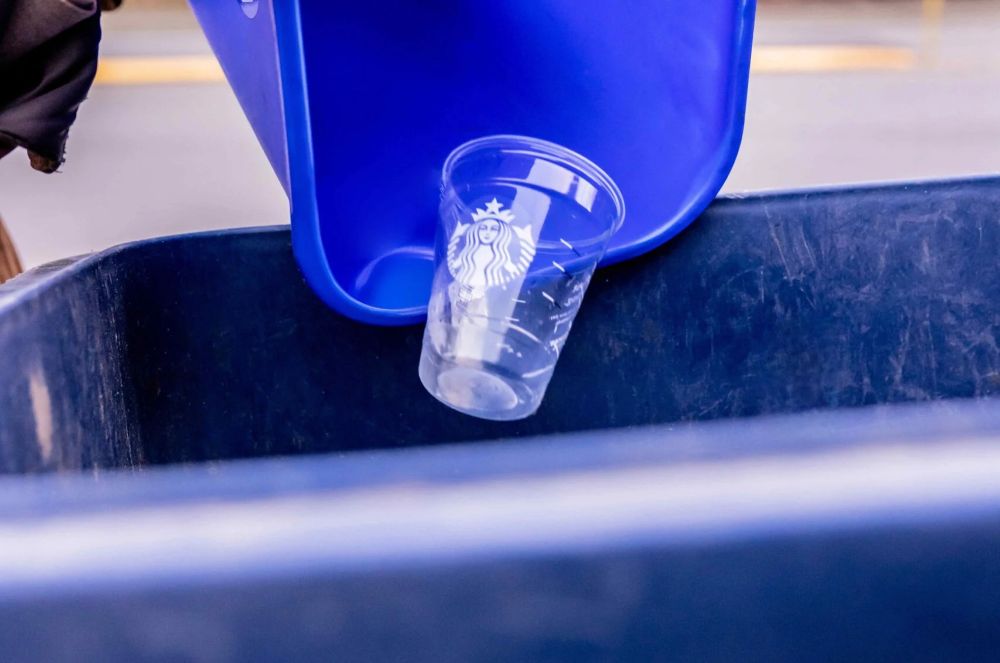
To test these claims, Beyond Plastics launched an independent tracking investigation between January and March 2026. During the experiment, a total of 53 single-use polypropylene cups equipped with tiny Bluetooth-based trackers were deployed in 35 different Starbucks stores across nine US states and Washington, D.C. In all cases, the cups were dropped into clearly marked recycling bins provided exclusively for customers inside the stores.
Shocking Data: Where Do the Cups Actually Go?
Out of the 53 deployed trackers, 36 ultimately provided usable, clear data about their final destination. The results were unequivocal: out of the 36 cups, exactly zero—not a single one—transmitted a signal from an actual plastic recycling facility.
The Beyond Plastics report details the fate of the 36 tracked cups as follows:
-
0 cups went to an actual recycling facility.
-
16 cups ended up in traditional landfills.
-
9 cups finished their journey in waste incineration facilities.
-
8 cups had their last known location at waste transfer stations (these are merely transit stations from which waste moves on to a landfill or incinerator).
-
3 cups reached so-called Materials Recovery Facilities (MRFs), which only sort and bale the plastic but do not perform the recycling themselves. A stop at an MRF does not equal actual processing.
The research also highlighted that plastic waste travels astonishing distances. The tracked cups collectively traveled thousands of miles. Four cups even crossed state lines when they were transported from New York City to a landfill in Ohio (Amsterdam). The longest recorded individual journey was 463 miles (approximately 745 kilometers), starting from a Starbucks store in Brooklyn (225 4th Avenue) and ending in the aforementioned Ohio landfill.
The Deceptive Reality of the “Widely Recyclable” Label
Judith Enck, President of Beyond Plastics and former Regional Administrator of the U.S. Environmental Protection Agency (EPA), stated clearly: “Starbucks is telling its customers that these plastic cups are being recycled, but our trackers tell a different story. The acceptance of a plastic item into a recycling bin does not equal its actual recycling, and the company knows exactly the difference.”
The root of the problem lies in the characteristics of the American waste management system. Although theoretically a recyclable material, the overall plastic recycling rate in the United States is less than 6 percent. The vast majority of this amount also consists of Type 1 (PET) and Type 2 (HDPE) bottles, not polypropylene.
There are extremely few viable recycling pathways for polypropylene. The report cites a December 2025 Greenpeace analysis, which identified only two commercial facilities nationwide (KW Plastics in Alabama and St. Joseph Plastics in Missouri) that claim to actually recycle post-consumer polypropylene. (Three other plants – Ultra-Poly in Pennsylvania, and Republic Services Blue Polymers in Indianapolis and Las Vegas – also handle PP plastic). There is also a “chemical recycling” plant in Ohio (PureCycle), but Beyond Plastics does not consider this actual recycling, as the plastic here is typically converted into fossil fuels at high temperatures, burdening local communities with toxic pollution.
The low market value of used polypropylene, the high costs of long-distance transportation, and contamination from liquids and food residues all render the process unfeasible. In California, the average contamination rate of polypropylene bales reaches 31 percent, drastically exceeding the 2 percent threshold still accepted by facilities like KW Plastics.
The Global Scale of the Problem and the Lack of Infrastructure
The coffee giant’s responsibility is massive, as it operates more than 40,000 stores worldwide and over 17,000 in the United States. Cold drinks account for approximately 75 percent of US beverage sales, largely served in PP cups. Although the company committed in 2020 to making its packaging 100 percent reusable, recyclable, or compostable by 2030, in practice, nearly all of its American stores continue to use single-use plastic.
The research also revealed another concerning fact. The organization originally wanted to expand the study to 21 US states but was ultimately only able to deploy sensors in 10 states. In the remaining 11 states, the surveyed Starbucks stores either offered no opportunity for selective waste collection at all, or the posted signs explicitly indicated that plastic cups are collected together with landfill-bound trash.
Reactions and Conclusions
Susan Keefe, the organization’s Southern California Director, summarized the results: “Contrary to what they advertise, Starbucks is not giving cups a ‘second life’ and cannot recycle its way out of the plastic problem. They need to stop misleading their customers.”
The company’s reaction is also noteworthy: just hours after the report was published on May 20, 2026, Starbucks removed its official press release celebrating the recycling of plastic cups from its website, and the former link now only returns a 404 error message.
The comprehensive analysis highlights: in today’s waste management systems, the illusion of sustainability is often underpinned by severe infrastructural deficiencies. Dropping a product into a recycling bin does not in itself guarantee environmentally conscious processing; the true solution can only be reducing the volume of single-use plastics.
References and Sources for the Article:
-
Original Press Release and Source Data: Beyond Plastics: Starbucks Cups Recyclable Report
-
Full Research Report: Beyond Plastics – Starbucks Cups Investigation
-
Government Source on US Plastic Recycling Rates and Data: U.S. Environmental Protection Agency (EPA) – Plastics: Material-Specific Data
-
Original URL of Starbucks’ Deleted PR Page:
[https://about.starbucks.com/stories/2026/recycling-your-starbucks-cold-cup-just-got-easier-heres-why/]