


If you like our site, mark us as a preferred source on Google — so you’ll see our articles more often in search!
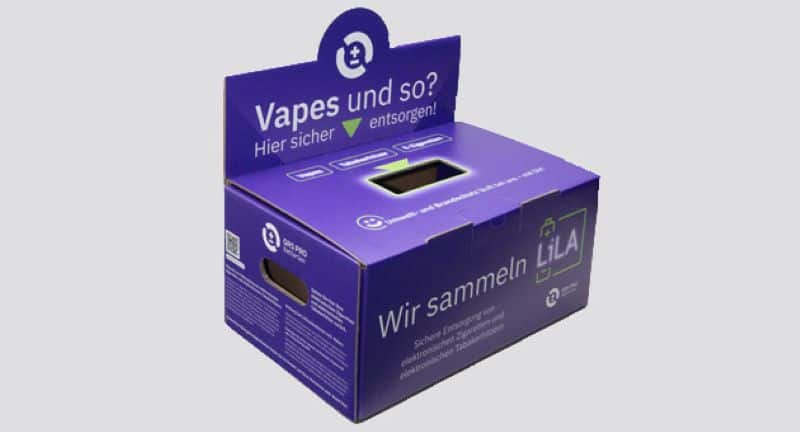
★Mark us as a preferred sourceAs part of a planned 12-month pilot project, a new retail-integrated take-back system for electronic cigarettes and heated tobacco products is being tested in the greater Munich area, Germany. Announced on July 7, 2026, the initiative dubbed “LiLA II” aims to provide a practical solution in response to new statutory take-back obligations that came into effect in July. The fundamental objective of the project is to promote the safe disposal of devices containing lithium batteries, strengthen the circular economy, and lay the groundwork for a future nationwide network.
Why are new take-back obligations necessary?
Under the changing regulatory environment, new take-back obligations for electronic cigarettes and heated tobacco products apply in Germany as of July 1, 2026. This legislative tightening addresses a growing, everyday challenge: households are accumulating an increasing number of small electrical appliances containing permanently installed lithium batteries or button cells. Alongside e-cigarettes, this includes electronic greeting cards, wireless headphones, and flashing promotional items. The public often fails to dispose of these devices properly, and improperly discarded appliances pose an increasing safety risk and fire hazard within the waste management chain.
The LiLA II Project: Participants and Retail Focus
The initiative was established through a close partnership between Philip Morris Deutschland, the Stiftung GRS Batterien, and GRS Service GmbH, while independent scientific support and data collection are provided by the bifa Umweltinstitut. Launched in the greater Munich area, the pilot program tests a concrete collection and take-back system operating directly at retail points of sale.
The focus is on the practical feasibility of the system, its acceptance among retail partners and consumers, and the further development of existing take-back structures—specifically with a view to the possibility of nationwide scaling. The project also places a strong emphasis on communication: given the persistently high rates of incorrect waste disposal, retailers and customers must be clearly and visibly informed about drop-off locations, thereby encouraging the actual use of the system.
Perspectives of Project Partners and the Role of the EPR System
Dr. Julia Hobohm, Managing Director of GRS Service GmbH, pointed out that due to the rapidly growing volume of products containing lithium batteries, safe collection is of critical importance. As she stated, seriously implemented extended producer responsibility can only function properly with the joint involvement of the industry (such as Philip Morris GmbH) and retail partners.
Georgios Chryssos, Member of the Board of Stiftung GRS Batterien, added that the LiLA collection system had previously been tested for a year at selected recycling centers in Bavaria, where it was extremely well received by the public. Experience shows that the main key to the success of an Extended Producer Responsibility (EPR) system is providing consumers with low-threshold take-back points directly accessible in stores.
Torsten Albig, Director of External Affairs at Philip Morris Deutschland, emphasized that the company assumes responsibility above and beyond strict legal obligations. Bavaria was a conscious choice for launching the pilot project, as the company’s German headquarters is located there, allowing them to take local responsibility.
Scientific Monitoring and Future Expansion
Throughout the one-year period, the bifa Umweltinstitut will continuously collect reliable data, measuring the volume, composition, and condition of the collected devices. These results will be regularly evaluated and published. The data will form the basis for the further development of the system and its potential expansion to new take-back points, such as in the gastronomy sector or at higher education institutions.
Currently, a project-accompanying advisory board consisting of external third parties with sustainability expertise is also being established. LiLA II builds closely on the results of previous LiLA initiatives, which had already mapped out collection and recycling routes for small devices with fixed batteries; the current phase is translating this knowledge into everyday retail practice.
Quantitative Data, Market Background, and Participating Organizations
The press release provided detailed data on the background and market weight of the participating partners, which contextualize the scale of the initiative:
-
Philip Morris International’s (PMI) smoke-free products (heated tobacco, e-cigarettes, nicotine pouches) were available in more than 105 markets as of December 31, 2025, and were used by an estimated 43 million adult consumers worldwide.
-
In the first quarter of 2026, smoke-free products accounted for 43 percent of PMI’s total net revenues. Since 2008, the company has invested over 16 billion US dollars in the development and scientific assessment of these alternatives. Certain products (e.g., ZYN, General Snus, and specific versions of IQOS) have received marketing authorization from the US FDA, and even Modified Risk Tobacco Product (MRTP) designations.
-
Its subsidiary, Philip Morris GmbH, was founded in Germany in 1970. The company has been the market leader in the German cigarette market since 1987, achieving a 38.4 percent market share in 2024.
-
Stiftung GRS Batterien is a non-profit competence center founded in 1998 (by ZVEI e.V. and battery manufacturers) with over 25 years of experience in producer responsibility (under Article 57 of the European Battery Regulation). They operate a nationwide take-back system in Germany and have supported the global battery value chain with an open R&D center since 2022.
-
GRS Service GmbH offers comprehensive process management from market placement to recycling by fulfilling extended producer responsibility (PRO). The company is licensed for all battery categories and is currently expanding its operations into the textile sector in line with the UN Agenda 2030 goals.
Reference:
The original, official press release containing the above data and statements is available at this link: Philip Morris International – LiLA II Pilotprojekt


