


If you like our site, mark us as a preferred source on Google — so you’ll see our articles more often in search!
★Mark us as a preferred sourceThe way societies manage waste has continuously evolved over time in response to emerging priorities, and the world’s most extreme continent, Antarctica, is no exception. A comprehensive two-part analysis by Pamela da Costa, a professional at the Uruguayan Antarctic Institute, highlights how Antarctic waste management has transformed from a mere logistical necessity into a global standard for environmental protection and international regulation. While the current operational model is highly rigorous, it faces significant structural challenges. The main question remains open: is the principle of minimal environmental intervention on-site a sufficient ecological safeguard, or is it merely a normative barrier preventing the testing of advanced circular economy models in polar regions?
The Historical Legacy and the Paradigm Shift in Environmental Governance
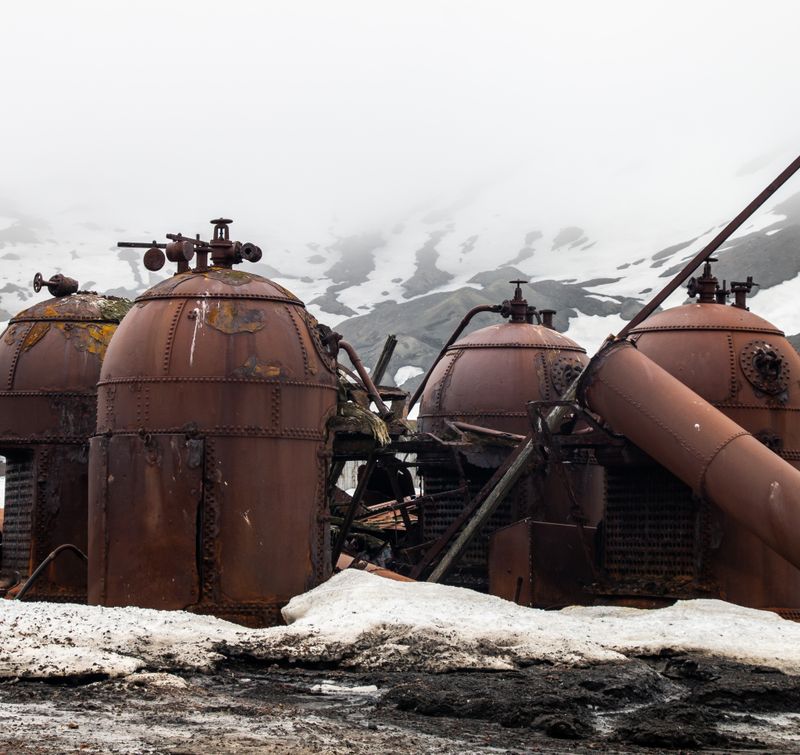
To understand the current challenges of waste management in Antarctica, it is essential to review the history of human activity on the continent. Prior to the 1970s, waste generated during polar operations was mostly abandoned, buried, or simply incinerated in the open air. During this period, there were no specific regulations, environmental remediation principles, or shared standards to guide proper management practices. This era is well illustrated by the area around Beaver Lake, discovered in 1956, where a 1957 Australian expedition established a base camp and an airstrip, and where old fuel drums could be found for a long time. Similarly telling is the fact that all old rubbish tips belonging to Australian research stations were only abolished in 1985.
From the 1970s until the adoption of the Madrid Protocol, practices gradually evolved, primarily due to the guidelines of SCAR (Scientific Committee on Antarctic Research) and the recommendations of the Antarctic Treaty System. With the entry into force of this international agreement, the regulatory framework became binding. The system immediately incorporated a ban on open-air waste burning, restrictions on the importation of hazardous materials and certain single-use plastics, and strict obligations for the sorting, compaction, and removal of waste to the country of origin. The mandatory preparation of waste management plans, conducting environmental impact assessments, and the systematic cleanup of historically contaminated areas are also parts of this renewed and complex process.
Waste Types and Ecological Biosecurity in Antarctica
The scientific and logistical activities taking place on the continent—which are themselves essential for preserving the environment—generate a wide variety of waste, all requiring specific treatment. These include wastewater, liquid chemical waste, combustible and non-combustible solid waste, medical and electronic waste, as well as gaseous emissions related to fuel use and power generation. As the first link in the system, waste reduction must be considered a priority; thus, every worker or researcher in Antarctica is deemed an “environmental operator” who must actively and consciously contribute to minimizing waste volume.
Waste management in Antarctica is not merely an issue of chemical pollution but a major factor in ecological biosecurity. Organic waste, in particular, poses a massive risk as it can create artificial microhabitats for non-native fungi and bacteria. The case of avian influenza perfectly exemplifies these biological threats: organic materials attract scavenging birds, such as skuas and gulls, which are known pathogen carriers. Waste management zones can thus unintentionally become ecological contact points among endemic wildlife, human activity, and imported pathogens. Additionally, non-native species often arrive via human activity (cargo, food, clothing, equipment, wood, cardboard), which means that the highest quality waste management can indirectly reduce the risk of pathogen transmission in sensitive Antarctic ecosystems.
International Regulation and Legal Liability
The driving force behind this prevention system is international cooperation, which enables countries with varying operational capacities to apply the same strict standards. Regular international inspections are designed to monitor compliance. Annex III of the Madrid Protocol makes prevention, reduction, sorting, and thorough, regulated treatment mandatory. Another defining document is the 2019 Resolution of the Antarctic Treaty (Resolution 1), which, in the form of the official Antarctic Clean-Up Manual, emphasizes the absolute necessity of environmental monitoring before, during, and after remediation activities.
Furthermore, Annex VI of the Madrid Protocol (adopted in 2005, regarding liability arising from environmental emergencies)—although not yet internationally in force—establishes a modern liability framework that entails clear legal and financial consequences if inadequate waste management is proven to cause an environmental emergency. The waste management monitoring guidelines published by COMNAP (Council of Managers of National Antarctic Programs) in 2006 are also vital for the international standardization of operational practices.
Structural Linearity and the Limitations of the Circular Economy
Today, Antarctica can also be described as an “incomplete circular economy model.” Strict waste reduction and sorting take place on the continent, but actual recycling and final disposal occur outside it, in the countries of origin. Although international research stations already employ dedicated wastewater treatment technologies—such as aerobic biological treatment plants, activated sludge systems, trickling filters, rotating biological contactors, and UV radiation disinfection—achieving zero waste is hindered by severe structural constraints. These insurmountable barriers include extreme weather conditions, unique logistical challenges arising from the locations of the stations, and the high risk of local spread of contaminants via meltwater.
This paradox highlights a rather significant technological gap: while the global waste sector has made massive strides in energy recovery, decentralized treatment, and the digitization of traceability, most of these innovations have not yet been able to adapt to the conditions of the white continent due to extreme temperatures and limited energy supply. Thus, the Antarctic waste system remains structurally linear, no matter how environmentally responsible it is. The closing of essential material cycles is constantly interrupted by mandatory removal. Given that microplastics are now detectable as a global problem even in the Southern Ocean, there is more reason than ever for the continent to become the ultimate testing ground for future, low-impact, and energy-efficient technologies.
Pamela da Costa, the author of the articles, has been working at the Uruguayan Antarctic Institute since 2017. Throughout her professional background, she has participated in several official Antarctic missions, and in 2024, she completed an internship at the Antarctic Treaty Secretariat. She complemented her studies in International Relations with knowledge of science diplomacy, polar studies, climate change, and international security, thereby ensuring an objective, data-driven approach to Antarctic waste management systems.
Utilized and Referenced Sources:
-
Original Articles (Polar Journal):
-
Official / State Website:
-
Secretariat of the Antarctic Treaty: https://www.ats.aq – The official, state-level portal consolidating information on international agreements and the Madrid Protocol referenced in the article.
-


