





If you like our site, mark us as a preferred source on Google — so you’ll see our articles more often in search!
★Mark us as a preferred sourceOn April 9, 2026, in Amsterdam, Fashion for Good officially launched its latest initiative, Project FAE (Feedstock Activation Europe). The program aims to develop the large-scale sorting and pre-processing infrastructure needed to channel non-rewearable post-consumer textiles into textile-to-textile (T2T) recycling. This project is a practical response to one of the most pressing problems in textile circularity: making post-consumer waste a viable, commercially competitive raw material for the recycling industry.
The Challenge: A Technical and Economic Gap
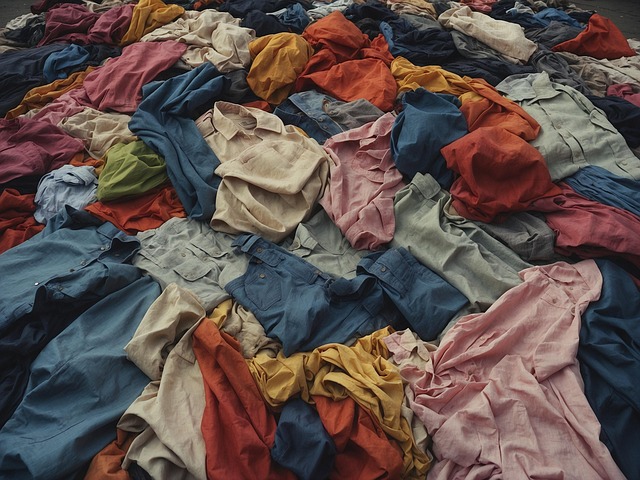
When post-consumer textiles are collected, they are first sorted based on rewearability and directed to resale markets. The remaining “non-rewearables” currently have few viable destinations: only a small fraction enters actual T2T recycling. The vast majority is downcycled, sent to landfills, or incinerated.
Secondhand export markets, which have historically absorbed significant volumes from Europe, are contracting. Declining global material quality limits resellability, while international trade restrictions are becoming stricter. Due to weak demand in destination countries, excess stock accumulates, and without sufficient recycling or reuse infrastructure, most of it often ends up in landfills.
While new recycling capacities coming online across Europe could change this, this opportunity will only be realized if the upstream feedstock infrastructure is capable of supplying materials at an acceptable cost and quality. Today, this is not the case. Post-consumer textile waste is highly heterogeneous and costly to process, while recyclers have stringent, technology-specific requirements.
This creates a severe economic gap: sorters find large portions of waste unsellable and face high collection and processing costs, while recyclers require competitively priced feedstock which they cannot profitably prepare themselves. Neither side can close this gap alone, leading most manufacturers to continue relying on post-industrial waste, which is cleaner, more consistent, and easier to process.
Regulatory Pressure: Extended Producer Responsibility (EPR)
Integrating post-consumer waste into T2T recycling is no longer a matter of if, but when. The demand for recycled fibers is growing, and legislative pressure on the industry is increasing. Upcoming Extended Producer Responsibility (EPR) legislation in the European Union will require brands to take financial responsibility for their products at the end of their life cycle. This turns functional recycling pathways from a simple sustainability goal into a hard commercial necessity.
According to Katrin Ley, Managing Director at Fashion for Good, technology is no longer the bottleneck. The real barrier is what she calls the “unglamorous” work: the sorting lines, pre-processing steps, and supply systems. Project FAE targets exactly this difficult but essential infrastructural work.
Collaborators and Quantitative Data
Solving this problem requires coordinated action across the entire value chain. An unprecedented number of key players from every segment of the industry have joined the Fashion for Good initiative. The project includes 3 global corporate giants as lead brand partners: adidas (the lead sponsor), BESTSELLER, and INDITEX. Rehubs serves as a strategic partner, with Rematters providing on-ground assistance.
The project relies on an extensive network of advisory expertise, which quantitatively includes:
-
12 textile sorting companies: Boer Group, Circle-8 Textile Ecosystems, Erdotex, Formació i Treball, Humana People to People, Kringwinkel Antwerpen, New Retex, Nouvelles Fibres Textiles, Plaxtil-Essaimons, Sympany, Texaid, and Texlimca.
-
12 recycling companies (representing mechanical, thermomechanical, and chemical technologies): Circ, Circulose, CuRe Technology, eeden, Infinited Fiber Company, Kipas (fibR-e), Matterr, Meltem Kimya, Recover, Reju, OnceMore (from Södra), and WornAgain.
-
9 ecosystem and supporting partners: InvestNL, Landbell Group, Refashion, Reverse Resources, TEXroad, Wargon Innovation, WRAP, ZDHC, and Global Fashion Agenda.
Gudrun Messias, Director of Sustainability Direction at adidas AG, emphasized that this is not a challenge any single organization can solve alone, making the consortium of dozens of players vital.
The Approach: Two Parallel Tracks
Project FAE works along two main tracks to bridge the value chain:
-
Advancing Feedstock Preparation: The first track focuses on solving pre-recycling preparation processes. It assesses advanced pre-processing technologies such as fiber blend separation, industrial elastane removal, and contaminant extraction. The project evaluates the technological and commercial feasibility of these methods, identifying what is ready for market deployment and what requires further development.
-
Infrastructure Networking (The Hub Model): The second track aims to develop a structural framework for large-scale, regional sorting and pre-processing hubs across Europe. These mega-facilities would aggregate scattered post-consumer textile volumes, applying highly automated sorting and mechanical pre-processing to produce consistent feedstock streams tailored to the specific technological requirements of different recyclers.
The Ultimate Goal: Real Industrial Implementation
Through technological automation and economies of scale, the regional hub model is designed to reduce per-unit processing costs, improve feedstock quality, and finally create a viable business case for both sorters and recyclers. The initiative’s ultimate goal is not just to produce another theoretical study or technical report. It aims to establish a practical and commercial framework that the wider industry can act upon immediately, thereby generating real physical infrastructure investments in the European Union in the coming years.
References and Sources:
- Official English Press Release by Fashion for Good (April 9, 2026): Solving the Feedstock Gap: Unlocking Post-consumer Feedstocks for Textile-to-Textile Recycling in Europe
