





If you like our site, mark us as a preferred source on Google — so you’ll see our articles more often in search!
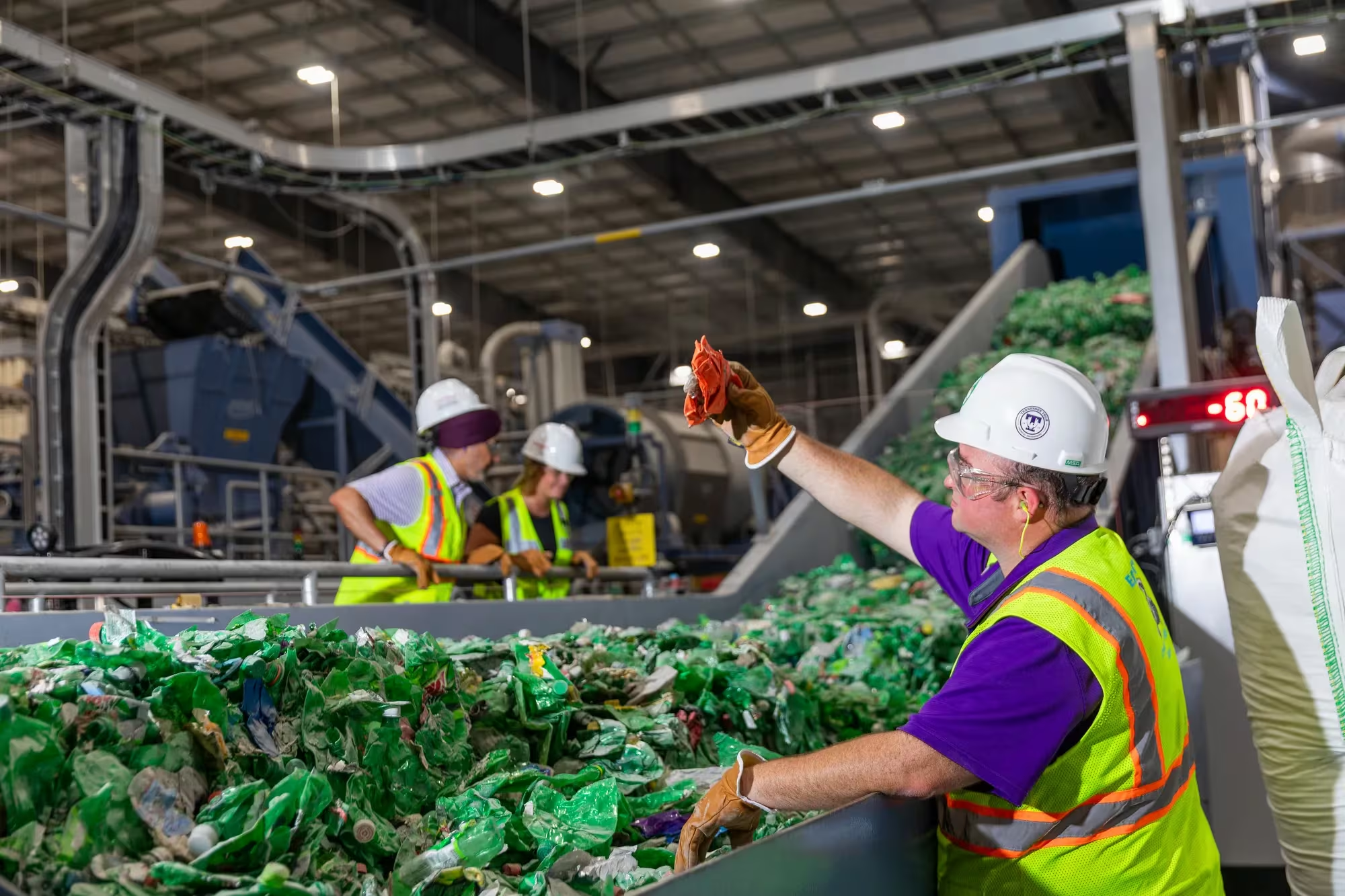
★Mark us as a preferred sourceReducing plastic pollution and keeping packaging materials in a continuous loop are among the most critical sustainability goals of the 21st century. Through a new, multi-year agreement, PepsiCo and Eastman are leveraging an advanced recycling technology capable of processing everyday plastics that typically evade traditional systems and end up in landfills. This innovative process successfully turns discarded materials—such as old carpets, clothing, and colored or opaque plastic bottles—into high-quality, food-grade recycled beverage packaging.
The Problem: The Limitations of Traditional Recycling Infrastructure
Ideally, once a consumer finishes a favorite beverage, the bottle is placed in a recycling bin, collected curbside, and recycled to be used again. This concept sits at the very heart of packaging circularity. Currently, the most common method employed by local municipalities is traditional, or “mechanical,” recycling. In this process, used clear plastic bottles are sorted, cleaned, melted down, and reshaped into new packaging. Continuing to improve and invest in these traditional systems remains a key element of PepsiCo’s overarching sustainable packaging strategy.
However, the reality of global waste management is far more complex. Mechanical recycling faces significant technological limitations:
-
Unprocessable Materials: Certain types of commonly used plastic materials—such as old clothing, carpet fibers, and harder-to-recycle items like jars, films, or opaque and colored bottles—simply cannot be processed by standard mechanical recyclers.
-
Material Degradation: Even clear bottles that can be mechanically recycled tend to lose their clear aesthetic and structural integrity after going through the melting process multiple times. Consequently, a massive volume of these materials frequently ends up as waste in landfills.
The Solution: Eastman’s Advanced Recycling Technology
To address these inherent challenges, PepsiCo has entered into a multi-year agreement with Eastman to purchase materials produced by their novel advanced recycling technology. This approach goes a step further than traditional methods, giving new life to discarded hard-to-recycle polyester plastic waste.
Lindsay Bridenbaker, PepsiCo’s vice president of global beverages packaging R&D, explained the mechanics of the process: “Eastman’s technology takes colored and opaque plastic bottles and other everyday plastic materials that mechanical recyclers do not process, breaks them down to their original molecular level and purifies them.”
Because the plastic is broken down to its fundamental molecular base, it can be rebuilt into virgin-like, high-quality bottles. This recycled material is highly adaptable and can be easily customized to fit the specific packaging design needs of any given product.
Tangible Results: The 2026 Rollout of Recycled Gatorade Bottles
The partnership’s goals are already materializing in the consumer market. In 2026, PepsiCo began rolling out Gatorade bottles in the United States made with recycled plastic enabled by Eastman’s technology. This launch practically demonstrates how materials once inevitably headed for waste streams can be successfully repurposed into specially designed beverage packaging.
Burgess Davis, PepsiCo’s North America chief sustainability officer, highlighted the significance of the achievement: “It’s exciting because with this technology, plastics that otherwise couldn’t be recycled are being recycled, which allows for more recycled content to be incorporated into packaging that have historically required virgin quality materials to create.”
A Broader Strategy: Complementing, Not Replacing, Existing Systems
PepsiCo’s stated goal is to leverage these advanced recycling technologies solely to create new packaging from hard-to-recycle waste, thereby reducing reliance on virgin plastic and delivering more products in recycled packaging across its portfolio. However, corporate leadership is transparent about the technology’s role within the broader environmental context.
David Allen, PepsiCo’s global vice president of sustainable packaging, clarified: “Advanced recycling is not intended to replace mechanical recycling or be a silver bullet solution to solve the global challenge of packaging waste. Instead, it’s meant to complement mechanical recycling and help recycle the materials that fall outside existing systems and expand what’s possible for packaging circularity.”
Ultimately, fixing the plastic waste crisis requires a multi-faceted approach. Building truly circular packaging systems demands better initial design, improved collection methods, stronger recycling infrastructure, enabling government policies, and continuous innovation.
References & Sources:
