


If you like our site, mark us as a preferred source on Google — so you’ll see our articles more often in search!
★Mark us as a preferred sourceRetailers in Southeast Asia are increasingly going viral on social media for wrapping fresh produce in banana leaves. While the banana leaf offers a natural, waterproof, and easily biodegradable alternative to single-use plastics, its potential introduction in Europe raises significant logistical, environmental, and import dependency questions. Relying strictly on facts and official data, this article examines whether the banana leaf could become a viable packaging solution for the European market.
Southeast Asian Initiatives and the Plastic Crisis
Some of the earliest media reports regarding banana leaf packaging date back to 2019, when the Rimping supermarket in Chiang Mai, Thailand, made international headlines for replacing single-use plastics with banana leaves and flexible bamboo in certain applications. Since then, other retailers in Southeast Asia have followed suit, and photographs of these solutions still frequently circulate on social media.
As explained by Vice magazine, wrapping food in banana leaves—whether for recipes or general food storage—is a well-established practice in the region. Supermarkets have started to embrace this approach because the leaves are sourced from a native plant, are durable enough to function as packaging, and possess a shelf life similar to that of the fresh produce they hold.
International publications have praised the move as an effective method for tackling single-use plastic waste. This is highly necessary, as according to the Organisation for Economic Co-operation and Development (OECD), the region experienced a 135 million-tonne increase in plastic use between 1990 and 2022. The OECD also notes that the ASEAN region relies heavily on an informal recycling sector and faces ongoing challenges with its waste management infrastructure.
The Natural Properties and Potential of Banana Leaves
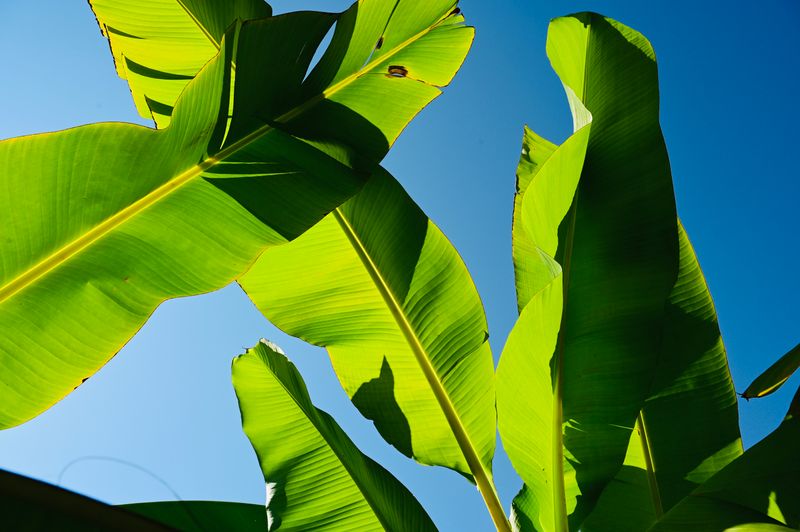
Due to their natural properties, banana leaves are highly suitable for packaging: they are waterproof and resistant to humidity, meaning no extra additives are required to enhance their durability. Even their vibrant green color is expected to unlock new shelf appeal when compared to traditional transparent polymers. Furthermore, a leaf is easily and naturally biodegradable.
Utilizing plantation waste is already an up-and-coming side stream for sustainability-minded packaging solutions. For example, Papyrus Australia manufactures pulp-based food containers made from banana stalks, leaves, and stems. Another example is former Sustainability Awards winner Zafree Papers, based in Ethiopia, which converts banana pseudostems into corrugated cartons for beer packaging. Both of these companies are strategically based in countries where bananas can be grown locally.
European Prospects and Production Data
The question arises whether these leaves could become an effective packaging solution for retailers in Europe. According to the Food and Agriculture Organization of the United Nations (FAO), the European Union primarily grows its bananas in overseas territories such as the Canary Islands and the French West Indies. Even if the leaves were sourced from the EU’s own banana supply, they would still need to be imported in large quantities.
The data supports this challenge: the EU’s banana production reportedly fell by approximately 25% in 2025, leading the bloc to import an estimated 5.5 million tonnes of bananas. This made the EU the world’s main banana importer last year.
From an administrative standpoint, sourcing imports would not necessarily be a problem. A tariff-only import regime has applied within the European Union since January 2006, designed to secure market access for banana producers in developing countries. Additionally, the Geneva Agreement on Trade in Bananas has granted certain Latin American countries ‘most favoured nation’ status, and the EU has committed to gradually lowering import tariffs on bananas. As of 2021, 74% of the EU’s bananas were sourced from Latin America, 15% from Caribbean and Pacific countries, and only 11% from its own production. However, an overreliance on a substrate that the European Single Market has limited access to is a recurring talking point and raises professional concerns in the packaging sector.
Logistical, Environmental, and Health Concerns
Aside from the documentation and licenses required for importation, the logistical and environmental implications are significant. Tim Sykes, brand director at Packaging Europe, highlighted several important questions. Would the leaves be shipped alongside the bananas? Would this require more vessels, more oil, and result in higher greenhouse gas emissions? Furthermore, what would happen in the event of a bottleneck in the supply chain?
Sykes also pointed out that a banana leaf may not preserve fresh produce effectively in certain European climates. Nor would it necessarily prevent damage to the product during transit or at the point of sale, which could negatively impact shelf appeal and ultimately lead to increased food waste.
Pests present another serious environmental and health concern. A simple Google search indicates that banana leaves are vulnerable to insects like aphids and weevils. Even assuming the leaves are washed before being used as packaging, mismanaged imports could contaminate local produce or unleash invasive species. If pesticides were used as a preventative measure, it would raise entirely new concerns for the environment and human health.
European Alternatives in the Natural Packaging Market
While the conversation around banana leaves continues, Europe is actively upscaling natural packaging substrates in other ways. Seaweed-based packaging is on the rise, with companies such as B’Zeos, Kelpi, Notpla, FlexSea, and Sway offering innovative solutions for European customers.
Additionally, Z1RO is leading the charge in converting fallen leaves, hemp hurds, and other non-wood biomass into moulded fibre packaging. Their product applications cater to a variety of sectors, including cosmetics and beauty, consumer electronics, wines and spirits, luxury and gifting, as well as premium FMCG products.
References & Sources:
-
Original Source Article (Packaging Europe): Could European retailers pack fresh produce in banana leaves?
-
Official Intergovernmental Organizations Referenced:


