


If you like our site, mark us as a preferred source on Google — so you’ll see our articles more often in search!
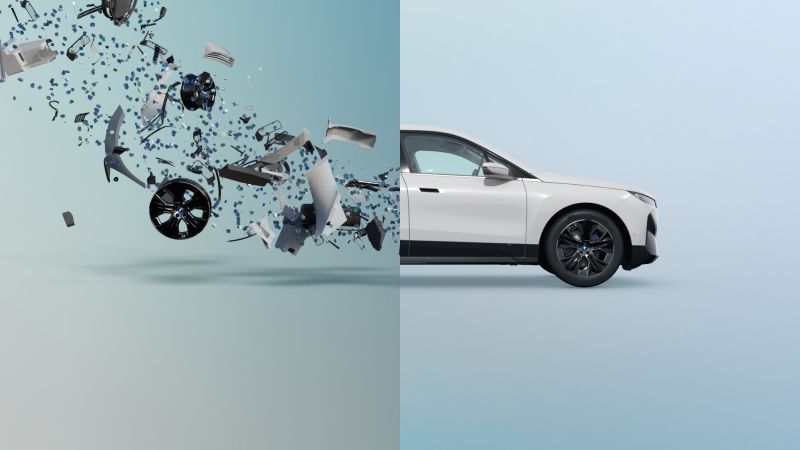
★Mark us as a preferred sourceThrough the BMW Car2Car project, the BMW Group and its consortium partners have successfully demonstrated that high-quality, closed-loop material recycling is fully feasible on an industrial scale within the automotive sector. By utilizing advanced processing and sorting technologies, the so-called “Car2Car rate” was increased from a mere 6 percent to an impressive 51 percent. This significant technological leap forward could fundamentally revolutionize how end-of-life vehicles are managed and how raw materials are sustainably sourced for future automotive production.
Objectives of the BMW Car2Car project and Consortium Partners
The research initiative was specifically designed to investigate the recovery of materials from end-of-life vehicles for direct reuse in new automotive applications. The ambitious project united stakeholders from across the automotive industry, materials manufacturing, the recycling sector, and specialized academia.
This broad consortium included BMW AG, various institutes of the TU Bergakademie Freiberg, the Helmholtz Institute Freiberg, the Technical University of Munich (TUM), and key industry players such as Scholz Recycling, STEINERT UniSort, thyssenkrupp Steel Europe, Salzgitter Mannesmann Forschung, Aurubis, Novelis Germany, OETINGER Aluminium, and Pilkington Automotive Germany. Backed by €6.4 million in funding from the German Federal Ministry for Economic Affairs and Climate Action (BMWK), the project highlights the national and ecological importance of securing localized raw material supply chains.
Significant Increases in Overall Recycling Rates
During the initial research, various recovery scenarios were meticulously explored. When applying standard market methods with minimal compulsory dismantling, the baseline “Car2Car rate” across the five focus material groups (steel, aluminium, copper, glass, and plastic) stood at just 6 percent. As accurately defined by the BMW Car2Car project, this specific rate represents the percentage of materials from a dismantled vehicle that can be recovered at a quality strictly high enough to be reused directly in new premium automotive applications—making it far more rigorous than conventional, lower-grade recycling metrics.
However, when the processing methods were expanded to include improved pre-sorting, modified shredding mechanisms, and state-of-the-art sensor-based material stream sorting (including AI-supported detection), the overall system rate remarkably climbed to 51 percent. This outcome clearly confirms the immense potential of establishing high-quality material loops.
Massive Potential for Metals: Steel, Aluminium, and Copper
The most substantial and measurable breakthroughs were achieved in the field of metal recycling. Under the optimized processing conditions established by the researchers, the specific recovery potentials skyrocketed across the board:
-
The recovery rate for steel increased from a baseline of 1 percent to an astounding 81 percent.
-
The corresponding rate for aluminium rose significantly from 23 percent to 52 percent.
-
The recovery efficiency for copper improved from 48 percent to 68 percent.
The industrial progress with steel is particularly noteworthy. Previously, microscopic copper-bearing impurities from vehicle cables and wiring connectors prevented the recycling of automotive scrap into high-quality flat steel. The project conclusively demonstrated that targeted mechanical sorting adds an essential processing step that successfully eliminates this copper contamination. A patent application has already been filed for this innovative process, which guarantees high-quality steel scrap that fully meets the demanding structural requirements of modern automotive manufacturing.
Remaining Technological Challenges with Plastics and Glass
While the metal recycling processes have shown extraordinary success, the extensive testing also highlighted that the transition to a full circular economy varies greatly depending on the material family. Plastics and vehicle glass still pose significant technological hurdles when it comes to meeting the automotive industry’s exceptionally strict quality and safety standards. The vast variety of chemical compositions, complex composite structures, and rigorous aesthetic requirements make it difficult to produce premium recyclates. For automotive plastics in particular, the consortium noted that future success will require highly tailored process chains that integrate specialized, multi-stage sorting and processing technologies to consistently achieve the necessary purity for closed-loop systems.
Real-World Industrial Application at the Leipzig Plant
The theoretical laboratory findings were subsequently put to the ultimate test in a real-world industrial environment. The comprehensive field test examined exactly 433 end-of-life vehicles representing 60 different BMW Group models. Crucially, this included test vehicles that were under five years old, ensuring the trial addressed the complexities of modern automotive electronics and composite materials.
The high-quality steel recovered through the advanced sorting processes was formed into new steel coils and integrated directly into the production line following rigorous quality assurance testing. At the BMW Group Plant in Leipzig, more than 100,000 series parts were successfully produced using this recovered steel and installed into new vehicles. This tangible mass-market application proves that producing new structural vehicle components from end-of-life scrap is a viable reality along a true industrial value chain.
Laying the Groundwork for the Future Circular Economy
Senior executives at the manufacturer emphasized that the circular economy remains an integral pillar of their corporate strategy. They highlighted that the full potential of these material loops can only be unlocked when the entire value chain is deeply optimized. The invaluable data from this research will feed into the brand’s “Design for Circularity” approach.
The overarching corporate goal is to increase the proportion of secondary materials in their new vehicle models from the current level of approximately 30 percent up to 50 percent. Furthermore, the findings provide a crucial empirical data foundation for the entire European automotive recycling landscape. In light of upcoming regulatory frameworks like the European ELV Regulation, achieving these loops industry-wide will require substantial further investments in dismantling infrastructure, scalable business models, and increased supply chain digitalization.


FAQ
What is the BMW Car2Car project?
The BMW Car2Car project is a research initiative focused on investigating and optimizing the recovery of materials from end-of-life vehicles for direct reuse in new, high-quality automotive applications.
Which materials were the main focus of the research?
The research primarily focused on maximizing the recovery potential for steel, aluminium, and copper, while also evaluating the technological limitations and possibilities for automotive plastics and glass.
What does the “Car2Car rate” mean?
The Car2Car rate refers to the specific percentage of materials from a dismantled vehicle that can be recovered at a quality level high enough to be reused seamlessly in the production of new automobiles.
What practical results were achieved at the Leipzig plant?
During the industrial field test at the Leipzig plant, more than 100,000 series parts were successfully manufactured from the recovered high-quality steel and subsequently installed into brand-new vehicles.
Reference Links:
-
Original Source: BMW Group Press Release
-
State Funding/Official Site: Federal Ministry for Economic Affairs and Climate Action (BMWK)


