


If you like our site, mark us as a preferred source on Google — so you’ll see our articles more often in search!
★Mark us as a preferred sourceStarting in the spring of 2026, a significant eco-friendly and administrative update will take effect in the capital’s waste management system. According to the official announcement by MOHU Budapest, the distribution of traditional paper flyers detailing residential bulky waste clearance (lomtalanítás) schedules will cease starting in April. Instead, Budapest residents will receive this personalized, precise information as an attachment to their monthly utility bills. This change aims to drastically reduce the environmental footprint and streamline the flow of information, while the company—in cooperation with district municipalities—takes increasingly strict measures against illegal waste dumping.
For decades, Budapest residents have been accustomed to finding separate paper flyers in their mailboxes informing them of the exact schedule for their district’s annual bulky waste clearance. However, following a decision by MOHU Budapest for 2026, this practice will be permanently discontinued for districts scheduled from April onwards.
Farewell to Flyers: How Will Information Arrive From Now On?
According to the official announcement, the service provider will now attach the detailed clearance briefing to the monthly waste transport bill. This new method directly aligns with the billing preference chosen by the household: customers who receive their bills by mail will find a paper attachment inside the envelope, while those who have switched to electronic billing (e-billing) will receive the notification in a digital format.
The billing attachment will contain all the essential details required for a smooth clearance process:
-
The exact dates for placing the waste outside and the subsequent collection for the specific district zone.
-
The specific types of waste that can legally be placed in public spaces.
-
Precise rules regarding the placement and other related instructions.
The service provider justifies this measure primarily as a way to cut down on paper waste, simultaneously ensuring that households receive all necessary information in one place and in a user-customized format.
Stricter Measures Against Illegal Dumpers and Businesses
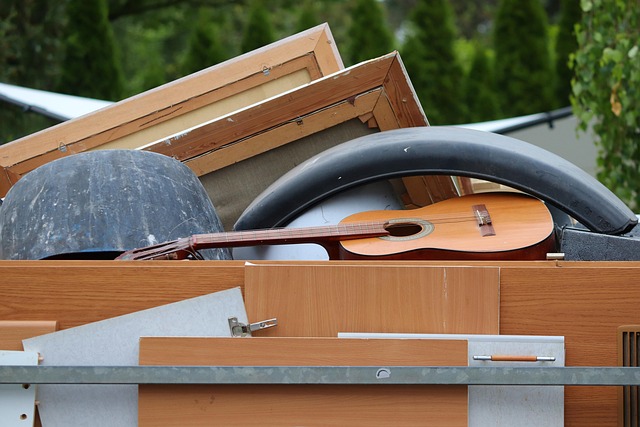
The institution of annual bulky waste clearance faces serious challenges year after year due to unauthorized waste dumping. MOHU Budapest specifically highlighted that residential bulky waste clearance—as the name implies—is strictly reserved for the removal of large, oversized waste that has become obsolete in local households.
A frequent and severe problem is that individuals from other municipalities or local businesses (such as restaurants, auto repair shops, and corporate offices) hide their own industrial waste, old electronic equipment, construction debris, or chemicals among the residential bulky waste. Furthermore, placing waste in random public areas, parks, or traffic islands of multi-lane roads—rather than directly in front of residential properties—is also classified as illegal dumping. Putting waste out at times or locations other than those officially designated constitutes a public cleanliness offense. MOHU emphasized that they will take legal action in cases where corporate-level, irregular dumping is suspected, and clearing these illegal hotspots remains the responsibility of the area manager (usually the local municipality).
Itemized Rules: What is Allowed and What is Strictly Prohibited?
A successful and clean bulky waste clearance relies entirely on following the rules. Bulky waste may only be placed on the street after 18:00 on the date specified in the official notification. The waste must be placed in a public area directly in front of the residential building, easily accessible by collection vehicles, and in a way that does not obstruct pedestrian or vehicular traffic. Placing items on the road, bicycle paths, or green spaces is strictly prohibited. Flat-packed wooden waste must be collected and stacked separately from other bulky items.
Only the following large items may be placed out:
-
Worn-out furniture (wardrobes, tables, chairs).
-
Bed inserts and mattresses.
-
Carpets and other large household items that do not fit into standard municipal waste bins due to their size.
It is strictly PROHIBITED to place the following items in public spaces:
-
Everyday municipal solid waste (regular household trash).
-
Selectively collectible packaging materials (paper, plastic, metal, glass).
-
Construction and demolition debris (tiles, rubble, soil).
-
Coal dust and ash.
-
Vehicle tires.
-
Flat glass (windows, mirrors).
-
Green waste (e.g., branches, leaves) and textiles.
-
Electrical and electronic waste (e-waste).
-
Waste originating from industrial or service activities.
-
Hazardous waste (e.g., paint, used oil, chemicals, car batteries).
Year-Round Alternatives: Waste Collection Yards and Reuse Centers
For Budapest residents who cannot or do not wish to wait for the once-a-year free district bulky waste clearance, there are legal options available year-round to dispose of unwanted items.
Households can transport large bulky waste free of charge at any time of the year to one of the four designated waste collection yards operating in the capital:
-
1151 Budapest, Károlyi Sándor u. 166.
-
1186 Budapest, Besence u. 1/A.
-
1186 Budapest, Ipacsfa u. 14.
-
1225 Budapest, Nagytétényi út 335. To ensure a smooth drop-off process, booking an appointment online is highly recommended.
Additionally, if an item destined for disposal, such as a piece of furniture, is still in good condition and could be used by someone else, MOHU provides a free drop-off option at the two Attitude-Forming and Reuse Centers (Szemléletformáló és Újrahasználati Központok) in Budapest.
Official Source and Reference:
-
Original, official service provider source (MOHU Budapest): Lakossági lomtalanítás 2026


