


If you like our site, mark us as a preferred source on Google — so you’ll see our articles more often in search!
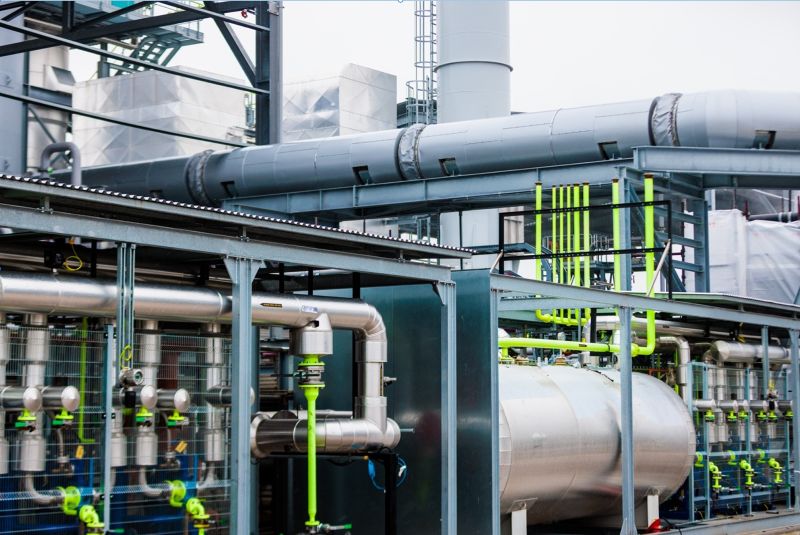
★Mark us as a preferred sourceCirctec has officially opened the first unit of its sustainable chemical hub in the port city of Delfzijl, Netherlands. The facility specializes in the chemical recycling (pyrolysis) of end-of-life tires (ELTs), and the newly inaugurated first phase already represents significant capacity in the European market. The plant not only addresses the urgent issue of waste management but also provides critical raw materials for the chemical industry and maritime transport while drastically reducing carbon emissions.
The management of end-of-life tires is a global environmental challenge. Circtec’s technology transforms this linear process into a circular one by breaking down tires at the molecular level and converting them into valuable industrial feedstocks at one of the Netherlands’ most important industrial parks.
Phased Development: Launch of Phase One
According to Circtec’s strategic plans, the giant facility in Delfzijl will reach its final performance capacity in multiple stages. The opening ceremony in January 2026 marks the successful completion of the first phase, laying the foundation for future expansions.
-
Immediate Operations: With the commissioning of the first phase (50,000 tonnes), commercial-scale processing of tires has commenced.
-
Modular Construction: The technology allows the company to deliver further processing units in a scheduled manner based on market demand.
-
Ultimate Goal: While the first unit is currently operational, the entire complex is designed to eventually process 200,000 tonnes of tires annually, making it the largest capacity of its kind in the world.
Quantitative Data and Technical Parameters
Upon full completion, the investment’s projected annual production figures are as follows:
-
Sustainable Marine Fuel (HFO): The technology will produce 90,000 tonnes of low-carbon, renewable marine fuel (Circtec Marine™) annually.
-
Circular Carbon Black: The plant will generate 70,000 tonnes of recycled carbon black per year, to be used in the production of new tires.
-
Raw Material Recovery: The process will recover 15,000 tonnes of steel annually from the tire structures.
Environmental Impact and Innovation
Circtec’s proprietary pyrolysis technology breaks down raw materials at high temperatures in an oxygen-free environment. This method is significantly more efficient than mechanical shredding, as it recovers the original chemical value of the materials.
According to the company’s measurements, the application of this technology results in 67% fewer CO2 emissions compared to traditional tire disposal methods. Additionally, the gases generated during operation are recirculated into the system, allowing the facility to meet a significant portion of its own thermal energy requirements.
Economic Significance
The realization of the project was supported by significant capital investment and long-term agreements with global partners, including some of the world’s largest tire manufacturers and shipping companies. The Delfzijl plant creates hundreds of direct and indirect jobs in the region, reinforcing the Netherlands’ role as a European hub for green technological innovation.
Official Sources and References:
-
Circtec Official Press Release (Jan 28, 2026): https://www.circtec.com/wp-content/uploads/2026/01/28-January-2026-press-release-for-Circtec-plant-opening-1.pdf
-
Circtec Technology Portfolio: https://www.circtec.com/technology/
-
Groningen Seaports – Delfzijl Industrial Park Data: https://www.groningen-seaports.com/
Consistent structure, quick answers: every article is built so that both readers and AI search tools can find the key points easily. Our content is produced with the help of AI tools and reviewed by our editor.


