


If you like our site, mark us as a preferred source on Google — so you’ll see our articles more often in search!
★Mark us as a preferred sourceFor decades, managing biohazardous plastic waste has posed a massive logistical challenge and environmental burden for the healthcare and laboratory industries. Instead of relying on traditional, highly polluting disposal methods like landfills or incineration, a more sustainable path has now emerged. On January 29, 2026, global medical technology giant BD (Becton, Dickinson and Company) and Irish cleantech innovator Envetec Sustainable Technologies announced the successful completion of a joint feasibility study. The pilot project proved that strictly regulated laboratory plastics can be safely disinfected and recycled into high-quality manufacturing raw materials within a circular economy framework.
Driven by strict infection control and hygiene regulations, the lifecycle of laboratory consumables—typically blood collection tubes, syringes, Petri dishes, and medical tubing—is traditionally linear: after a single use, they must be destroyed as hazardous waste. The primary goal of the joint pilot study by BD and Envetec was to create a viable, closed-loop recycling model that finally breaks this outdated linear chain.
A New Life for Regulated Medical Polymers
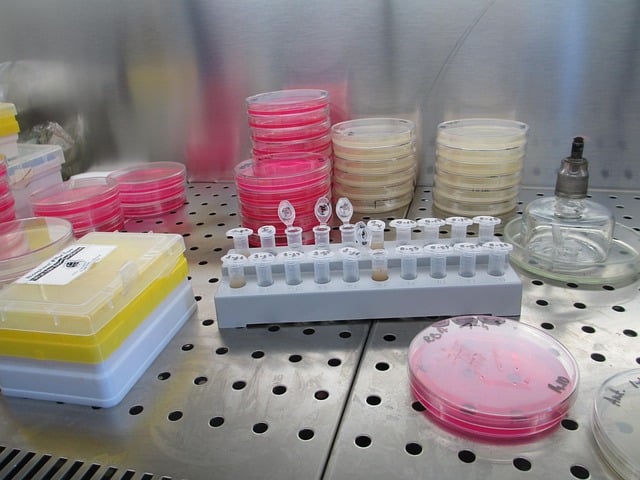
The experiment proved that with the right industrial technology, Petri dishes made of polystyrene can be transformed back into high-quality new raw materials. Official test results suggest that the process can also be successfully applied to other widely used medical and laboratory polymers, including:
-
Polyester (PET)
-
Polypropylene
-
Polyethylene
According to the data, once these materials are safely cleaned and processed, they can be seamlessly reintroduced into the manufacturing supply chain, drastically reducing the sector’s reliance on virgin plastics.
How It Works in Practice: GENERATIONS Technology
The technological backbone of the pilot program was Envetec’s patented Generations process. This is a specific, low-energy, non-thermal chemical disinfection technology capable of treating contaminated, biohazardous materials directly at their source of generation.
During the pilot project, led by the BD Sustainable Medical Technologies Institute, unused, post-industrial waste consisting of BD BBL™ plated media was utilized. The processing involved the following strict steps:
-
The plates and their biological contents were first shredded using industrial machinery.
-
The materials were then separated and underwent complete chemical disinfection.
-
The result was a clean, non-hazardous, recyclable polymer flake.
At the very end of the process, these clean flakes were extruded into new polystyrene pellets and subsequently molded into new Petri dish prototypes. The innovative products successfully passed both material property tests and molding feasibility checks.
Measurable Ecological Impact and Scope 3 Emission Reductions
While the immediate goal of the project is landfill avoidance, peer-reviewed research backing Envetec’s technology illustrates the climate protection potential with concrete figures. According to previous Envetec reports related to the technology, recycling a single metric ton of polymer waste and treating the biohazardous materials with Generations technology can result in a staggering 91 percent reduction in greenhouse gas (Scope 3) emissions compared to traditional incineration or landfill methods.
Malcolm Bell, CEO of Envetec, highlighted the significance of the project:
“By establishing a proof of concept for a pathway that enables regulated plastics to be safely treated and returned to productive use, we are opening the door to sustainable solutions. This helps the industry avoid landfills and keep valuable materials in continuous circulation.”
A Vision for Circular Healthcare
Envetec is currently actively collaborating with its customers and recycling partners to build out these sustainable, circular pathways on a broader scale. The successful pilot project marks a true milestone: it proves that even with high-volume healthcare consumables, there is no need to compromise. Strict medical safety is perfectly compatible with the creation of a green, circular economy.
Official Source and Reference:
-
Original Press Release (January 29, 2026): BD and Envetec Demonstrate Closed-Loop Recycling Solution for Laboratory Plastics in Health Care


