


If you like our site, mark us as a preferred source on Google — so you’ll see our articles more often in search!
★Mark us as a preferred sourceParallel to global economic and population growth, the planet’s waste generation has reached unprecedented proportions. Published in March 2026, the World Bank’s comprehensive report titled “What a Waste 3.0: Global Snapshot of Solid Waste Management Toward Circularity until 2050” sheds light on a stark reality: annual global waste generation could approach 4 billion tons by 2050. Based on the latest data from 217 countries and 262 cities, the document reveals that one-third of the waste generated globally is already left unmanaged or ends up in illegal dumpsites, threatening an incalculable public health and climate crisis.
3.86 Billion Tons: The Global Waste Mountain in Numbers
The World Bank‘s third and latest edition of its waste management report (following the 2012 and 2018 “2.0” versions) provides drastic figures regarding current and projected global waste generation. According to official data, the world produced approximately 2.56 billion tons (rounded to 2.6 billion by some institutional analyses) of municipal solid waste in 2022.
Based on the current “business-as-usual” scenario, if no immediate, radical policy and investment interventions occur, this number is expected to reach 3.86 billion tons by 2050. This represents an increase of roughly 50 percent in just a few decades.
The intensity of generation at an individual level is also striking: on a global average, a person produces 0.88 kilograms of waste per day. However, this value spans an extremely wide range depending on national economic and demographic indicators. While per capita waste generation in some low-income African countries (such as Niger) is a mere 0.2 kilograms per day or less, in high-income nations like the United States or Canada, this figure exceeds 2.2 kilograms per day.
The Geography of Inequality: A Ticking Bomb in the Developing World
“What a Waste 3.0” details the sharp statistical contrasts between the Global North and South. The report confirms that the volume of waste generation is closely correlated with income levels: high-income countries, despite accounting for only 16 percent of the world’s population, generated 29 percent (754 million tons) of global waste in 2022. Meanwhile, lower-middle-income countries, home to 40 percent of the global population, are responsible for only 25 percent (638 million tons) of the world’s waste.
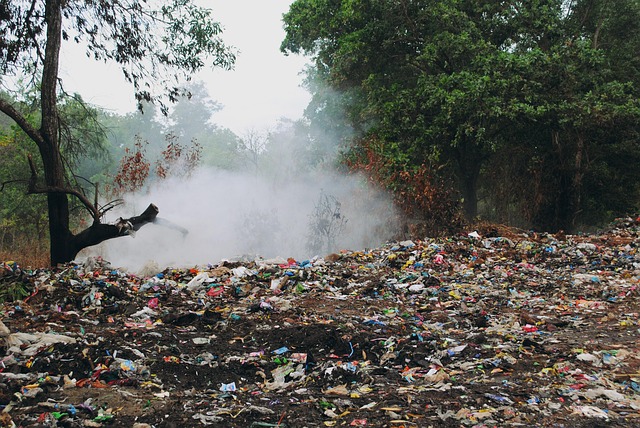
The true catastrophe, however, lies not in the volume generated, but in the lack of proper management. The report highlights the shocking fact that one-third (roughly 30 percent) of the waste generated globally remains uncollected or ends up in open dumping sites. This problem is most critical in low-income countries:
-
In these regions, only 28 percent of generated waste is collected.
-
A mere 3 percent of the generated garbage is managed in any form of controlled facility (compared to the nearly 100 percent rate in high-income countries).
The epicenters of the future demographic and economic explosion will unequivocally be the developing regions. Forecasts indicate that over the coming decades, the fastest waste growth is expected in Sub-Saharan Africa (+124 percent) and South Asia (+99 percent).
Food and Plastic: What Actually Makes Up the Waste Mountain?
The third-generation report also provides precise statistics on waste composition. Globally, the largest portion of municipal solid waste—exactly 38 percent—consists of food waste. This loss occurs at both retail and consumer levels due to spoilage, aesthetic standards, or expiration dates. In low-income countries, the dominance of food and green waste is even more pronounced: there, this category accounts for more than 52 percent of the total volume. In contrast, high-income nations are dominated by dry recyclables, textiles, and electronic waste (making up roughly 50 percent of total waste).
The situation regarding plastics is particularly alarming: the document estimates that 93 million tons (about 29 percent of all plastic waste) leak into the environment unmanaged each year, causing immeasurable damage to ecosystems and oceans.
Climate Catastrophe and the High-Ambition Alternative
Unmanaged waste mountains are one of the most underestimated catalysts of global warming. Based on official World Bank measurements, the waste sector emitted approximately 1.28 billion tons of CO2-equivalent greenhouse gases in 2022. The vast majority of this—1.15 billion tons—consisted of highly potent methane gas originating from the decomposition of organic waste.
However, “What a Waste 3.0” is not merely an ominous diagnosis. Researchers also developed a “high-ambition” alternative scenario. If global governments take immediate and systemic steps toward a circular economy, improve collection rates, and radically reduce waste generation, the global waste volume by 2050 could be kept near current levels. In this optimistic scenario, climate-damaging emissions from the waste sector could drop significantly to roughly 0.91 billion tons of CO2-equivalent, offering a chance for a more livable and sustainable future.
Official Sources and References:
-
Latest World Bank Report (2026): What a Waste 3.0: Global Snapshot of Solid Waste Management Toward Circularity until 2050 (World Bank Open Knowledge Repository)
-
Supplementary Analysis: Ten Charts that Explain the Global Waste Crisis (World Bank Blogs, March 2026)


