If you like our site, mark us as a preferred source on Google — so you’ll see our articles more often in search!
★Mark us as a preferred sourceMarine waste found in deep-sea environments undergoes significant degradation, complicating traditional mechanical recycling efforts. The OCEANZYME project, running from 2026 to 2028, investigates innovative enzymatic solutions to reintegrate marine litter into the plastics value chain, supporting the circular economy. Here is dontwasteit.hu’s summary of the latest technological breakthroughs.
The Challenges of Deep-Sea Waste Recycling
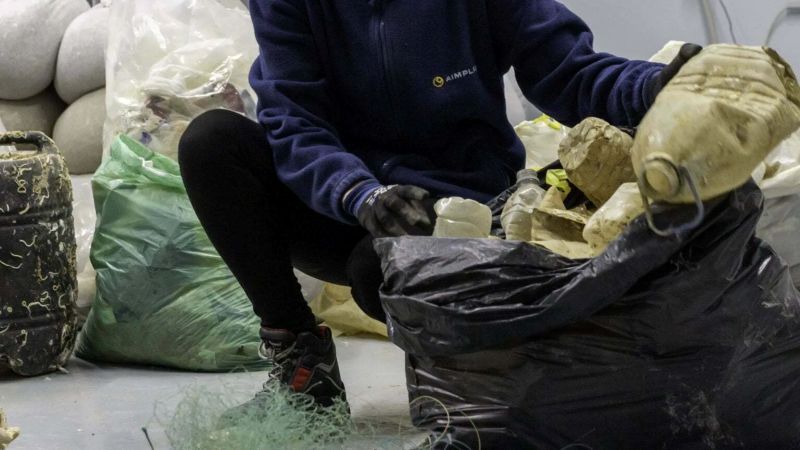
Marine litter accumulated in deep-sea environments exhibits a high degree of degradation. This natural breakdown process leads to the loss of the materials’ original physico-mechanical properties. Consequently, recycling this waste through conventional mechanical processes presents significant difficulties, severely limiting its reintroduction into the commercial plastics value chain.
The OCEANZYME Project: Goals and Consortium
To overcome these challenges and provide an effective alternative for recycling, the OCEANZYME project was launched to investigate new enzymatic recycling solutions. The initiative, which began at the end of January 2026 and will run until 2028, is being carried out by an extensive professional consortium. The participating organizations include the Plastics Technology Centre AIMPLAS, the Institute of Marine Sciences, and the Institute of Advanced Chemistry of Catalonia of the CSIC. The project is coordinated by the Vertidos Cero Association.
Development is taking place in collaboration with the Biodiversity Foundation of the Spanish Ministry for Ecological Transition and Demographic Challenge through the Pleamar Programme. The initiative is also co-funded by the European Union through the European Maritime, Fisheries and Aquaculture Fund (EMFAF).
Integrated Approach and Biological Innovation
OCEANZYME adopts an integrated approach that combines metagenomic analyses, enzymatic characterization, and molecular simulations, alongside the isolation of bacteria with functional degradation capabilities. The primary aim is to valorize marine litter collected by fishers through enzymatic recycling and to explore the application of the resulting products in sectors such as fisheries and aquaculture.
Quantitative Data and Marine Campaigns in Spain
To achieve these goals, passive fishing campaigns will be conducted to remove marine litter in two of Spain’s five marine regions: the North Atlantic and the Levantine-Balearic regions. In these areas, the density of marine waste is notable, with average densities ranging from 40 to 300 items per square kilometer.
Technological Process: From Waste to Enzymes
The collected plastic waste will first be characterized to analyze its associated microbial communities through metagenomics. Simultaneously, researchers will carry out pure culture isolations of bacteria that possess the potential to degrade different plastic compounds.
Subsequently, enzymes with degradation potential will be identified and modeled in 3D alongside the plastic substrates. Finally, these enzymes will be produced and tested to validate their potential use in practical enzymatic recycling applications.
Circular Economy and Future Vision
The project brings together the collective expertise of all participating organizations in waste removal protocols, marine microorganism studies, molecular simulations, and plastic recycling. Through a strong communication and dissemination strategy, OCEANZYME promotes the circular economy, the protection of the marine environment, and technology transfer.
References:
-
Original Source: AIMPLAS – OCEANZYME Investigates New Enzymatic Recycling Solutions for Marine Litter
-
Official Government Site (Spanish Ministry for Ecological Transition – Fundación Biodiversidad): Programa Pleamar – OCEANZYME Project Page
Consistent structure, quick answers: every article is built so that both readers and AI search tools can find the key points easily. Our content is produced with the help of AI tools and reviewed by our editor.