


If you like our site, mark us as a preferred source on Google — so you’ll see our articles more often in search!
★Mark us as a preferred sourceGlobal specialty chemicals company Evonik has entered the market with new catalysts and adsorbents that significantly improve the quality of pyrolysis oil extracted from plastic waste. The company’s specialized modular systems promise seamless integration into existing industrial facilities. Headquartered in Essen, Germany, the company aims its developments at increasing the efficiency of chemical recycling, which is essential for establishing a viable, sustainable circular economy and reducing dependence on fossil raw materials.
The Importance of Chemical Recycling and the Pyrolysis Process
In the processing of plastic waste, mechanical recycling—for example, in the case of clean PET bottles—is already a well-established, standard method. However, a significant portion of global plastic waste consists of mixed and contaminated materials that are very difficult or impossible to recycle mechanically. Chemical recycling provides a solution to exactly this technological gap.
During the pyrolysis process, plastic waste is broken down into its chemical building blocks at high temperatures with the complete exclusion of oxygen. The primary product of the technology is the so-called pyrolysis oil, which can supplement the fossil raw materials traditionally used in steam crackers (such as naphtha derived from crude oil). Steam cracker units further process this pyrolysis oil to produce basic building blocks—such as ethylene and propylene—from which new plastics can be manufactured.
Strict Industry Standards and Quality Challenges
Although pyrolysis oil is a highly promising alternative, its industrial application faces serious technological challenges. The oil thus extracted often contains impurities such as chlorine, nitrogen, or silicon. These pollutants degrade the operational efficiency of steam crackers and jeopardize plant safety.
Regarding the new technologies, Hendrik Rasch, Head of Circular Packaging and Plastic Recycling in Evonik’s Next Markets program, pointed out: “Operators of cracker plants place strict quality requirements on the raw materials used. This is exactly where our products come into play, significantly contributing to improving the quality of pyrolysis oil.”
Evonik’s Innovative Solutions: The Purocel™ Product Line
Relying on its extensive expertise in the petrochemical and raw material processing sectors, Evonik began developing technologies for purifying pyrolysis oil years ago. As a result of this research, the company introduced the Purocel™ product line, which includes adsorbents specifically designed to remove impurities from the oil.
One of the most outstanding elements of the portfolio is Purocel™ 505, which combines two separate purification processes in a single step. The technology first separates chlorine atoms from larger molecules using a catalytic reaction, and then binds the resulting hydrogen chloride. Compared to conventional solutions, this process can remove up to three times more chloride from pyrolysis oil.
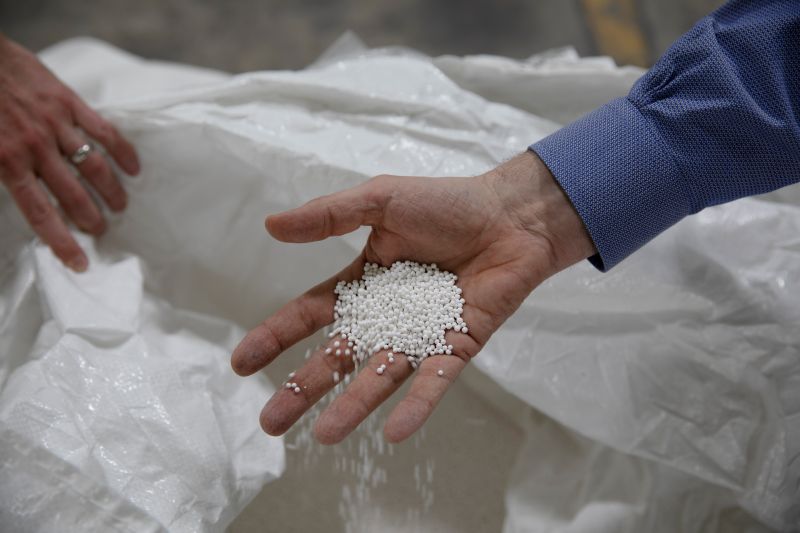
For more complex industrial applications with higher requirements, Evonik supplements adsorption with so-called hydrotreating. During this process, hydrogen reacts with the remaining impurities and converts them into volatile compounds. To protect the environment and conserve resources, Evonik utilizes recycled Purocel H catalysts in this process. These catalysts and adsorbents are manufactured and recycled at Evonik’s plant in Little Rock, Arkansas, in the United States.
Modular Integration: Rocket Technology
Beyond the developed chemical products, Evonik also offers complete modular systems that guarantee seamless installation into existing industrial infrastructure. The company’s solution, called “Rocket Technology,” provides pre-configured column modules containing adsorbents (such as Purocel™ 510). These units can be connected to various pyrolysis plants and steam crackers with maximum flexibility, allowing the efficient purification process to be integrated without major capital investments or prolonged production shutdowns.
Market Outlook, Regulatory Environment, and Corporate Figures
Demand for chemical recycling is continuously growing in the global market, driven largely by new, tightening regulatory frameworks. Evonik positions itself as a strategic and systemic partner to the chemical industry, offering its solutions tailored to a wide variety of industrial needs—from smaller capacity pyrolysis plants to monumental petrochemical complexes.
These technologies not only support the operation of the circular economy but also increase the overall resilience of the industry. Through the efficient use of pyrolysis oil, dependence on fossil resources can be drastically reduced, the environmental impacts of industrial production can be minimized, and last but not least, security of supply is improved.
Behind the innovation is the Essen (Germany)-based Evonik, a global specialty chemicals company currently active in more than 100 countries. The corporate group employs approximately 31,000 people and generated sales of €14.1 billion and an adjusted EBITDA of €1.9 billion in the 2025 financial year.
References and Sources


