


If you like our site, mark us as a preferred source on Google — so you’ll see our articles more often in search!
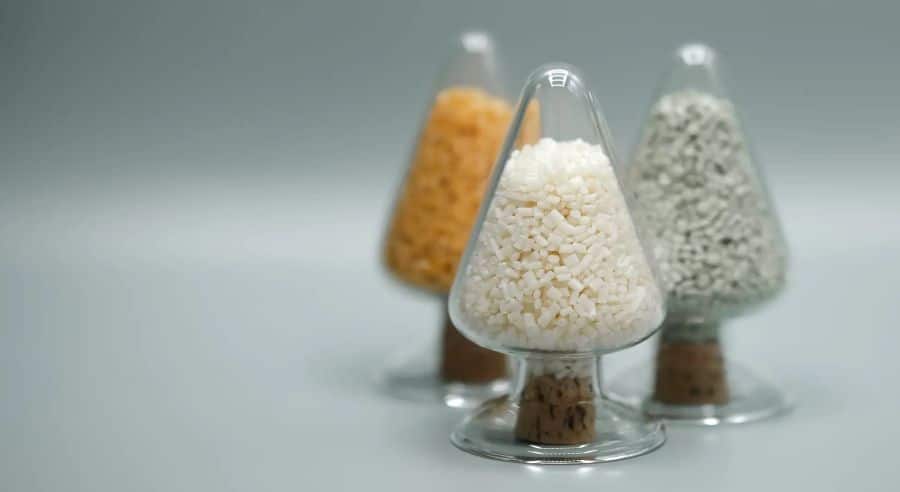
★Mark us as a preferred sourceThe crisp packet, the coffee pouch, the film around sliced ham: from the outside a single thin skin, in reality three or four mutually incompatible plastic layers laminated together. That is why multilayer packaging recycling is one of the most stubborn problems in the waste sector. The layers either have to be separated or the polymers broken down into molecules, and both routes are expensive. A Tokyo start-up, esa (Environmental Solutions Architect), offers a third way: it turns composite plastics into recycled pellets mechanically, without separating the layers.
The idea itself is not new, but the execution is worth a closer look. In four years the company has raised JPY 1.15 billion, runs its own plant in Ibaraki Prefecture and can point to a life cycle assessment carried out with Kyoto University. We looked at what the company claims on its website and in its announcements – and what it does not.
In short: esa has developed a mechanical process for multilayer packaging recycling that turns composite plastics into pellets called Repla without layer separation, using special screw designs and precise pressure and temperature control. The results are convincing, but for now they apply almost exclusively to clean post-industrial manufacturing waste of known composition, not to what households put in their recycling bins.
Who is behind esa?
esa was founded in March 2022 and is headquartered in Otemachi, Tokyo’s business district. The company’s team is led by CEO Chikako Kurokawa, a serial entrepreneur. On the technology side, however, the key people are the two co-founders, CTO PY Chou and CSO PJ Chou, who each spent more than twenty years in the plastic extrusion equipment business. esa is therefore a machine-building company at heart rather than a chemicals company – and its method shows it.
The team also includes COO Hideaki Yonekubo, who holds more than thirty patents from his years in product development at Canon, led a national NEDO project on recycled plastics at Asahi Kasei, and spent four years in the EU as a public affairs representative working on circular economy policy. The European regulatory landscape is therefore familiar territory for the company.
Funding has been built up in stages. In February 2024 the company raised JPY 100 million for capacity expansion, followed in August that year by a JPY 450 million Series B round. In February 2026 Mitsubishi UFJ Morgan Stanley Securities came in, bringing cumulative funding to JPY 950 million. On 13 October 2026 another round closed with two MUFG group companies, Environmental Energy Investment and SG Wonder zone, taking the total committed by its investors to JPY 1.15 billion. The new money will go towards stable production and supply of composite recycled pellets and developing new applications.
The target market is clearly defined. According to Plastic Waste Management Institute figures cited by esa, around 72 per cent of plastic waste in Japan goes to incineration with heat recovery or to landfill. In Japan this is often called “thermal recycling”, but internationally it does not count as recycling.
How does the esa method work?
esa runs production lines that it designs and builds in-house. According to its description of the Repla Process, the core of the technology is kneading with special screw designs combined with precise pressure and temperature control. Each line is set up for the moisture content and exact composition of the incoming material. The layers are not separated: the different polymers are melted and worked together into uniform pellets.
The company designs explicitly for real-world storage conditions. In its own words it plans for the worst case – material left out in the rain, for example – so that output quality holds up whatever arrives. For compositions it has not encountered before, it offers bespoke line designs.
Processable materials include polystyrene (PS), polyethylene (PE), polypropylene (PP), PET and other thermoplastics, as well as their composites. Input can arrive as film rolls, ingots, flakes, pellets or moulded products.
The company says the process needs no complex chemicals and little energy, cuts emissions by more than 90 per cent compared with incineration, and reuses all of its process water. These are the company’s own claims; we found no public independent verification of them.
From a technical point of view, the challenge is polymer incompatibility. PE and PET, or PE and polyamide, do not mix in the melt and have very different melting points. Without compatibilisers, such blends usually produce a material with weak mechanical properties. esa does not say whether it uses additives, only that it uses no complex chemicals. A kneading-based approach typically aims to disperse the minority polymer as fine particles within the main polymer – more a feat of extrusion engineering than a chemical breakthrough, which fits the founders’ background.
Production takes place at the Yuki Circular Factory in Yuki City, Ibaraki Prefecture, where two lines process hard-to-recycle, inseparable composite plastics. The company does not publish the plant’s annual capacity.
What waste does esa process today?
The company’s website gives three typical examples. The first is semiconductor cover tape: a multilayer film of several resins used to carry precision components. The second is composite nonwoven waste generated in the manufacture of disposable diapers. The third is multilayer packaging film used for food and product packaging.
All three are post-industrial waste, generated during manufacturing. The company’s mission statement says as much: it aims to build a domestic recycling loop for hard-to-recycle post-industrial plastic waste. The blackboard eraser project announced in October 2026 is a case in point: together with Nihon Rikagaku Industry, esa turned semiconductor cover film that used to be incinerated into a finished product. The conditions for mass production, quality and supply stability are now being assessed.
What does the life cycle assessment show?
esa studied the environmental impact of Repla together with two graduate schools of Kyoto University. According to the results, producing Repla emits up to 87 per cent less CO₂ than virgin polyethylene and around 83 per cent less than bio-based polyethylene. When half of the raw material in bag manufacturing is replaced with Repla, CO₂ emissions fall by 42 per cent, while human carcinogenic toxicity and fossil resource use each fall by 61 per cent.
These are strong numbers, but two points need adding. The assessment specifically covers Repla made from uncontaminated factory scrap. Such feedstock carries no collection, sorting or washing burden, which would account for a significant share of emissions with household waste. The second issue is functional equivalence: a pellet made of a polymer blend does not replace virgin polyethylene one-for-one in every application. The public summaries do not say which technical properties the comparison was based on.
Why does the post-industrial feedstock matter so much?
In esa’s case, “without sorting” means that the layers do not need to be separated. The input, however, is typically already segregated: it comes from a single factory, with a known composition and without food residue, labels or foreign matter. The sorting is effectively done by the producer, simply because the waste arises in one place and in one form.
Household multilayer packaging is a different matter. In a pile of films sorted out of a household recycling bin, the composition changes from pouch to pouch; there are aluminium-metallised and paper-laminated layers, printing inks, adhesives, grease and food residue. In our earlier analysis of flexible packaging – Bench or new packaging? The fate of flexible mixed polyolefin waste – we also saw that in Europe a significant share of such material is already lost during pre-treatment.
None of this diminishes esa’s achievement. In Japan most composite manufacturing waste is currently incinerated, so recovering it as material is real progress. It also makes sense that the company is pursuing stable supply: a pellet of stable quality needs feedstock of stable composition, and today post-industrial waste provides that. But anyone who reads the news as “household crisp packets can now be recycled” is reading more into it than the public data supports.
What becomes of Repla?
Repla pellets are offered for injection moulding, extrusion and sheet forming. The product examples are telling: the 100 per cent recycled Repla Pallet won a Good Design Award in 2026 (the Repla material itself received the same award in 2023), esa is working with DigitalArchi on 3D-printed concrete formwork, and the company is also looking at automotive and construction applications.
These are all durable, thick-walled products; food-contact packaging is not among them. esa is therefore not making packaging from packaging, but channelling packaging material into long-lived products. Many would call this downcycling, yet the Dutch–Belgian study cited above showed that mechanical recycling into long-lived products often achieves a better circularity and environmental balance than packaging used for a few days. A pallet used for thirty years gets more value out of the same kilogram of plastic.
Multilayer packaging recycling in Europe: where would an esa-type solution fit?
Under the EU Packaging and Packaging Waste Regulation (PPWR), from 2030 all packaging must meet design-for-recycling criteria, and mandatory recycled content applies: 30 per cent for contact-sensitive plastic packaging and 35 per cent for other plastic packaging.
The industry has two main answers. One is mono-material design, i.e. flexible packaging made only of PE or PP. The other is advanced recycling, exemplified by the 16-partner InFACT project or by pyrolysis and solvolysis. We know, however, that chemical recycling remains more expensive than virgin plastic.
esa-style mechanical processing of composites sits between the two: cheaper and less energy-intensive than the chemical route, but its output only goes into durable products. Two limitations need stating clearly. First, only material recovered from post-consumer plastic waste counts towards the PPWR recycled content targets, so Repla made from post-industrial waste would not help the packaging industry meet its quotas. Second, the technology does not make multilayer packaging “recyclable” in the PPWR sense, as the regulation’s assessment presupposes recycling at scale based on household collection and sorting.
Where an esa-type solution could genuinely add value in Europe is with packaging converters, printers and laminators: edge trim, roll ends, misprints and start-up scrap. Many plants already recycle their mono-material scrap in-house, but laminated composite scrap typically goes to energy recovery. esa’s licensing model, which would transfer the line technology to partners, could be an answer for exactly these locally generated streams.
What does this mean for Hungary?
In Hungarian sorting plants, multilayer films from households typically end up in the sorting residue and are mostly used from there as refuse-derived fuel (RDF), for example in cement kilns. An esa-type technology would not change this in the short term, since it is not built around the household stream.
Hungary’s packaging and hygiene product industries, however, also generate composite manufacturing waste. A licensed in-plant or regional line could be an alternative to energy recovery here, provided two conditions are met: sufficient volumes of consistent composition, and a paying buyer for the pellets. The natural market would be pallets, street furniture, fencing and construction elements – in other words, the same durable products already made from film waste today.
Open questions
Several important data points are missing from the public material. We do not know Repla’s mechanical properties (tensile strength, impact resistance, melt flow index) or how they vary from batch to batch. We do not know the annual processing capacity of the Yuki plant. There are no public results from trials with contaminated household composite waste. It is unclear whether the blended pellet can be reprocessed the same way at the end of the product’s life or is a one-off step in the cascade. And the commercial terms of the licensing model are not yet known either.
The bottom line
In multilayer packaging recycling, esa has not delivered a miracle cure but a well-engineered solution: from clean composite manufacturing waste of known composition it produces, without layer separation, pellets suitable for durable products – and in doing so genuinely saves material from incineration. It does not solve the household packaging waste problem, does not count towards PPWR packaging quotas and does not return to food packaging. Anyone looking to stop incinerating their own composite production scrap should keep an eye on the company’s licensing model and its news page.
🔗 Official sources and references: 👉
- esa Inc. – home page: esa-gl.com/en
- esa – About Us (mission, Repla Process, Yuki Circular Factory, team): esa-gl.com/en/about
- esa – Service (Repla, Repla Process Licensing): esa-gl.com/en/service
- esa – Company (overview, investors, history): esa-gl.com/en/company
- esa – News: esa-gl.com/en/news
- THE BRIDGE: esa Develops Composite Plastic Recycling Technology, Secures Funding from Mitsubishi UFJ Morgan Stanley Securities (March 2026)
- LOGI-TODAY: esa raises JPY 1.15 billion to expand supply of composite recycled material (13 October 2026, in Japanese)
- Nikkan Kogyo Shimbun / PR TIMES: Repla life cycle assessment results with Kyoto University (in Japanese)
- DIME / PR TIMES: Blackboard eraser made from semiconductor cover film with Nihon Rikagaku Industry (in Japanese)
- Kepple: esa’s Series B funding round (2024, in Japanese)
Consistent structure, quick answers: every article is built so that both readers and AI search tools can find the key points easily. Our content is produced with the help of AI tools and reviewed by our editor.


