If you like our site, mark us as a preferred source on Google — so you’ll see our articles more often in search!
★Mark us as a preferred sourceThe newly announced Philippine plastic reduction targets establish a comprehensive national strategy to cut plastic pollution by 85 percent by the year 2040. Launched through the Philippine National Plastic Action Roadmap 2026–2040, the initiative outlines a long-term shift toward preventing plastic waste at the source while strengthening collection, recovery, and recycling nationwide.
In short: On September 25, 2026, the Department of Environment and Natural Resources (DENR) launched the Philippine National Plastic Action Roadmap 2026–2040 in Makati City. Developed through the National Plastic Action Partnership (NPAP) Philippines in collaboration with the World Economic Forum (WEF) and its global action partnerships, the blueprint aims to reduce plastic pollution in the Philippines by 85 percent by 2040. The roadmap is structured around 10 mutually reinforcing outcomes (6 core system changes and 4 enabling conditions), addresses both upstream and downstream phases of the plastics value chain—including single-use sachets—and integrates safeguards for informal waste workers, who collect three-quarters of all materials reaching domestic recyclers.
A Unified Framework Across the Plastics Value Chain
At the official launch of the Philippine National Plastic Action Roadmap 2026–2040 in Makati City on Friday, September 25, 2026, representatives from the Department of Environment and Natural Resources (DENR) and other stakeholders signed the Commitment to Circular Economy wall to mark their support for the 2040 vision. According to the DENR, the roadmap provides a shared framework for the national government, businesses, local government units (LGUs), communities, and other stakeholders to achieve the 85 percent reduction goal by connecting existing laws, programs, and initiatives across the entire plastics value chain.
DENR Secretary Juan Miguel “Mitch” Cuna stated that the roadmap—developed through the National Plastic Action Partnership (NPAP) Philippines in partnership with the World Economic Forum (WEF) and its global action partnerships—serves as a blueprint to bring existing targets and initiatives into a unified framework, guide greater coherence across policies, and establish a firm basis for directing investment where it is needed most.
Speaking while in New York for the United Nations General Assembly, Cuna emphasized that achieving the 85 percent reduction in plastic pollution by 2040 requires sustained action across planning cycles and administrations, backed by clear milestones, measurable progress, and accountability.
Addressing Upstream and Downstream Challenges, Including Single-Use Sachets
During the press briefing, Al Orolfo, DENR Director for Foreign Assisted and Special Projects Services, explained that the roadmap covers both the upstream and downstream sides of plastic management:
-
Upstream phases: product design, production, and consumption.
-
Downstream phases: collection, recovery, recycling, and the management of residual waste.
In line with initiatives tackling coastal plastic waste in Southeast Asia, Orolfo noted that reaching the 2040 target requires coordinated action across the various phases of the plastic value chain, combined with systemic behavior changes.
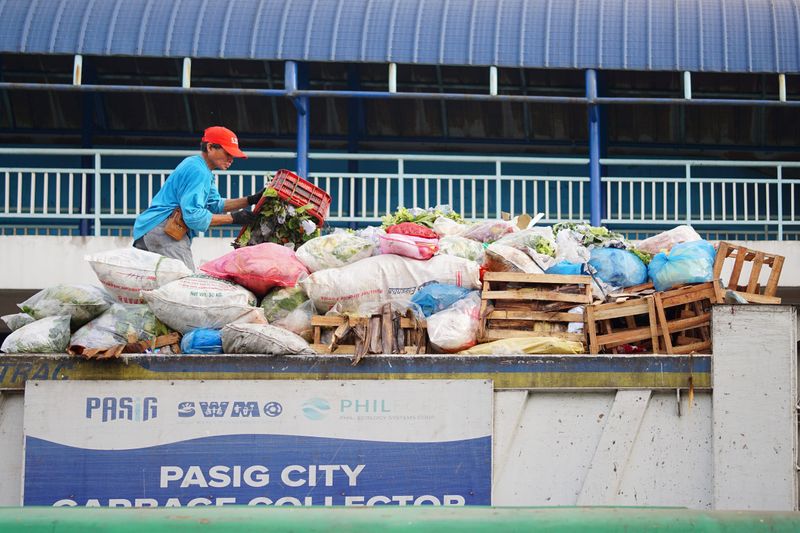
Orolfo specifically pointed to single-use sachets as one of the major drivers of plastic pollution in the country. He stated that producers must redesign these packaging formats or adopt alternatives that remain affordable for local Filipinos. Furthermore, the roadmap calls for increased participation from the informal sector, which plays a vital role in recovering recyclable materials.
Ten Outcomes Driving the Philippine Plastic Reduction Targets
To achieve the Philippine plastic reduction targets and deliver an 85 percent cut in plastic pollution, the DENR will pursue 10 mutually reinforcing outcomes identified in the roadmap:
-
6 outcomes focused on core system changes.
-
4 outcomes focused on enabling conditions, specifically governance, financing, data, technology, and behavior change.
The roadmap envisions a circular, inclusive, resilient, and accountable plastics system by 2040, incorporating measures that cover both waste prevention at the source and the management of remaining plastic waste.
Orolfo explained that while the launch establishes the country’s strategic direction through 2040, detailed implementation work will continue in the next phase. Following the presentation of the abridged framework, the DENR will outline granular resource requirements, agency lead assignments, and sectoral benchmarks to operationalize the 2040 vision, while identifying the parties responsible for each outcome and those involved in executing the measures. Financing for the roadmap will be drawn from multiple sources, including the private sector, local governments, the national government, and innovative financing mechanisms.
Global Partnerships, Informal Waste Workers, and Whole-of-Society Engagement
Roisin Greene of the Global Plastic Action Partnership stated that the Philippines joins a global network of 25 national partnerships. She highlighted local progress in executing the Extended Producer Responsibility (EPR) law as well as targeted private sector initiatives, which include a dedicated task force addressing single-use sachets.
Greene noted that the blueprint integrates specific safeguards to ensure equitable economic participation for two key groups:
-
Informal waste workers, who currently collect three-quarters (75%) of all materials reaching domestic recyclers.
-
Micro, small, and medium-sized enterprises (MSMEs).
She also underscored the growing number of local government units (LGUs) embracing the circular economy, emphasizing the need to capitalize on this momentum in upcoming phases so that leading LGUs inspire others and bring them along.
Meanwhile, Christophe Bahuet, United Nations Development Programme (UNDP) Resident Representative in the Philippines, stressed that plastic pollution is not only an environmental challenge but also a health issue. Highlighting the importance of individual behavior and public awareness, Bahuet stated that addressing plastic pollution requires not just a whole-of-government or whole-of-private-sector effort, but a whole-of-society engagement.
Looking ahead to 2040, Secretary Cuna expressed hope that Filipinos will experience the tangible benefits of the roadmap through healthier rivers and seas, cleaner and more resilient communities, efficient and productive resource use, and equitable participation in a circular economy supported by better social services and secure livelihoods.
Frequently Asked Questions (FAQ)
What is the primary goal of the Philippine National Plastic Action Roadmap 2026–2040?
The roadmap targets an 85 percent reduction in plastic pollution across the Philippines by 2040 through source prevention and improved nationwide collection, recovery, and recycling.
How is the 2026–2040 plastic action roadmap structured?
The Department of Environment and Natural Resources (DENR) will pursue the 85 percent reduction target through 10 mutually reinforcing outcomes: 6 focused on core system changes and 4 focused on enabling conditions, including governance, financing, data, technology, and behavior change.
What share of recyclable materials is collected by informal waste workers in the Philippines?
According to the Global Plastic Action Partnership, informal waste workers currently collect three-quarters of all materials that reach domestic recyclers in the Philippines. The roadmap includes safeguards for both informal workers and MSMEs to ensure equitable economic participation.
Which organizations developed the Philippine National Plastic Action Roadmap?
The roadmap was developed by the Department of Environment and Natural Resources (DENR) through the National Plastic Action Partnership (NPAP) Philippines, in partnership with the World Economic Forum (WEF) and its global action partnerships, making the Philippines part of a network of 25 national partnerships globally.
Source:
Philippine News Agency (PNA) – Official Philippine Government Newswire Service