





If you like our site, mark us as a preferred source on Google — so you’ll see our articles more often in search!
★Mark us as a preferred sourceModern society struggles with two massive waste problems: hazardous batteries from rapidly replaced smartphones, and tens of millions of tons of lignin waste generated annually in the papermaking and biorefinery industries. A breakthrough new study has now proven that through the hydrothermal synthesis of these two pollutants, a composite with outstanding performance and a honeycomb-like structure (NiCo₂S₄/Co₉S₈@LC) can be created. The anode material developed for sodium-ion batteries not only drastically reduces manufacturing costs but also boasts excellent electrochemical indicators.
The Global Waste Problem and the Potential of Sodium-Ion Technology
Mobile phone batteries, which have become an essential part of our daily lives, have a limited lifespan, and due to frequent device upgrades, discarded energy storage units are rapidly accumulating globally. The improper handling of these batteries poses severe environmental and health risks, while a massive amount of valuable metals goes to waste. In parallel, industrial lignin—which accounts for approximately 30 percent of the Earth’s non-fossil organic carbon—is generated as a byproduct in huge volumes, amounting to 50–70 million tons annually. Currently, less than 5 percent of this staggering amount is utilized as value-added products (such as adhesives or dispersants), while more than 90 percent is simply discarded or incinerated as low-value fuel.
The research offers an innovative, sustainable solution: the synergistic utilization of the two waste types for the development of sodium-ion battery (SIB) anodes. SIB technology is a highly promising alternative to lithium-ion cells due to abundant and cheap raw materials, high safety, excellent low-temperature performance, and rapid charging capabilities.
The Synthesis Process and Optimal Honeycomb-like Morphology
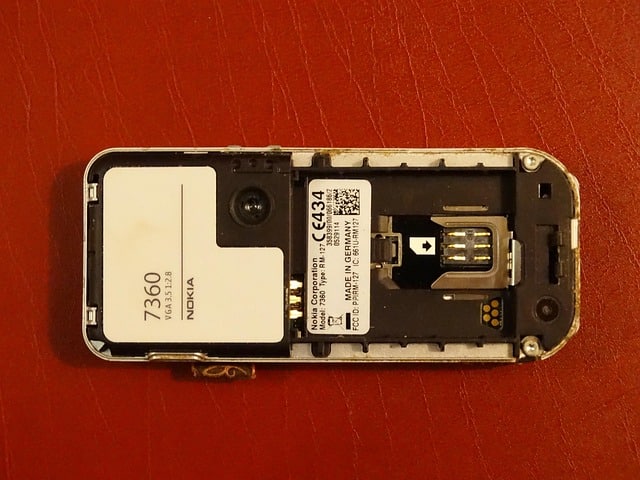
Researchers created NiCo₂S₄ metal sulfide through a hydrothermal process utilizing metals extracted from discarded mobile phone batteries (Nokia batteries were used in the experiment). This material was then carbonized in the presence of purified industrial lignin under a nitrogen atmosphere. During the process, a portion of the original NiCo₂S₄ structure transformed into a Co₉S₈ phase due to high temperatures and sulfur-containing gases released from the lignin.
One of the most important findings of the study is that the proportion of lignin is critical to forming the proper material structure. During the tests, the resulting composites were examined with 25%, 50%, and 75% lignin addition. When the mass ratio of lignin was exactly 50% (this material was designated as NCS/CS@LC50), a continuous carbon skeleton was formed, which enclosed the spherical metal sulfides in an ideal, honeycomb-like structure. The specific surface area of the material was found to be 42.25 cm²/g, while the pore size was 12.98 nanometers, creating a perfect balance for the insertion of sodium ions (Na+) and electrolyte penetration.
Quantitative Results: Outstanding Capacity and Stability
The electrochemical performance of the NCS/CS@LC50 composite produced highly convincing data. Based on sodium-ion half-cell tests, the initial specific discharge capacity of the material was astonishingly high, at 1,062.8 mAh g⁻¹. Thanks to the optimal carbon coating derived from lignin, the initial Coulombic efficiency (ICE) reached 65.61%, significantly exceeding the 53.15% value of the pure sample without carbon coating.
Rate performance measurements testing the rapid charging capability of the material also showed excellent results. Under various, increasingly higher current densities (0.1, 0.2, 0.5, 1.0, and 2.0 A g⁻¹), the average discharge capacities reached 548.2, 423.3, 328.1, 247.1, and 208.7 mAh g⁻¹, respectively. When the current density was reduced back to the original 0.1 A g⁻¹, the capacity recovered to 332.2 mAh g⁻¹, proving the excellent structural stability and kinetics of the electrode even after high-speed cycles.
The investigation of long-term cycling stability highlighted the protective role of the carbon coating: after 100 cycles, the sample without lignin could only exhibit a capacity of 27.2 mAh g⁻¹, while the composite with a 50% lignin ratio produced a value of 244.5 mAh g⁻¹. The best-performing NCS/CS@LC50 material retained a specific capacity of 207 mAh g⁻¹ even after 300 cycles at a current density of 0.5 A g⁻¹, and based on microscopic (SEM) images, its honeycomb-like structure remained intact despite the prolonged stress.
The Physicochemical Background Behind the Excellent Performance
Experts uncovered the reasons behind the outstanding performance using cyclic voltammetry (CV) and density functional theory (DFT). Pseudocapacitive behavior played a significant role in the charge storage mechanism, accounting for 61.66 percent of the total current at a scan rate of 0.8 mV s⁻¹. This phenomenon enables the extremely rapid storage and release of charges on the surface.
Alternating current (AC) impedance (EIS) tests proved that the charge transfer resistance (Rct) was lowest for the sample containing 50% lignin (790.3 Ω), which is due to the shortened ion-diffusion pathways and the excellent conductivity of the carbon layer. DFT calculations pointed out that a heterojunction facilitating electron transfer forms at the interface of NiCo₂S₄ and Co₉S₈ (with a work function of 5.305 eV). The optimal bandgap value of 0.527 eV of the composite minimizes energy loss and ensures excellent electronic transport properties.
Although the electrochemical indicators of NCS/CS@LC50 are similar to those of NiCo₂S₄ materials previously produced from expensive analytical reagents, production from waste (spent mobile batteries and lignin) could revolutionize the industry. The sustainable and cost-effective manufacturing process holds massive potential for the future energy storage systems of electric vehicles and smart grids.
Reference and Official Source:
-
Maximum Academic Press – Biochar X (February 10, 2026): Synergistic conversion of spent mobile phone batteries and industrial lignin into the NiCo2S4/Co9S8@LC composite with enhanced sodium storage performance
