




If you like our site, mark us as a preferred source on Google — so you’ll see our articles more often in search!
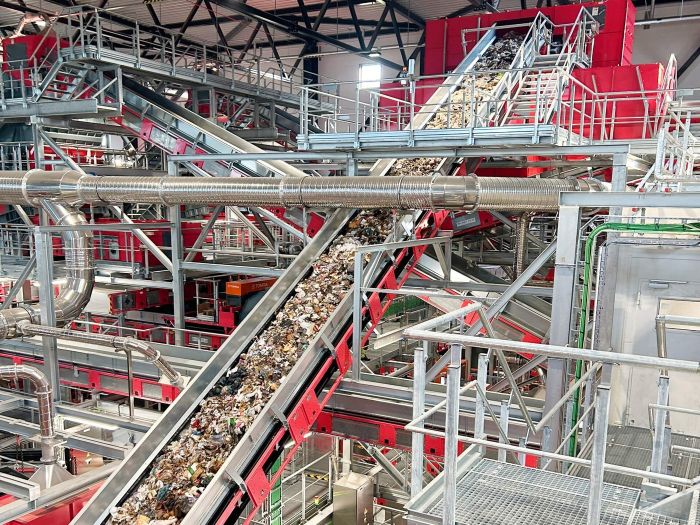
★Mark us as a preferred sourceWaste management is undergoing a global transformation. According to the latest insights from the STADLER Group, increasing municipal waste volumes have made residual waste sorting one of the most complex and critical areas of resource recovery. Modern sorting systems not only reduce environmental impact but also deliver significant economic benefits.
Waste as an Untapped Resource
The perception of waste has fundamentally changed in recent times: materials previously treated primarily as public health, safety, and disposal problems are now viewed by the industry as resource streams with significant recovery potential. According to Sabine Schlögl, Technical Sales Engineer at STADLER, material is no longer simply a problem to be solved, but a potential waiting to be tapped. This paradigm shift has also reshaped the relationship between the waste management and manufacturing sectors, placing a much greater emphasis on design for recycling, efficient collection systems, and the strict quality requirements for secondary raw materials.
The Transformation of Waste-to-Energy Processes
The optimized sorting of residual waste has a direct and positive impact on the operation of waste incineration plants. Removing metals, inert materials, and—increasingly—recyclable plastics before incineration drastically reduces the volume of materials destined for energy recovery that are not optimal for burning. STADLER points out that this preliminary screening improves the overall performance of energy plants, enables the recovery of still-salvageable resources, and minimizes the amount of bottom ash that requires landfill capacity after incineration.
Environmental and Economic Benefits: The Example of Aluminum
Material recovery from residual waste offers measurable advantages from both environmental and economic perspectives. Extracting secondary raw materials reduces the demand for virgin resources, the extraction and processing of which entail an extremely high environmental burden.
One of the most striking quantitative examples of this is aluminum. While primary bauxite mining can cause severe damage to forests, habitats, and soil and water resources, recycling aluminum from waste streams can reduce emissions by 90–95% compared to primary production. Simultaneously, the recovered and sold recyclable materials generate direct revenue while reducing landfill or incineration costs. Consequently, sustainability and profitability can go hand in hand, provided that the regulatory environment and material market values support this business model.
Technological Advancements and the Role of Artificial Intelligence
STADLER experts emphasize that residual waste is highly heterogeneous, often contaminated, and its composition varies significantly by region, city, and even season. Therefore, efficient value recovery from this stream requires highly robust and flexible sorting plants capable of handling challenging input materials.
This industry transition is being accelerated by the rapid development of optical sorting, higher-resolution sensors, process automation, and artificial intelligence (AI) based recognition systems. These innovative technological solutions continuously expand the range of material fractions that can be successfully recovered as high-purity, valuable secondary raw materials. (To serve growing and evolving needs, STADLER also opened a new office in Japan in June 2026, expanding its expertise in Asian markets traditionally dominated by Waste-to-Energy solutions.)
References and Sources:
-
Original source: Official press release of STADLER Anlagenbau GmbH
