


If you like our site, mark us as a preferred source on Google — so you’ll see our articles more often in search!
★Mark us as a preferred sourceThe omnipresence of e-cigarettes (vapes) in the United States’ waste stream has escalated to the point where their disposal and recycling pose a significant challenge for regulatory authorities and waste managers alike. Although the healthcare waste management industry is specifically accustomed to handling complex and strictly regulated waste streams, experts say the transformation of e-cigarettes into waste is slowly pushing the boundaries of creative problem-solving.
At the Healthcare Waste Institute Summer Summit, hosted by a division of the National Waste & Recycling Association (NWRA) in Washington, D.C., industry stakeholders discussed the crisis. Our analysis, relying strictly on the report published by the Waste Dive industry portal and its quantitative data, presents the current technological, regulatory, and financial hurdles of vape waste management.
Three Distinct Waste Streams Concentrated in One Device
The severity and administrative complexity of the situation are well illustrated by the fact that the U.S. Environmental Protection Agency (EPA) officially classifies vape devices as hazardous waste. This strict categorization is based on two main components: the nicotine found in the devices is a toxic substance capable of being absorbed even through the skin, while the lithium-ion batteries they contain pose a prominent fire hazard to waste management facilities.
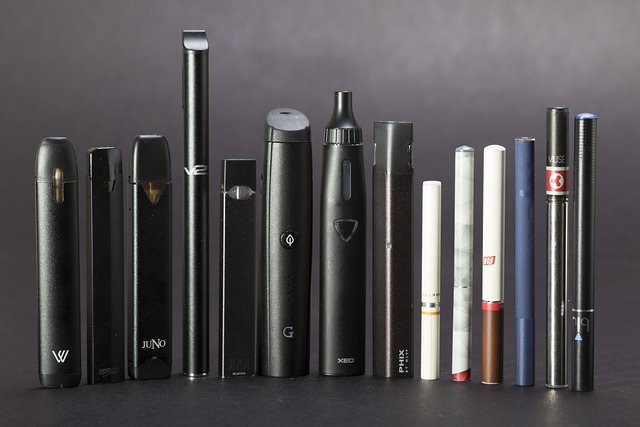
Rob Motl, National Director of Sales for the healthcare sector at Reworld—a company that holds certain vape waste management contracts—pointed out the root of the problem: to this day, there are no standardized collection or disposal pathways for these devices. As Motl put it, “a vape is the convergence of three historically distinct waste streams. You have consumer product waste, electronic waste, and lithium battery waste—all combined into one tiny, jewelry-like device,” referring to the design of the popular Juul brand e-cigarettes. Experts agreed that finding safe handling routes is an urgent task, especially due to the continuous facility fires caused by the batteries.
Technological Barriers to Recycling and Incineration
Although there are already a few companies on the market attempting to recycle the products, the appropriate infrastructure remains extremely limited. According to Angie Martin, Senior Vice President of Environmental Programs at Arcwood Environmental, the current physical processes are too cumbersome. Disassembling the devices and processing them by material is extremely time-consuming, and furthermore, the design of every single vape type is different, making it almost impossible to standardize the steps.
Incineration as an alternative is also far from perfect. Although Arcwood has a hazardous waste incinerator capable of accepting these devices, the company must strictly monitor the volumes entering the system. “We can put them directly into the incinerator, but we have to watch how much lithium we put into the system, as it is not always compatible with the process,” Martin explained.
Reworld is theoretically also capable of incineration, but according to Motl, the company often tries to avoid accepting e-cigarettes due to storage concerns prior to destruction. The main hazard is not the moment of incineration itself. “There are numerous handling points from the collection of the material up to the actual incineration, and that is exactly where the danger lies,” he elaborated. The batteries can suffer “thermal runaway” at any part of the process, which can cause significant and dangerous operational disruptions for an organization during loading into the hopper or storage in the processing pit.
Financial Burdens and EPA Statistics
Kristin Fitzgerald, an environmental expert at the EPA, highlighted the emerging high costs as one of the biggest logistical hurdles. Currently in the United States, the financial burden of collecting and managing vapes is most often borne by municipalities and schools through occasional household hazardous waste collection events. These costs are steadily rising, while the number of service providers and channels offering final treatment remains persistently low.
Fitzgerald emphasized that municipalities must identify funding sources in advance even for what happens to the devices after the actual collection. Disposal costs are exceptionally high because very few companies are willing to accept a material with such complicated and hazardous characteristics. During a recent meeting, the EPA examined the case of a successfully launching startup that collected approximately 1,000 pounds (about 453 kilograms) of vape waste from the public in just a few months, but currently, they have no outlet to forward the collected hazardous waste.
Extended Producer Responsibility (EPR), Bans, and the Need for Collaboration
According to Stephanie Weeks, Senior Product Portfolio Manager at The Battery Network, the spreading state regulations for battery recycling—especially Extended Producer Responsibility (EPR) programs—could help mitigate the crisis. Forecasts suggest that by 2030, about 47 percent of the U.S. population will be covered by some form of battery EPR program. As a result, the national annual collected battery volume could explosively increase from the current 10 million pounds (approx. 4,500 tons) to up to 160 million pounds (approx. 72,500 tons). According to the expert, this expansive trend could also have a positive impact on vape waste, boosting the development of the necessary infrastructure.
The state of Maine recently took a milestone step: it became the first in the country to pass an EPR law specifically for e-cigarettes. The legislation obliges manufacturers to create and fund a program that provides safe collection points, as well as disposal and recycling services for consumers. Additionally, a $2 incentive is offered for returned devices to curb littering. Although the initiative is a guiding example, participants at the Washington summit expressed serious concerns about whether the incoming funds will be sufficient to finance stable final treatment pathways.
Bans are also an examined tool to physically mitigate the problem. California state lawmakers, for instance, are making a legislative attempt to ban certain types of vapes to prevent facility fires, exposure to toxic substances, and targeted marketing to minors. A related California bill would also allow hazardous waste managers to finally legally disassemble vapes mechanically, separating the hazardous components.
However, Joseph Boudah, Program Coordinator at the District of Columbia Department of Energy and Environment, drew attention to the unintended, even harmful consequences of bans. As he put it: “A lot of legislation and regulation tries to get people to not use these devices. But the result of that can be that we are left with a lot of devices that we cannot safely get rid of without creating a completely new and unprocessable waste stream.”
The solution, according to the conference speakers, is building “multiple lines of defense.” Sector representatives agreed that there is a need to redesign e-cigarettes to make batteries easier to remove, as well as to streamline transportation requirements in cooperation with state authorities. The most important goal, however, is for representatives of the manufacturing, regulatory, and waste management sectors to eliminate the isolation between them, get on a common platform, and work in coordination to develop long-term solutions.
Sources and References:
-
Original source: Waste Dive – Amid growing vape waste woes, industry calls for multilayered solutions
-
Referenced government agency/authority: U.S. Environmental Protection Agency (EPA)


