


If you like our site, mark us as a preferred source on Google — so you’ll see our articles more often in search!
★Mark us as a preferred sourceThe European Union’s push for a circular economy through the Packaging and Packaging Waste Regulation (PPWR) aims to drastically reduce waste, but research from BKV GmbH suggests that for rigid transport packaging, the path forward is fraught with unintended consequences. While reuse sounds environmentally superior, the study reveals that mandatory quotas could lead to increased CO2 emissions, logistical inefficiencies, and a massive surge in resource consumption. Experts warn that without a more pragmatic approach, the very regulation designed to protect the environment might place an unsustainable burden on European logistics.
The regulation sets ambitious reuse targets for 2030 and 2040, focusing heavily on rigid transport units. However, the study identifies several critical “pain points” where the theory of reuse clashes with the reality of global supply chains.
Quantitative Targets: A Steep Climbing Curve
The PPWR mandates a swift transition for economic operators involved in transport and e-commerce:
-
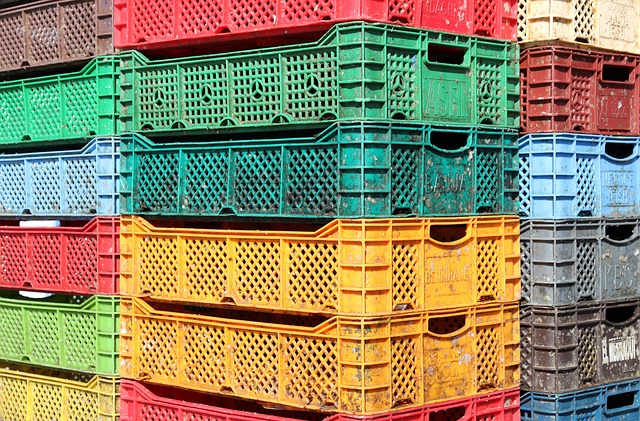
2030 Milestone: At least 40% of rigid transport packaging (pallets, boxes, crates) must be part of a functional reuse system.
-
2040 Vision: This requirement jumps to 70%, necessitating a near-total overhaul of current industrial logistics.
-
The Recycling Exemption: A potential “escape clause” exists for member states that achieve a 15% reduction in packaging waste and an 85% recycling rate, but the administrative burden to prove these figures is immense.
The Environmental Paradox: Transport and “Empty Miles”
One of the most significant findings in the study concerns the environmental impact of reverse logistics. For a reuse system to function, empty containers must be shipped back to their point of origin.
-
Increased Emissions: The study highlights that the additional mileage required for these return trips often offsets the environmental gains of using less raw material. In many long-distance scenarios, the total carbon footprint of a heavy, reusable plastic pallet is higher than that of a lightweight, single-use, but fully recyclable alternative.
-
Resource Intensity: Reusable units are built to be more durable, meaning they contain significantly more material than single-use versions. If these units do not achieve a high number of rotations, the initial “resource debt” is never repaid.
Logistical Friction: Cleaning, Storage, and Loss
The transition to reuse introduces new industrial processes that consume significant resources.
-
Water and Energy Demand: Unlike single-use packaging that goes straight to recycling, reusable units must be cleaned and disinfected between uses. This is particularly critical in the food and pharmaceutical sectors, where hygiene is non-negotiable. This process requires vast amounts of water, energy, and chemical detergents.
-
Storage and Shrinkage: Reusable systems require massive warehouse spaces to store empty units waiting for redistribution. Furthermore, the study points to “system leakage”—the loss, theft, or irreparable damage of expensive reusable units. High loss rates can render a reuse system economically and environmentally unviable.
Innovation vs. Standardization
The push for reuse necessitates a high degree of standardization to ensure that crates and pallets can be used across different companies and systems.
-
The Cost of Uniformity: While standardization aids the return process, it stifles innovation. Companies may be forced to use “universal” heavy-duty packaging that is not optimized for their specific products, leading to less efficient loading and increased transport volume.
Summary: Balancing Reuse and Recycling
The BKV GmbH study concludes that a “one-size-fits-all” approach to the PPWR could be counterproductive. For rigid transport packaging, the most sustainable solution is often determined by the specific shipping distance and the efficiency of the local recycling infrastructure. The findings suggest that the regulation should allow for more flexibility, permitting high-quality recycling as a legitimate alternative to reuse when Life Cycle Assessments (LCA) prove it to be the greener path.
Official Source:
-
BKV GmbH – The reuse targets in the PPWR (Short version study, Feb 19, 2026): https://www.bkv-gmbh.de/files/bkv/studien/260219%20Short%20version%20Study%20The%20reuse%20targets%20in%20the%20PPWR.pdf


